Wingtech Digs In Against Dutch Nexperia Split, Calling Plan Discriminatory
The Shanghai-listed parent rejects a restructuring that would strip control of its European semiconductor assets, raising the stakes in a year-long regulatory confrontation ahead of high-level diplomacy.
A Standoff Over Semiconductor Sovereignty
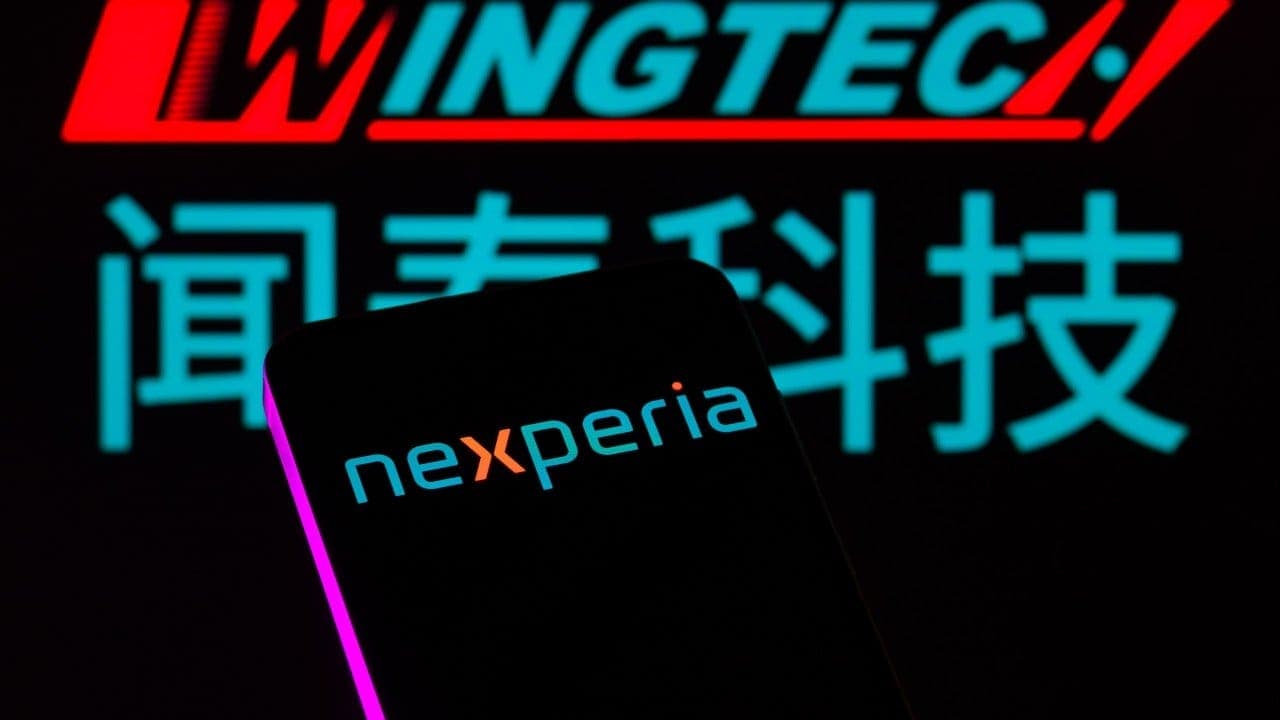
Wingtech Technology publicly rejected a restructuring plan that would sever its operational grip on Nexperia's assets outside mainland China, labelling the proposal an act of expropriation rooted in bias against Chinese capital. The Shanghai-listed parent issued its statement on Tuesday, deepening a regulatory confrontation that has now stretched beyond twelve months and shows no sign of resolution.
At Opentechwire, we have tracked the unwinding of cross-border semiconductor deals across Asia and Europe since export controls tightened in 2022. This latest development fits a broader pattern: regulatory mechanisms in host countries are increasingly deployed to unwind ownership structures that looked commercially rational three or four years ago, but now sit uncomfortably with national security frameworks.
Nexperia, headquartered in Nijmegen, specialises in discrete components, logic chips and MOSFETs used in automotive and industrial applications. Wingtech acquired the Dutch firm in 2019 for approximately USD 2.8 billion, a transaction that passed regulatory scrutiny at the time. The geopolitical climate has shifted materially since then, and The Hague now views concentrated Chinese ownership of European semiconductor production capacity as a vulnerability.
The Proposal Wingtech Will Not Accept
Details of the restructuring plan remain partially confidential, but the core mechanism is clear: Nexperia's operations and assets located outside China would be carved into a separate legal entity over which Wingtech would hold reduced or non-controlling stakes. The exact governance model has not been disclosed, though industry observers expect some form of trust arrangement or enforced divestment to a European buyer.
Wingtech characterised the plan as discriminatory, a term that carries specific weight in international investment law. The company argues that no comparable restrictions have been imposed on semiconductor investments originating from the United States, South Korea or Taiwan, and that the proposed restructuring effectively nullifies property rights without compensation. Whether Wingtech pursues formal arbitration under bilateral investment treaties remains an open question, though the language in Tuesday's statement suggests legal options are being evaluated.
The Dutch government has not published a formal response to Wingtech's rejection, but officials in The Hague have previously cited national security reviews and the need to align with European Union semiconductor policy. Prime Minister Rob Jetten is scheduled to visit Beijing in the spring, and the Nexperia dispute is expected to feature in preparatory talks. The timing creates an awkward diplomatic overlay: neither side can afford to appear to capitulate, yet both have broader economic relationships at stake.
Domestic Pressure Compounds the Dilemma
Wingtech faces a parallel crisis at home. The company has been flagged for potential delisting by the Shanghai Stock Exchange after failing to meet profitability thresholds for consecutive reporting periods. Chinese listing rules allow limited grace periods, and Wingtech's window is narrowing. Losing the Nexperia restructuring fight would likely crystallise impairment charges that push the parent further from compliance, while accepting the Dutch proposal would mean writing down the value of assets it no longer controls.
This creates a bind: Wingtech cannot easily divest Nexperia to raise capital without Dutch regulatory consent, yet holding the asset in its current form generates no path to profitability improvement. The company has explored bridge financing and asset sales within China, but those discussions have not resulted in announced transactions. Investors in Shanghai have responded predictably, with Wingtech's share price down more than 40 per cent over the past year.
The pressure is not unique to Wingtech. Several Chinese technology conglomerates that pursued aggressive overseas acquisitions between 2016 and 2020 now find themselves holding assets that are difficult to monetise or operate under tightening foreign scrutiny. The regulatory environment has moved faster than corporate restructuring cycles, leaving balance sheets exposed.
What the Nexperia Case Signals for Cross-Border Semiconductor Investment
The Nexperia dispute is a test case for how host governments will treat legacy Chinese ownership in strategically sensitive sectors. If The Hague succeeds in forcing a restructuring over Wingtech's objections, other European jurisdictions may follow similar playbooks. Belgium, Germany and Italy have all introduced or strengthened foreign investment screening mechanisms in the past eighteen months, and semiconductors sit at the top of sensitive technology lists.
For Chinese investors, the lesson is unambiguous: acquisitions in critical technology sectors, even those cleared at the time of purchase, are subject to retroactive policy risk. This reality is already reflected in outbound deal volumes. Chinese direct investment into European technology companies fell by more than 60 per cent in 2025 compared to the 2019 peak, according to data from Rhodium Group. The Nexperia case will likely accelerate that trend.
European and American policymakers, meanwhile, face a trade-off. Forced divestments and restructuring mandates provide short-term security gains, but they also signal to future investors that property rights are contingent. Non-Chinese acquirers will price in this risk when evaluating European assets, potentially reducing valuations and liquidity in M&A markets. The long-term cost may be a less attractive investment climate overall.
The Road Ahead: Escalation or Compromise?
Wingtech's outright rejection leaves three plausible paths forward. The first is litigation. Wingtech could challenge the restructuring plan in Dutch courts or pursue international arbitration under the China-Netherlands bilateral investment treaty. Such proceedings typically take years and offer uncertain outcomes, but they would freeze the status quo and create negotiating leverage.
The second path is a brokered compromise. Intermediaries, possibly including Chinese and European trade officials, could facilitate a deal in which Wingtech retains a minority stake and board representation in the non-China entity, while ceding operational control. This would allow both sides to claim partial success and avoid the optics of total capitulation. However, Wingtech's public framing of the plan as expropriation makes compromise politically difficult for the company's leadership.
The third path is escalation. If the Dutch government moves to enforce the restructuring unilaterally, Wingtech could retaliate by restricting technology transfers from Nexperia's Chinese operations to its European facilities, or by initiating asset freezes. Such moves would damage Nexperia's integrated supply chain and likely trigger reciprocal measures from European regulators, but they would demonstrate resolve and potentially shift negotiating dynamics.
None of these paths is clean. The Nexperia case sits at the intersection of industrial policy, national security and international investment law, domains in which clear rules are still being written. What is certain is that the outcome will shape how other cross-border semiconductor ownership disputes are resolved in the years ahead, and whether the global chip industry can sustain the integrated supply chains that have underpinned its economics for decades.
Prime Minister Jetten's visit to Beijing will be an early indicator of whether diplomatic channels can produce a workable settlement. If the trip concludes without progress on Nexperia, expect both sides to dig in for a prolonged regulatory and legal confrontation.