Off-Balance-Sheet AI Liabilities Hit $3.2 Trillion Across US Tech Majors
Commitments tied to data centres, cloud contracts and infrastructure now equal 80 per cent of asset bases as investors question capital discipline
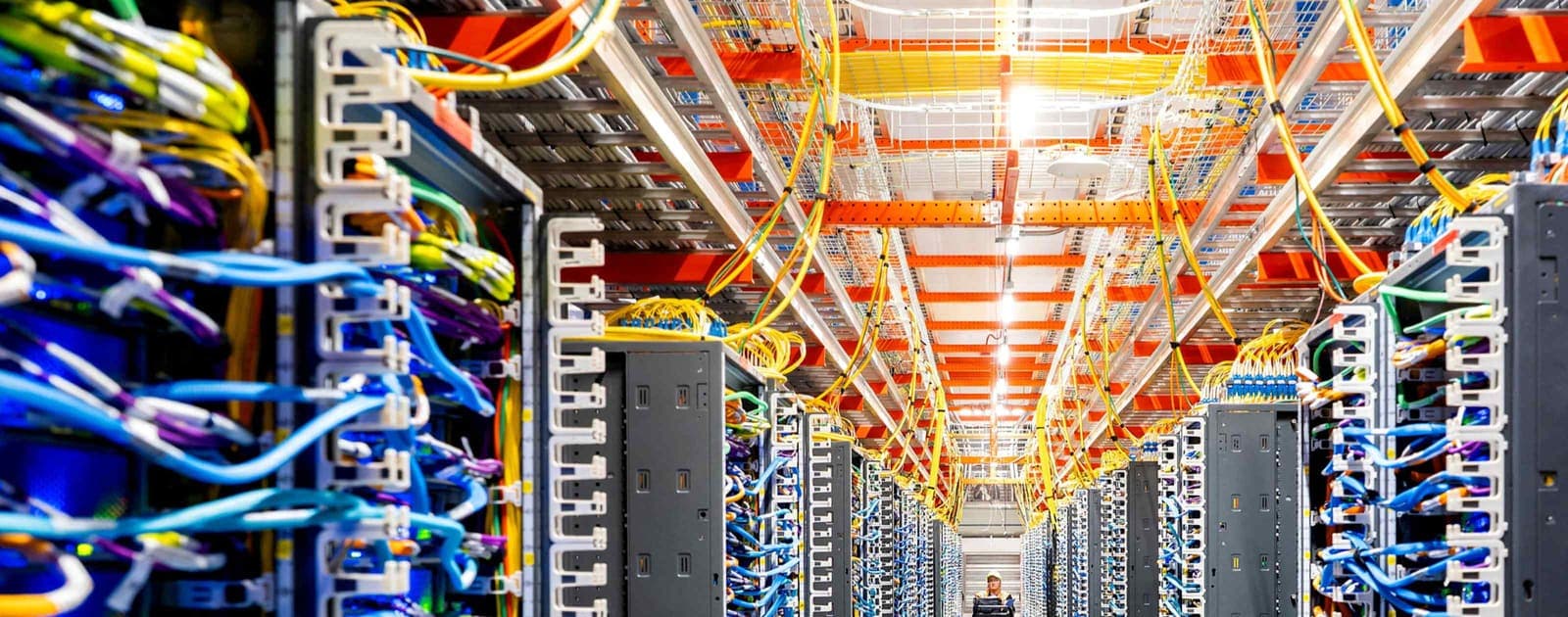
The Scale of Invisible Commitments
The wave of artificial intelligence spending across Silicon Valley has generated a parallel wave of obligations that do not appear on corporate balance sheets. As of mid-2026, the combined off-balance-sheet debt linked to AI-related commitments at major US technology companies has climbed to approximately $3.2 trillion, according to data compiled from regulatory filings. That figure represents a 90 per cent increase over six months, a velocity that has begun to unsettle equity and credit analysts who track the sector.
These obligations encompass long-term lease agreements for data centre capacity, multi-year purchase commitments for server chips and networking hardware, and contractual arrangements with power utilities to secure electricity supply for inference and training workloads. Under current accounting standards, many of these commitments remain off the primary balance sheet, disclosed instead in footnotes or management discussion sections of quarterly filings. The aggregate now sits at roughly 80 per cent of the combined asset base of the firms in question, a ratio that would trigger immediate covenant reviews in other sectors.
At Opentechwire, we have tracked capital intensity metrics across Asia-Pacific and North American technology firms for the past eighteen months, and the trajectory in the US cohort stands apart. The rate of obligation growth has consistently outpaced revenue growth from AI-adjacent services, creating a wedge that investors are only beginning to price into equity valuations. The question is no longer whether these companies can afford the spend in nominal terms but whether the returns will justify the scale and timing of the commitments.
Who Holds the Largest Exposures
Google and Meta account for a significant portion of the $3.2 trillion total, each having committed tens of billions of dollars annually to expand data centre footprints in the United States and abroad. Both companies have disclosed multi-year agreements with semiconductor suppliers and co-location providers, locking in capacity well ahead of demonstrated demand from enterprise customers or advertising revenue linked to generative AI features.
Amazon, through its cloud infrastructure arm, has likewise entered into obligations that span power purchase agreements, land leases for campus expansions, and volume commitments for custom silicon. Microsoft and a handful of other firms round out the cohort, each layering on commitments tied to training clusters, edge inference nodes, and cooling infrastructure required to sustain the thermal envelope of next-generation accelerators.
The obligations are structured in ways that minimise immediate balance-sheet impact. Operating leases, take-or-pay power contracts, and conditional purchase orders all fall below the threshold for capitalisation under US generally accepted accounting principles, yet they bind the companies to cash outlays over periods stretching five to ten years. The cumulative effect is a funding requirement that rivals or exceeds the on-balance-sheet debt held by these entities, without the same level of visibility or covenant protection afforded to bondholders.
Investor Alarm and Market Reaction
The doubling of off-balance-sheet AI liabilities in six months has prompted a reassessment among institutional investors, particularly those holding convertible debt or hybrid instruments tied to these companies. Equity analysts have begun to model the cash flow impact of these commitments as if they were debt service obligations, adjusting free cash flow projections downward and applying higher discount rates to terminal values.
Credit rating agencies have so far maintained their outlooks, citing the strong operating cash generation and diversified revenue streams of the firms involved. Yet private commentary from fixed-income desks suggests that the pace of commitment growth is approaching a threshold where formal downgrades or negative watch listings become plausible, especially if revenue from AI services fails to inflect upward in the next twelve to eighteen months.
The concern centres on capital discipline. In prior technology cycles, infrastructure spending was tied to visible demand signals from enterprise customers or consumer adoption curves. The current wave of AI investment is more speculative, predicated on the assumption that demand for inference, fine-tuning, and model hosting will scale in line with the supply being built out. If that assumption proves optimistic, the result will be underutilised capacity and a drag on return on invested capital that persists for years.
Regional Context and Comparative Discipline
The pattern in the United States contrasts with the approach taken by technology firms and hyperscalers in other regions. In South Korea, major cloud and telecommunications operators have adopted a more measured cadence, signing shorter-term agreements with equipment vendors and delaying large-scale data centre expansions until enterprise AI adoption reaches defined milestones. Singapore-based infrastructure providers have similarly opted for modular buildouts, with capacity added in tranches tied to contracted customer demand rather than forecasted market growth.
Japanese cloud operators and systems integrators have pursued joint ventures with domestic power utilities and semiconductor manufacturers, sharing both the capital outlay and the demand risk. This cooperative model reduces the off-balance-sheet burden on any single entity and aligns incentives across the supply chain. The trade-off is slower time to market and less control over the technology stack, but the capital efficiency is markedly higher.
China's hyperscalers, constrained by export controls on advanced chips, have focused spending on optimising inference efficiency and building out capacity with domestically available accelerators. The result is a lower absolute level of off-balance-sheet commitments, though the strategic calculus is shaped as much by regulatory and geopolitical factors as by financial discipline.
The Path Forward and Open Questions
The $3.2 trillion in off-balance-sheet AI obligations will begin converting to cash outlays over the next several quarters, and the market will gain a clearer view of whether the spending translates into durable revenue streams. Early indicators from enterprise adoption surveys and generative AI usage metrics have been mixed. Developers are integrating AI features into workflows, but willingness to pay at scale remains uneven, and many enterprise customers are still in pilot or proof-of-concept phases.
If demand materialises in line with the most optimistic scenarios, the infrastructure in place will support a multi-year growth cycle, and the off-balance-sheet commitments will be vindicated as prudent forward investment. If demand lags, the same commitments will be cited as evidence of exuberance, and the companies involved will face pressure to write down assets, renegotiate contracts, or absorb losses on unutilised capacity.
For now, the trajectory is clear: obligations are growing faster than revenues, and the gap is widening. Investors, analysts, and policymakers are watching to see which dynamic prevails. The answer will shape not only the financial performance of a handful of large technology firms but also the broader narrative around AI infrastructure investment and the sustainability of the current buildout cycle.