Washington Blacklists Megaspeed as Nvidia Scandal Fallout Widens
Commerce Department adds Singaporean cloud firm to trade restrictions the same day Jensen Huang returns as CEO, deepening regulatory scrutiny of chip access routes to China

Trade Restriction Coincides with Leadership Return
The US Commerce Department confirmed on Monday that Megaspeed, a Singaporean cloud computing operator, will be added to a trade blacklist, marking the first regulatory enforcement action stemming from scrutiny of semiconductor access routes to China. The designation came on the same day Nvidia announced Jensen Huang's return as chief executive, ending a turbulent period that saw the chip designer's board reverse its own decision to remove him.
The blacklist placement targets a company that operates cloud infrastructure in Southeast Asia and has been linked to Alice Huang, whose relationship with the Nvidia founder triggered a security review. Megaspeed's registered office is located in Singapore's Ocean Financial Centre, a commercial hub that houses numerous technology and finance firms.
Monday's dual developments close one chapter of a crisis that forced Washington to reassess how advanced chips reach restricted end-users, even as questions remain about enforcement gaps in jurisdictions where US export controls rely on partner cooperation.
Export Control Expands Beyond Hardware Sales
The Commerce Department's action extends trade restrictions to a services layer that had previously received less scrutiny than direct chip sales. Cloud computing providers can offer remote access to advanced processors without transferring physical hardware, a model that complicates enforcement when the provider operates outside US jurisdiction and the end-user sits in a restricted territory.
Placing Megaspeed on the Entity List requires US companies to obtain a licence before supplying it with controlled technology, a threshold that is rarely granted for entities tied to security concerns. The designation effectively cuts the firm off from American semiconductor supply chains and software ecosystems that underpin large-scale AI inference workloads.
Server suppliers in Southeast Asia have halted shipments of systems containing Nvidia GPUs in response to guidance from the Commerce Department, according to industry participants. The pause affects orders across Malaysia and Singapore, two markets where data centre construction has accelerated over the past 18 months to serve demand from both regional enterprises and Chinese clients seeking alternatives to domestic infrastructure.
Washington's move signals that export controls will now scrutinise the corporate structures and ownership networks behind cloud providers, not merely the technical specifications of chips leaving US ports. That shift raises compliance costs for operators in markets where beneficial ownership disclosure rules are less stringent than those in the United States or the European Union.
Nvidia Reinstates Founder Amid Regulatory Pressure
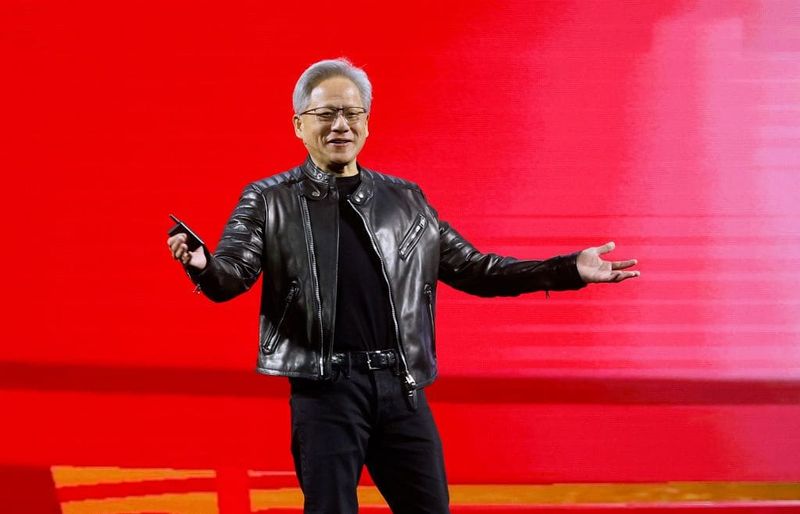
Nvidia's board announced Huang's reinstatement hours before the Commerce Department's disclosure, a timing that underscores the pressure on the company to demonstrate stable governance as it navigates both regulatory scrutiny and a product cycle critical to its valuation. The board had removed Huang three weeks earlier amid concerns that his personal conduct created security vulnerabilities, a rare step for a founder who had led the company since its inception in 1993.
The reversal followed intense pushback from institutional shareholders and questions about whether the board had a credible succession plan for a firm whose market capitalisation exceeds $3 trillion. Nvidia's stock had declined 11 per cent in the 15 trading days following Huang's removal, erasing roughly $330 billion in market value and prompting calls from several large investors for clarity on leadership.
Huang's return does not erase the regulatory questions raised by the affair. The Commerce Department's Bureau of Industry and Security has continued its review of whether Nvidia's internal controls were sufficient to prevent misuse of its technology, a process that could result in additional compliance requirements even if no formal violation is found.
The company has not commented on whether it will adjust its governance structure or implement new oversight mechanisms for executives with access to sensitive customer data and export-controlled technical specifications.
Southeast Asia's Role in Chip Access Scrutiny
The Megaspeed designation places Singapore and Malaysia at the centre of a broader enforcement challenge: how to monitor chip access when cloud infrastructure in third countries can serve as a relay point. Both governments have export control frameworks that align with multilateral regimes, but enforcement capacity varies and beneficial ownership transparency remains uneven.
Singapore's position as a financial and technology hub makes it an attractive jurisdiction for entities seeking to structure operations that span multiple markets, including China. The city-state's regulators have strengthened anti-money laundering rules and expanded disclosure requirements for certain sectors over the past two years, but gaps remain in real-time monitoring of who ultimately controls cloud computing entities.
Malaysia has emerged as a data centre destination due to lower power costs and land availability, drawing investment from Chinese hyperscalers and regional operators. The concentration of new capacity in southern states near Singapore has created a corridor where hardware, capital, and management talent move fluidly across borders, complicating efforts to enforce controls that depend on fixed jurisdictional boundaries.
The Commerce Department has not disclosed whether additional entities in the region are under review, but the Megaspeed action suggests Washington is prepared to act even when doing so strains relationships with governments that are partners on other technology and security issues.
Forward Path for Enforcement and Compliance
The blacklist addition sets a precedent that could extend to other cloud operators whose customer bases or ownership structures raise similar concerns. Industry executives in Singapore and Hong Kong have begun reviewing their client onboarding procedures and seeking legal opinions on how far US export controls can reach when a provider uses American chips but operates entirely outside US territory.
Nvidia has scheduled a compliance briefing for major customers in early December, according to a notice reviewed by Opentechwire. The session will cover updated guidance on end-use and end-user verification, a signal that the company expects heightened scrutiny of who accesses its hardware, whether through direct purchase or cloud rental.
The Commerce Department's next export control update is expected in the first quarter of 2027, when officials have said they will address computational thresholds and services models. That review will determine whether Monday's action is an isolated response to a specific scandal or the start of a broader effort to close what some in Washington see as a loophole in the current regime.