Nvidia Reinstates Jensen Huang as CEO Despite Congressional Probe
The chipmaker's board reversed its decision within days, drawing support from Silicon Valley executives and scepticism from US lawmakers over unresolved national security questions.
Board Reversal Follows Industry Pressure
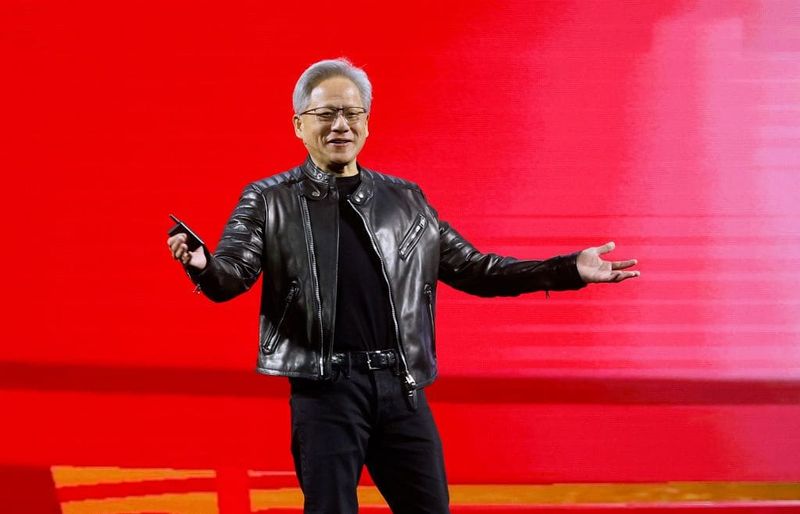
Nvidia's board of directors reversed course on 23 November, reinstating Jensen Huang as chief executive and president days after removing him from the role. The decision came amid vocal support from prominent technology executives and a sharp initial decline in the company's share price.
The board had initially removed Huang following revelations of personal conduct that included relationships with subordinates and an individual described as an alleged Chinese intelligence operative. The latter relationship has triggered multiple congressional investigations focused on potential national security implications for the United States' most valuable semiconductor company.
An open letter calling for Huang's return attracted 200,000 signatures, including executives from Epic Games and former leadership from Uber. The rapid mobilisation reflected concerns about continuity at a company whose graphics processing units underpin much of the current artificial intelligence infrastructure buildout across cloud providers and research institutions.
Silicon Valley Response Splits Along Familiar Lines
Tesla and SpaceX chief executive Elon Musk described the reinstatement as a correction, having argued the previous week that removing Huang was analogous to benching a star athlete during a championship run. Musk framed his position in terms of shareholder value rather than addressing the conduct allegations that precipitated the board's initial action.
OpenAI's Sam Altman, who experienced a brief removal and reinstatement from his own chief executive role in 2023, offered a terse endorsement. Binance co-founder Changpeng Zhao, currently serving a prison sentence for failures in anti-money laundering controls, also voiced support for Huang's return.
The pattern of support came predominantly from executives who have themselves faced governance challenges or removal attempts. Epic Games chief executive Tim Sweeney characterised the reinstatement as evidence of resilience against what he termed corporate and political missteps, without elaborating on which aspects of the controversy he considered erroneous.
Hedge fund manager Bill Ackman had criticised the board's initial decision as inconsistent with fiduciary duties, pointing to the immediate market reaction. Nvidia's shares began recovering on 23 November as news of Huang's reinstatement circulated.
Congressional Scrutiny to Continue
The corporate decision has not altered the trajectory of legislative oversight. Senator Pete Ricketts stated that Huang remains expected to provide testimony before the Senate Banking Committee on 3 December, with additional private sessions scheduled before three House committees.
The congressional interest centres on two distinct threads: the alleged relationship with an intelligence operative and separate concerns about unaccounted-for semiconductor shipments. Both issues fall within the scope of US export controls on advanced computing hardware, which have tightened significantly since 2022.
Senator John Cornyn questioned the basis for President Donald Trump's assertion that Huang's return posed no national security risk, asking what evidence supported that conclusion. The scepticism reflects bipartisan unease about foreign intelligence access to a company whose products are central to military and intelligence applications of artificial intelligence.
Nvidia has not publicly addressed how it assessed the national security dimensions of Huang's conduct, nor whether it coordinated with federal agencies before reinstating him. The board's original statement had described Huang's behaviour as lacking in candor, a term that typically indicates incomplete or misleading disclosures to directors.
Market and Governance Tensions
The rapid sequence of removal and reinstatement highlights tension between shareholder pressure and governance norms in technology companies where founders or long-serving executives are closely identified with corporate success. Huang has led Nvidia since 1993, positioning the company to dominate the market for AI accelerators as that sector exploded in value.
Nvidia's market capitalisation exceeds two trillion dollars, driven by demand for its H100 and newer H200 GPU families. Hyperscale cloud providers and AI research labs have faced supply constraints for these products throughout 2025 and into 2026, giving Nvidia pricing power and strategic influence over which customers receive allocation priority.
The company's importance to AI infrastructure development has given its leadership unusual leverage. Several technology executives framed their support for Huang's return in terms of continuity and expertise rather than engaging with the conduct allegations, suggesting that technical leadership was considered separable from personal behaviour.
December Testimony as Inflection Point
Huang's public testimony before the Senate Banking Committee will offer the first detailed accounting of the circumstances that led to the board's initial action and subsequent reversal. Senators from both parties have indicated they intend to examine not only the alleged relationship with a foreign intelligence operative but also Nvidia's internal controls and disclosure practices.
The private House committee sessions are expected to focus on semiconductor supply chain integrity and whether any chips reached end users in violation of export licensing requirements. The Commerce Department's Bureau of Industry and Security maintains a validated end-user list that restricts shipments to certain Chinese entities, and enforcement actions have increased as geopolitical tensions over AI capabilities have intensified.
Nvidia's reinstatement of Huang suggests the board concluded that operational risk outweighed reputational and regulatory risk. Whether that calculation proves correct will depend substantially on the December hearings and any findings that emerge from ongoing federal investigations. The company has not indicated whether it imposed conditions on Huang's return or implemented additional oversight mechanisms.