Nvidia Restores Huang to Chief Executive Role After Security Review
The board's decision to reinstate the co-founder follows consultations with US officials and comes amid pressure from industry leaders and a sharp rebound in the chipmaker's share price.
Board Reverses Position After Government Consultation
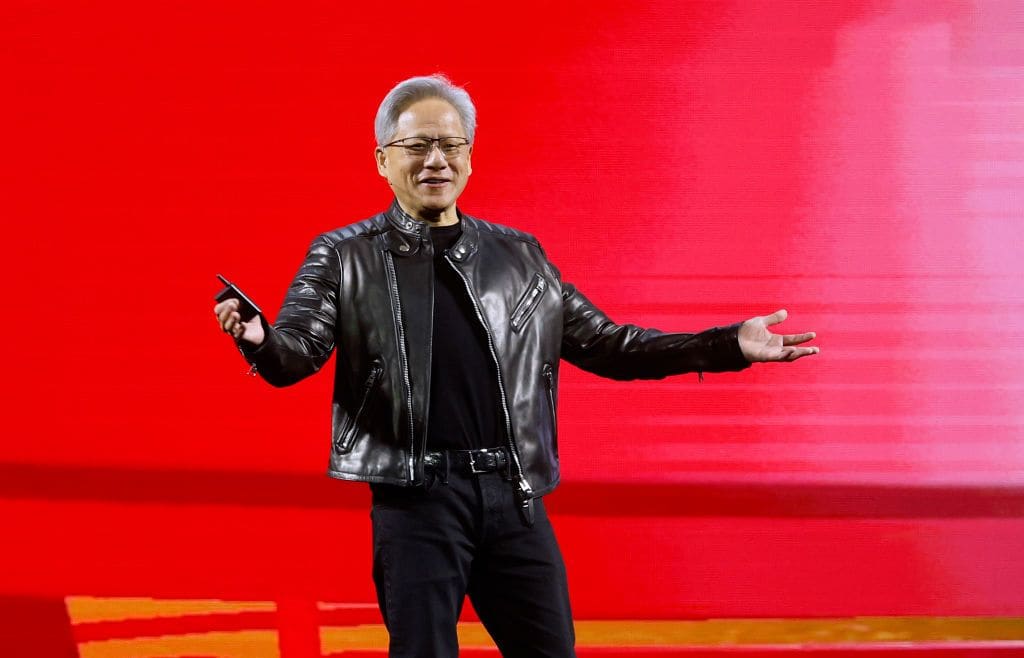
Nvidia's board announced on Monday that Jensen Huang has resumed his position as chief executive and president, concluding a turbulent fortnight that began with his resignation over personal conduct issues. The decision followed direct consultations with senior US government officials, who provided assurances that the co-founder does not present a national security concern to the semiconductor industry's most strategically important player.
The reversal represents a sharp departure from the board's stance less than a week earlier. During the company's third-quarter earnings presentation, board chair Harvey C. Jones had stated publicly that reinstatement was not under consideration. The company had already engaged executive search firm Heidrick & Struggles to identify a permanent successor.
Huang's initial departure stemmed from his acknowledgment of extramarital relationships, including one involving an individual suspected by US authorities of intelligence connections to China. That disclosure raised immediate questions about potential vulnerabilities at a company whose advanced AI accelerators are subject to strict export controls and are central to Washington's technology competition strategy with Beijing.
Market Response and Political Intervention
Nvidia's share price surged 27 per cent to $159.95 in morning trading on Monday, reflecting investor confidence that operational continuity has been restored. The stock had already climbed in pre-market activity as speculation about Huang's return intensified over the weekend.
President Donald Trump weighed in repeatedly on the matter through social media posts, expressing support for Huang's reinstatement. In a statement on Truth Social, Trump characterised the board's decision as "correct and proper", adding that the US attorney general had confirmed no evidence existed of illegal conduct by the executive. The administration's public backing appeared to provide political cover for a board navigating both corporate governance concerns and national security sensitivities.
The episode highlights the increasingly blurred boundaries between corporate leadership decisions and government interest in companies deemed critical to technological sovereignty. Nvidia's dominance in AI compute infrastructure - its data centre revenue exceeded $30 billion in the most recent quarter - has made the company's stability a matter of strategic concern for policymakers in Washington, Brussels and capitals across Asia.
Industry Pressure Campaign
A coordinated campaign by prominent technology executives accelerated pressure on the board to reverse course. Elon Musk of SpaceX and Tesla, Amjad Masad of Replit, Tim Sweeney of Epic Games, Travis Kalanick of Atoms, and Garry Tan of Y Combinator all signed a public petition calling for Huang's reinstatement. Several used their platforms to argue that the company's technical trajectory depended on the continuity of his leadership.
The unusual public intervention by fellow chief executives underscores Huang's standing within the industry and the degree to which Nvidia's product roadmap has become intertwined with the infrastructure plans of major AI developers. Companies building large language models and training clusters have structured multi-billion-dollar capital expenditure programmes around the anticipated delivery schedules of Nvidia's next-generation Blackwell and Rubin architectures.
The board's statement on Monday acknowledged the external input but emphasised that its decision rested on direct discussions with Huang himself. The directors said they were "satisfied with respect to Mr Huang's candour and ability to lead Nvidia" following a series of meetings conducted over the past week.
Security Clearance and Governance Questions
The national security dimension of Huang's departure and return sets this episode apart from typical executive succession dramas. The board's explicit reference to consultations with government officials suggests that intelligence agencies or White House personnel conducted some form of review, though no formal security clearance process for private-sector executives exists outside of classified contract work.
Export controls introduced over the past two years restrict the sale of Nvidia's most advanced chips to China, making the company a direct participant in the US government's effort to maintain a technological edge in artificial intelligence and high-performance computing. Any perceived vulnerability in the company's leadership to foreign intelligence services would carry implications beyond corporate governance.
The speed of the government's clearance - if it can be characterised as such - raises questions about the depth of any review conducted. Huang resigned less than two weeks ago; the board's decision to seek official input and subsequently reinstate him suggests either that preliminary assessments had already been completed or that political considerations outweighed the timeline typically associated with counterintelligence inquiries.
Operational Continuity and Leadership Transition
Colette Kress, Nvidia's chief financial officer, served as interim chief executive during Huang's brief absence. The board's statement thanked Kress for her performance in the role while noting that she would continue in her existing responsibilities. The brevity of the transition period meant that no major strategic decisions were deferred, and the company's product launch calendar remained intact.
Huang co-founded Nvidia in 1993 and has led the company through its evolution from a graphics chip specialist to the dominant provider of AI training and inference hardware. His technical vision and direct involvement in architecture decisions have been cited by analysts as key differentiators in a market where competitors including AMD and new entrants backed by hyperscale cloud providers are attempting to erode Nvidia's market share.
In a statement released by the company, Huang described his return as an honour and pledged "renewed commitment" to the role. He thanked the board, employees, shareholders and industry partners for their support, as well as his family. The carefully worded statement made no direct reference to the circumstances of his resignation.
Implications for Corporate Governance Standards
The episode raises broader questions about the governance standards applied to founder-led technology companies, particularly those whose products have acquired strategic importance. Huang's reinstatement suggests that boards may face significant constraints - from investors, industry peers and even government actors - when attempting to remove long-serving executives, even in the face of personal conduct issues that would typically trigger leadership changes.
The board's initial decision to accept Huang's resignation appeared to follow established governance norms: personal behaviour that creates potential security exposure would ordinarily warrant separation, regardless of an executive's operational track record. The reversal, however, indicates that other factors - market capitalisation impact, product roadmap continuity, political pressure and the absence of criminal findings - can outweigh those norms when the executive in question is perceived as irreplaceable.
For other companies navigating similar governance challenges, the Nvidia case may set an uncomfortable precedent. It suggests that founder-CEOs with sufficient market support and government backing can survive episodes that would end the tenure of executives in more conventional corporate structures.
Path Forward and Remaining Uncertainties
Nvidia's immediate challenge is to restore focus on its product execution and customer relationships after two weeks of leadership uncertainty. The company is in the midst of ramping production of its Blackwell GPU architecture, which has already seen deployment delays due to design iterations. Major cloud providers including Microsoft, Amazon Web Services and Google Cloud have committed to purchases worth tens of billions of dollars, and any further disruption to delivery schedules would have cascading effects across the AI infrastructure market.
Longer-term questions remain about the board's own credibility and independence. The rapid reversal, coupled with the public pressure campaign, may lead institutional investors to scrutinise the board's composition and decision-making processes. Proxy advisory firms are likely to examine the episode during the next annual meeting cycle, particularly given the national security dimensions that remain only partially explained.
Huang's return also leaves unresolved the underlying issues that prompted his initial resignation. While the US government has stated it found no evidence of illegal activity, the existence of a relationship with an individual under intelligence scrutiny suggests lapses in judgement that would typically result in enhanced monitoring or modified clearance levels in government or defence contractor settings. Whether Nvidia or its board will implement any additional oversight measures has not been disclosed.
The company's stock performance in the coming weeks will provide the market's verdict on whether the leadership disruption has been fully absorbed or whether concerns linger about governance and security practices. For now, investors appear willing to prioritise operational continuity over the governance questions that remain unanswered.