Tenstorrent Closes $1.5B Round at $6.2B Valuation, Betting on Open-Weight Inference
The chip startup, led by veteran engineer Jim Keller, spurned takeover interest and raised fresh capital to scale hardware optimised for DeepSeek-class models and video generation workloads.
The Round and the Rationale
Tenstorrent has closed a $1.5 billion financing at a $6.2 billion valuation, more than doubling the $2.6 billion post-money it carried at the end of 2024. Trace Capital, a new firm launched by Quiet Capital co-founder Ben Mahdavi, led the round alongside Innovation X. Cadence Ventures, Eclipse, Fidelity, SanDisk and T. Rowe Price also participated.
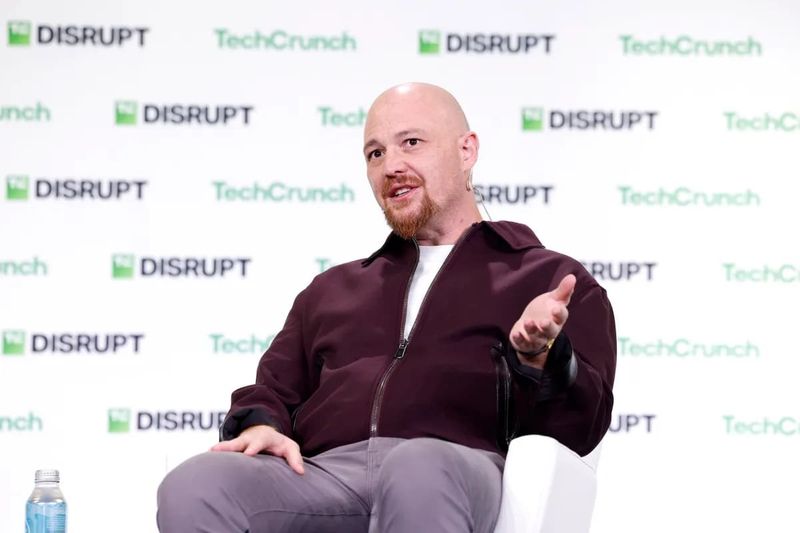
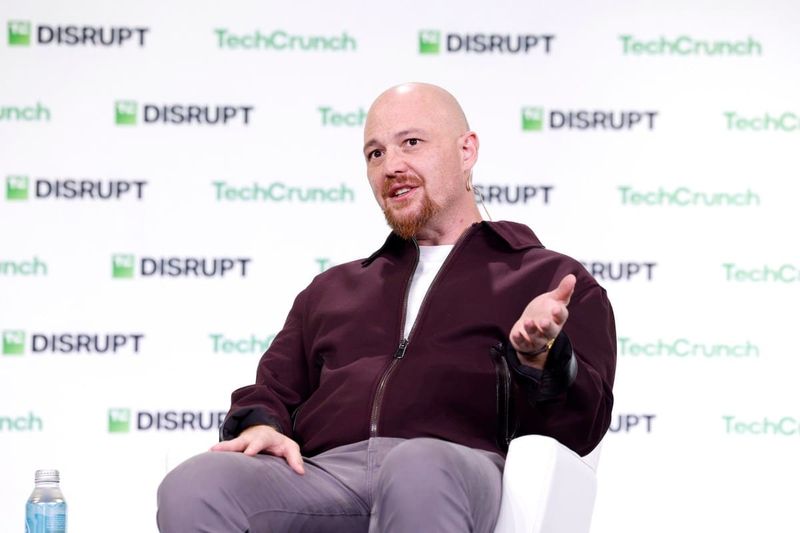
The deal arrives five months after Tenstorrent reportedly fielded acquisition approaches from Intel and Qualcomm at valuations approaching $5 billion. Instead of selling, the company chose to raise more capital and remain independent. CEO Jim Keller, the microprocessor designer whose résumé spans AMD, Apple and Tesla, framed the decision around a technical proof point: Tenstorrent's Galaxy servers successfully demonstrated inference on DeepSeek models, the family of open-weight large language models released by the Chinese AI lab.
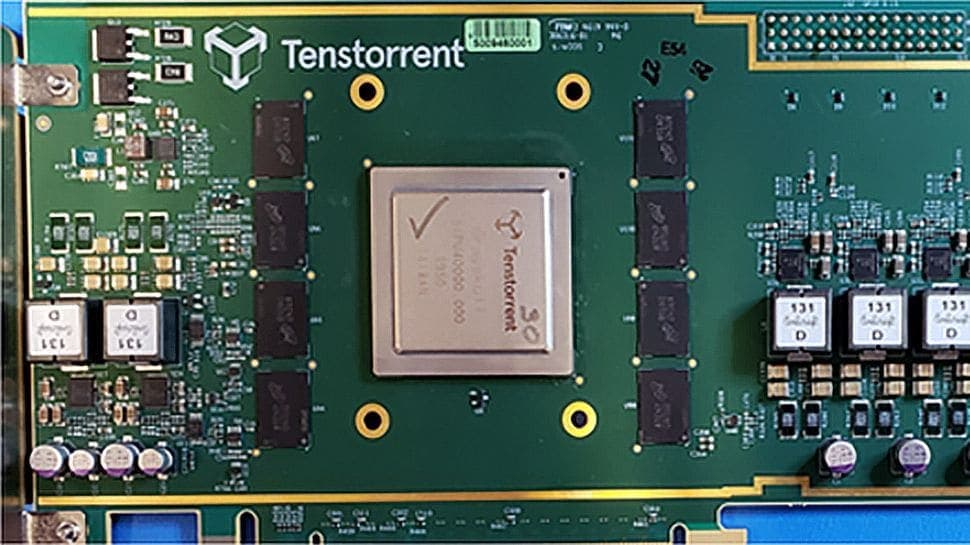
That demonstration appears to have reset the company's fundraising trajectory. The new capital will fund production scale-up for chips designed specifically for serving open-weight models and for video generation, two workload categories where Nvidia's dominance is contested but not yet broken.
Inference, Open Weights and the Nvidia Wedge
Tenstorrent's focus on inference distinguishes it from many AI chip challengers that target training. Inference - running a trained model to generate outputs - accounts for the bulk of deployed AI compute in production environments, and the cost structure is different. Training clusters run continuously at high utilisation; inference servers face variable request patterns, making efficiency and cost per token the primary design constraints.
Open-weight models compound that difference. Unlike closed APIs from OpenAI or Anthropic, open-weight models allow enterprises to run inference on their own infrastructure. The trade-off is operational: organisations must procure, configure and maintain the hardware themselves. For chip startups, that creates an opening. If a non-Nvidia accelerator can deliver comparable latency and throughput at lower unit cost or power draw, the switching cost drops sharply, especially when the model weights are public and the software stack is portable.
DeepSeek's models have become a reference benchmark precisely because they are open-weight, competitive in quality and widely deployed across Asia. Keller's decision to highlight Galaxy-on-DeepSeek performance signals where Tenstorrent expects its first volume deployments: enterprises and cloud providers serving open-weight workloads at scale, rather than frontier labs training proprietary models.
The Valuation Context
A $6.2 billion valuation for a ten-year-old chip startup without disclosed revenue might seem rich in another cycle. In the current AI infrastructure market, it sits in the middle of a wide band. Cerebras, which went public in 2024, trades at a market capitalisation that has fluctuated between $4 billion and $8 billion depending on quarterly results. Groq, another inference-focused accelerator company, raised at a reported $3 billion valuation earlier this year. At the upper end, Etched - a startup designing chips hardwired for transformer inference - has reportedly received investment offers valuing it at more than $40 billion, though no deal has closed at that level.
The spread reflects investor uncertainty about which architectural bet will capture share. Nvidia's CUDA moat remains formidable, but the sheer scale of inference demand, combined with the heterogeneity of workloads, suggests room for multiple winners. Investors are effectively buying options on different execution models: Cerebras on wafer-scale integration, Groq on deterministic low-latency serving, Etched on application-specific architecture and Tenstorrent on programmable, open-weight-optimised silicon.
Tenstorrent's valuation jump also reflects the composition of its investor base. Fidelity and T. Rowe Price bring crossover capital typically reserved for late-stage private companies with a visible path to public markets. Their presence suggests Tenstorrent is being underwritten not just as a technology bet but as a potential liquidity event within the next 18 to 24 months.
Keller's Credibility and the Engineering Narrative
Jim Keller's name carries weight in semiconductor circles. He led the design of AMD's K8 architecture, which broke Intel's server dominance in the mid-2000s, and later architected Apple's A-series mobile chips and Tesla's first custom AI silicon. His involvement lends Tenstorrent a narrative advantage: this is not a startup improvising around Nvidia's patents, but a ground-up rethink by someone who has shipped volume silicon at scale.
That credibility matters more in hardware than in software. Chip startups face a brutal capital cycle: tape-out costs run into tens of millions, fabrication lead times stretch six to nine months and design flaws discovered post-silicon can set a roadmap back by years. Investors fund not just the technology but the team's ability to navigate that gauntlet. Keller's track record de-risks the execution story, even if the product itself remains largely under wraps.
Tenstorrent has shared few public benchmarks beyond the DeepSeek demonstration, and the company has not disclosed which process node its current chips use, nor which foundry partner it relies on. That opacity is typical for pre-revenue or early-revenue chip startups, but it also means the valuation rests heavily on forward projections and investor confidence in the team.
The Open-Weight Tailwind and the Video Bet
The capital raise is explicitly earmarked for two workload categories: open-weight language models and video generation. Both are growing faster than closed-API inference, and both present distinct hardware challenges.
Open-weight models like DeepSeek, Llama and Mistral are increasingly deployed by enterprises that want control over data residency, model fine-tuning and cost predictability. Serving these models efficiently requires hardware that can handle variable batch sizes, support mixed-precision arithmetic and optimise for memory bandwidth rather than raw compute. Tenstorrent's architecture, which the company describes as a "distributed compute fabric," is designed to parallelise inference across multiple chiplets, reducing bottlenecks when serving large context windows.
Video generation - whether diffusion models like Stable Video or autoregressive models like Runway's Gen-3 - places even greater stress on memory subsystems. A single frame can require gigabytes of intermediate activations, and generating 24 frames per second demands sustained memory throughput that traditional GPU architectures struggle to deliver cost-effectively. Startups like d-Matrix and SambaNova have also targeted video inference, betting that custom memory hierarchies will undercut Nvidia's H100 and H200 on total cost of ownership.
If Tenstorrent can demonstrate a 30 to 40 per cent cost or power advantage on these workloads, it will find customers. The question is whether that advantage can be sustained across model generations, and whether the software stack - compilers, runtime libraries, developer tooling - can match the maturity of CUDA and Triton Inference Server.
The Competitive Landscape and the Risk Map
Tenstorrent is not alone in chasing Nvidia's inference market. Alongside the startups mentioned above, hyperscalers are designing their own accelerators: Amazon's Inferentia and Trainium, Google's TPU, Microsoft's Maia. These chips are captive - used only within the cloud provider's own infrastructure - but they set a price ceiling for third-party silicon. If AWS can serve Llama 3 inference at a certain cost per million tokens using Inferentia, an independent chip vendor must beat that price to win enterprise deployments.
The other risk is software lock-in. Nvidia's advantage is not just silicon; it is the toolchain. CUDA has two decades of library support, and frameworks like PyTorch and JAX assume CUDA semantics at the lowest level. Tenstorrent has invested in its own software stack, including a compiler called Buda and runtime support for PyTorch, but developer adoption remains unproven at scale. The company will need to convince not just CTOs but also ML engineers that switching accelerators will not slow down their deployment velocity.
Finally, there is geopolitical exposure. Tenstorrent has engineering centres in Toronto, Tokyo and Belgrade, and the company has previously announced partnerships with automotive and edge customers in Asia. If US export controls on AI chips tighten further, Tenstorrent's ability to sell into China or to supply Chinese cloud providers could be curtailed, narrowing its addressable market.
What Comes Next
With $1.5 billion in new capital, Tenstorrent has runway to scale production, hire aggressively and subsidise early customer deployments. The company will need to show volume shipments and public benchmarks to justify its valuation ahead of any eventual IPO or strategic exit.
The inference market is large enough to support multiple winners, but only if those winners can prove sustained differentiation. Tenstorrent's bet on open-weight models and video generation is well-timed, but execution will determine whether the company becomes the AMD to Nvidia's Intel, or another well-funded also-ran in a market where second place often means obsolescence.