Benchmark Admits AI's Economics Are Breaking Venture's Non-Compete Norm
As software-building costs plummet, even storied early-stage partnerships are colliding, and Silicon Valley's most founder-loyal firm says conflicts will multiply.
The Pact Is Fraying
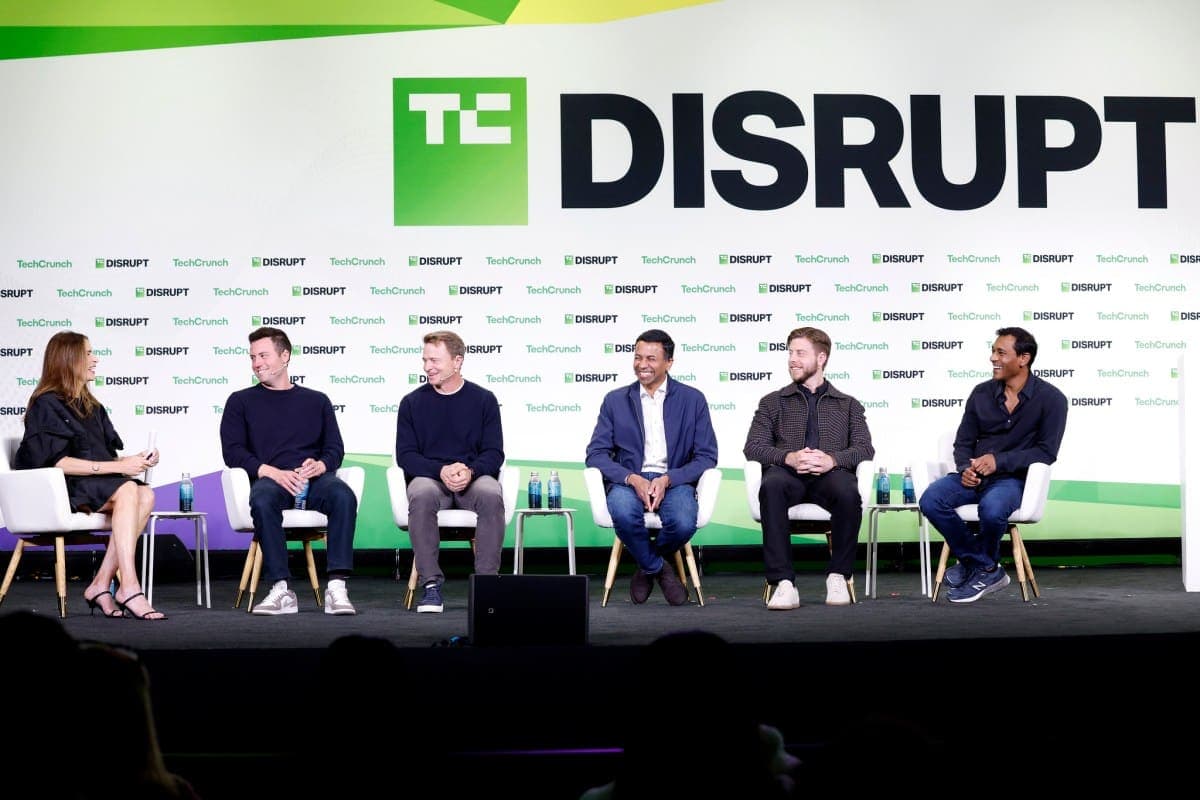
For thirty years, venture capital operated on a handshake principle: back one company per market, never two that compete directly. That understanding has been under stress since the large language model wave began, and at an industry conference earlier this month, partners at Benchmark said the norm can no longer be assumed.
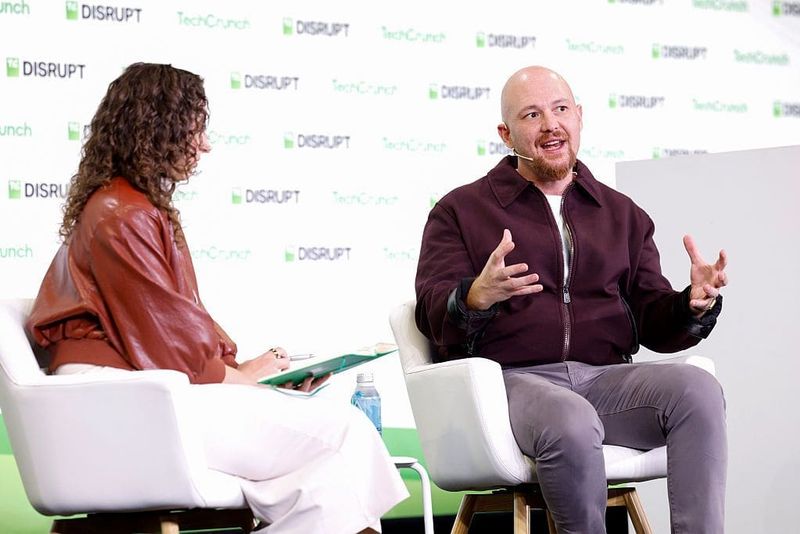
Benchmark has long positioned itself at the co-founder end of the investor spectrum, embedding in a single company per category and staying for a decade or more. Yet even it now describes conflicts as inevitable, not accidental. "You are going to get conflicts, and that's just the reality of the current dynamic," Eric Vishria told attendees, citing the speed at which companies pivot and expand.
Chetan Puttagunta pointed to the underlying shift: when the cost of building software "effectively goes to zero," founders see an enormous addressable surface and want to claim all of it. That ambition, he said, means portfolio companies will run into one another more often.
OpenAI, Anthropic, and Dozens of Shared Backers
The strain was visible well before this month's remarks. OpenAI and Anthropic, two of the most capitalised AI labs, share dozens of common investors. Sequoia Capital, Andreessen Horowitz, and a roster of other firms have written cheques to both, a situation that would have been unthinkable in earlier technology cycles.
At Opentechwire, we've tracked the funding rounds of Asia-based AI labs as well. In Seoul, Tokyo, and Singapore, the same phenomenon is unfolding: sovereign wealth funds, corporate venture arms, and crossover funds are placing bets on multiple foundation-model teams, hedging against uncertainty about which architecture or go-to-market strategy will dominate. The logic is straightforward: when the technical landscape shifts every quarter, exclusivity becomes expensive.
Factory, Cognition, and a Very Public Rupture
The abstract tension turned concrete at the end of September. Factory, which builds an AI agent that writes software, announced it had removed Chris Degnan as a board observer, alleging he had discussed employment with Cognition while attending Factory's board meetings. Cognition makes Devin, a direct rival coding agent. Degnan said he had already resigned and denied sharing confidential information; days later, he joined Cognition as chief revenue officer.
Vinod Khosla, whose firm backs both companies, defended Degnan on social media and called Factory "a struggling second tier competitor." The episode laid bare a dynamic that had been whispered about in term-sheet negotiations but rarely articulated in public: when a single investor owns stakes in two head-to-head competitors, loyalty becomes situational.
Benchmark's Reluctant Acknowledgement
Peter Fenton, a Benchmark partner, called the issue "kryptonite" and the firm's toughest problem. He described a spectrum of investor postures. At one extreme is the co-founder, who would never work on a competing company. At the other is the public-market portfolio manager, who can own shares in several rivals because capital allocation, not operational influence, is the relationship.
Benchmark sits near the co-founder pole, Fenton said, and treats transparency as non-negotiable. "There shouldn't be the surprise after the fact." If a conflict does emerge, founders should never feel shortchanged. Vishria added that Benchmark keeps what it learns confidential and noted that venture investors are "not product or technology experts" anyway, suggesting the risk of information leakage is overstated.
Still, the firm acknowledged that exclusivity, while "really important" at the seed and Series A stages it targets, is evolving. Vishria said Benchmark has been fortunate not to land in an "insane direct conflict" of the Factory-Cognition variety, but the qualifier implies the possibility is real.
Why AI Accelerates the Problem
The underlying cause is economic, not cultural. Training a foundation model still requires tens of millions of dollars and access to scarce GPU clusters, but fine-tuning an existing model, wrapping it in an API, and shipping a vertical application can now be done in weeks with a small team. That collapse in time and capital has two effects.
First, it lowers the barrier to entry, so more startups crowd into adjacent problem spaces. A company that began by automating customer-support tickets can add a coding agent in a quarter; a coding agent can add a data-analysis module just as quickly. The surface area Puttagunta referenced is not metaphorical. It is the expanding set of tasks that a single model, with modest prompt engineering and retrieval-augmented generation, can handle.
Second, it compresses the interval between funding rounds. Investors who used to have eighteen months to assess product-market fit before the Series B now face six-month cycles. That tempo pushes firms to deploy capital faster and into more deals, which in turn raises the statistical likelihood of overlaps.
The Asia Parallel: Corporate Venture and Sovereign Funds
In Asia, the conflict-of-interest question plays out differently because the investor base is more concentrated. Samsung Ventures, SoftBank Vision Fund, Temasek, and GIC appear across dozens of cap tables in AI infrastructure, edge inference, and vertical agents. These entities often have strategic mandates that extend beyond financial return: securing supply-chain access, ensuring domestic compute capacity, or building leverage in standards negotiations.
When a corporate venture arm backs two companies building inference accelerators, the logic may be portfolio hedging, but it can also be a hedge against geopolitical supply risk. Founders in Bengaluru and Jakarta understand that their backers may be optimising for objectives orthogonal to their own growth, a dynamic that adds a layer of complexity absent from the Silicon Valley model.
What Founders Should Expect
Benchmark's candour is unusual, and that may be the point. By stating the problem aloud, the firm signals that it will not pretend conflicts do not exist. Other firms have remained silent or offered boilerplate assurances that "we manage information barriers" without explaining how those barriers work when the same partner sits in two competing board meetings.
Founders evaluating term sheets should now ask explicit questions: Does the firm have another investment in this category? If a conflict emerges, who decides which company receives priority on introductions, follow-on capital, or the partner's time? Will the firm commit in writing to recusal protocols, or is the answer that "we'll handle it case by case"?
The answers will vary. Some firms will continue to operate on the old exclusivity model, particularly those that write smaller cheques and take fewer board seats. Others will adopt the hedge-fund posture, owning multiple bets and offering less operational involvement in exchange for speed and capital. Benchmark is trying to hold a middle position, but its partners' remarks suggest that position is becoming harder to defend.
The Structural Shift
The deeper question is whether the venture model itself is suited to a world in which product categories emerge and blur in months rather than years. The traditional partnership between investor and founder assumed a stable competitive landscape over a five-to-seven-year horizon. If that landscape now reshapes itself every eighteen months, the exclusivity pact may be less a matter of ethics and more a relic of slower cycles.
Puttagunta's observation that software-building costs are approaching zero is not hyperbole. Inference costs have fallen by an order of magnitude in two years; code-generation models can now scaffold a working prototype from a natural-language specification; and the marginal cost of adding a new feature, if that feature is AI-native, is often just the API call. In that environment, every company becomes a potential rival to a dozen others, and every investor's portfolio becomes a latticework of potential conflicts.
Benchmark is not declaring the pact dead, but it is acknowledging that the pact now has exceptions, and those exceptions are multiplying. For founders, the practical implication is straightforward: assume your investors have other bets in adjacent spaces, ask for transparency, and build leverage through execution rather than relying on investor loyalty. The handshake era is not over, but the handshake now comes with fine print.