Replit Drops Anthropic in Favour of OpenAI Partnership
The AI coding platform cites performance benchmarks and cost considerations behind the shift, though the timing and rationale raise questions about vendor lock-in risk.

The Switch
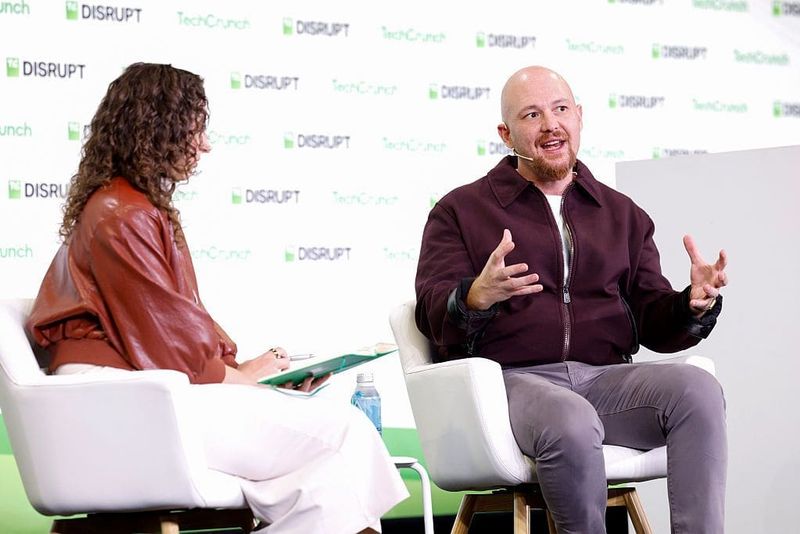
Replit has severed its partnership with Anthropic, moving entirely to OpenAI's models for the cloud-based development platform used by thousands of startup founders and engineers across Asia and beyond. Amjad Masad, the company's CEO and co-founder, disclosed the change on Thursday, citing a combination of cost efficiency, model performance, and partnership dynamics.
The announcement came months after Replit formalised a tie-up with OpenAI in August, though at the time the company gave no indication it was winding down its relationship with Anthropic. Replit's platform allows users to build and deploy applications directly in a browser, and it had relied on Anthropic's Claude family of models to power core features. That arrangement reportedly contributed to substantial revenue growth over the past year.
Masad framed the decision as rooted in internal assessment. The company runs proprietary benchmarks to evaluate model behaviour, he explained, and OpenAI's offerings now deliver stronger results for the kinds of tasks Replit prioritises. "ChatGPT is better now," Masad said, adding that Replit's public benchmark consistently shows its own models, Sol and Astra, performing more reliably when generating applications from minimal prompts.
Yet the narrative is not entirely settled. At least one person with knowledge of the Anthropic relationship contested the claim, asserting that the partnership remained active. A Replit blog post published in September referenced Anthropic's Claude Fable 5 and Claude Fable 5.1 models as part of the production environment for Replit Agent, the company's AI-assisted coding tool. The discrepancy suggests either a very recent pivot or miscommunication about contractual status.
Why Model Choice Matters for Platform Companies
For a company like Replit, the choice of underlying model is not merely technical. It shapes user experience, influences operating margin, and signals strategic alignment. Large language models remain expensive to run at scale, particularly for inference-heavy workloads such as real-time code generation. Even marginal improvements in throughput or accuracy can translate into meaningful cost savings when multiplied across millions of sessions.
At Opentechwire, we've tracked a broader pattern: platform companies initially hedged by working with multiple model providers, then consolidated as pricing pressure intensified and differentiation between frontier models narrowed. Replit's shift mirrors moves by other developer-tool startups in Singapore, Bengaluru, and San Francisco that have quietly renegotiated terms or switched vendors over the past six months.
Performance benchmarks, however, are rarely apples-to-apples. Replit's internal metrics emphasise "vibe-coded applications", a colloquial term for tools that generate functional software from conversational or loosely specified input. OpenAI's GPT-4 and its successors have shown strength in natural-language-to-code tasks, but Anthropic's Claude models have historically excelled at longer context windows and nuanced instruction following. The question is whether Replit's use case favours one profile over the other, or whether cost considerations ultimately dominated the calculus.
Enterprise Revenue Takes Centre Stage
Masad also used the occasion to share updated growth figures. Enterprise customers, virtually negligible a year ago, now account for roughly 15 per cent of Replit's revenue, he said. Business-to-business contracts more broadly represent over half of total income, a sharp pivot from the platform's origins serving individual hobbyists and early-stage founders.
The shift reflects a common trajectory among developer platforms: land with a freemium or low-cost tier to build network effects, then climb upmarket as margin pressure mounts and venture investors demand unit economics that pencil out. Replit did not disclose annual recurring revenue, but the enterprise mix suggests the company is preparing either for profitability milestones or a future funding round where revenue quality will matter as much as headline growth.
Enterprise adoption also changes the stakes around model choice. Large organisations often require contractual guarantees around uptime, data residency, and audit trails. If OpenAI can offer better service-level agreements or tighter integration with enterprise identity systems, that alone might justify the switch, independent of raw model performance.
The Habitat Metaphor and AI Safety
Masad spent part of his remarks outlining what he calls the "habitat" for AI agents: the surrounding infrastructure that allows models to operate reliably in production. Orchestration, error recovery, sandboxing, networking, identity, and authorisation all sit outside the model itself but determine whether an AI tool can be deployed safely at scale.
The framing is useful. Much of the public conversation around AI safety centres on model behaviour, alignment research, and catastrophic risk. Masad's point is more prosaic but no less important: even a well-aligned model can cause harm if it runs in an environment with poor access controls or inadequate rollback mechanisms. For a platform handling live code execution, those guardrails are existential.
Replit's architecture gives it unusual exposure. Unlike a chatbot or image generator, the platform executes arbitrary code on behalf of users, often in shared or multi-tenant environments. A poorly scoped agent could leak credentials, corrupt a database, or inadvertently expose proprietary logic. The company has invested heavily in containerisation and runtime isolation, but the risk surface remains large.
That operational context may also bear on the choice between Anthropic and OpenAI. If one provider offers better tooling for function calling, rate limiting, or audit logging, those features could outweigh differences in raw language understanding.
What the Departure Signals
Anthropic has positioned itself as the enterprise-friendly alternative in the foundation-model market, emphasising safety research, constitutional AI, and transparent model cards. Losing a high-profile integration like Replit, assuming the departure is confirmed, would be a setback for that narrative.
For OpenAI, the win reinforces its dominance among developer-facing platforms. The company has aggressively courted startups with flexible pricing, API reliability, and a broad model portfolio that spans reasoning, vision, and code. If Replit's decision was indeed driven by performance on public benchmarks, it suggests OpenAI has closed gaps that existed a year ago when Claude models held an edge in certain coding tasks.
The episode also underscores a structural challenge for any company building on third-party models: vendor lock-in cuts both ways. Switching costs are real, but so is the risk of being tied to a single provider whose roadmap, pricing, or policy stance may shift. Replit's ability to move from Anthropic to OpenAI in a matter of months suggests the company has maintained enough abstraction in its stack to swap providers without rewriting core systems. That flexibility is a competitive asset in a market where model leadership can change with a single release.
Open Questions
Several points remain unresolved. If Anthropic models were still cited in production as recently as September, what triggered the final break? Did OpenAI offer preferential terms tied to the August partnership announcement? And how does Replit plan to handle the risk that another model provider, whether from China, Europe, or an open-source consortium, might leapfrog OpenAI on the metrics that matter to code generation?
The company's refusal to disclose annual recurring revenue also limits outside assessment of whether the enterprise push is yielding the margin improvement needed to justify the pivot. Enterprise deals often come with heavy implementation costs, custom integration work, and multi-year support commitments. If those contracts are not materially more profitable than self-serve subscriptions, the growth story becomes less compelling.
Finally, the safety and infrastructure investments Masad described are table stakes, not differentiators. Every serious platform in this category is building similar guardrails. The question is whether Replit can translate those capabilities into a defensible moat, or whether the value accrues primarily to the model providers whose intelligence sits at the core of the product.
For now, the move to OpenAI appears to be a bet on performance, cost, and partnership depth. Whether it pays off will depend on factors Replit controls and many it does not.