Replit Switches Default AI Partner to OpenAI, Shrinking Anthropic Footprint
The cloud coding platform's CEO cites performance and cost as Anthropic falls from top-five customer status, though Claude models remain accessible.
A Quiet Pivot in the AI Coding Stack
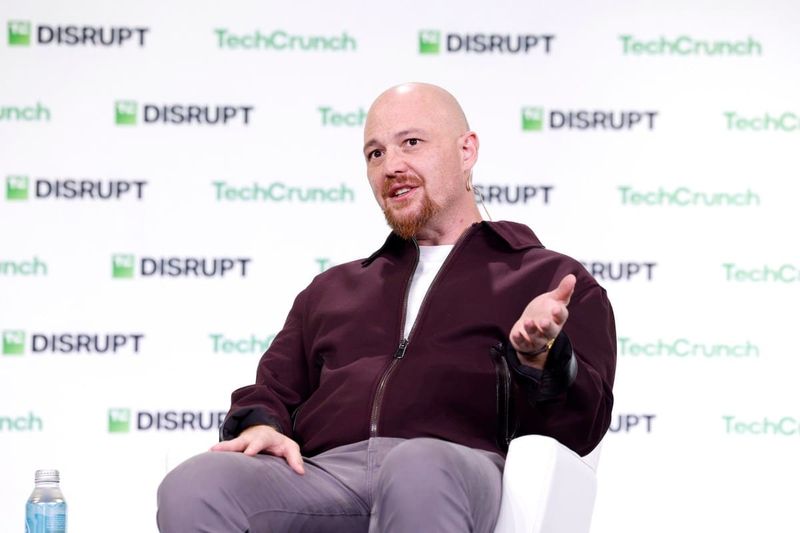
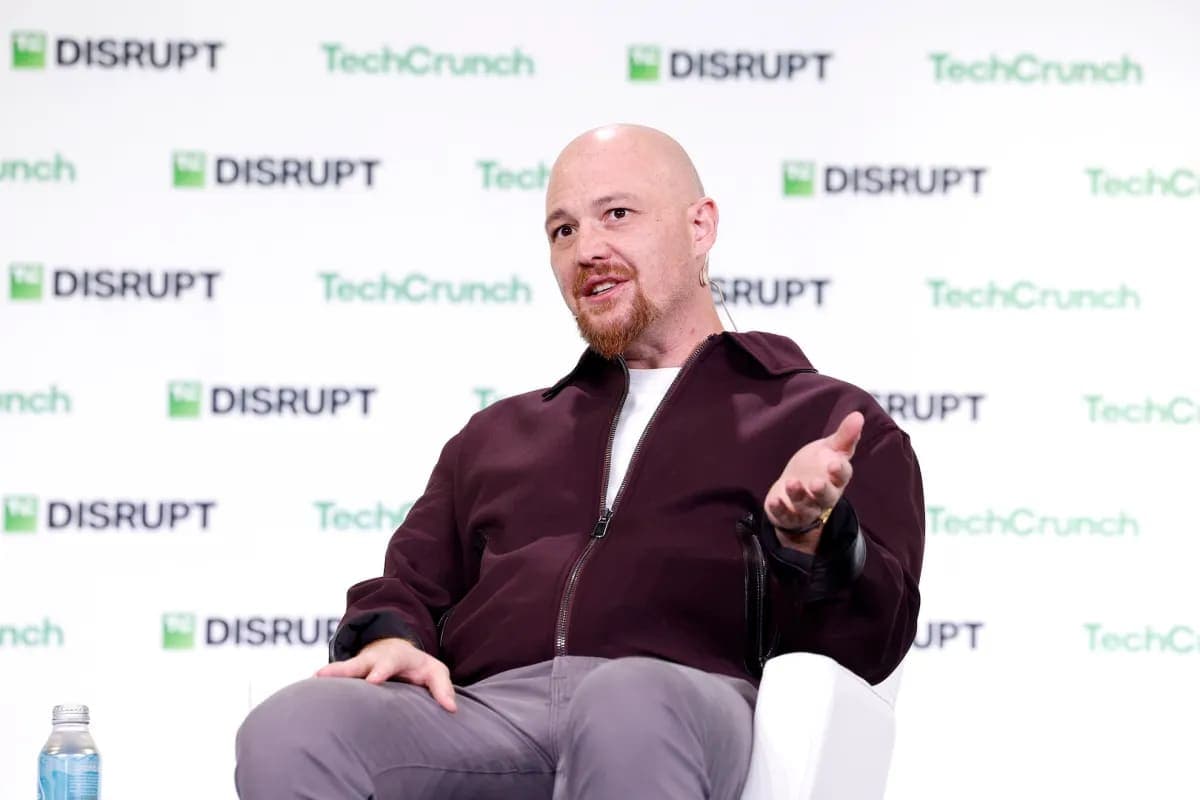
Replit, the browser-based development platform that has drawn hundreds of thousands of developers and startup founders into its orbit, has reconfigured its AI infrastructure in a way that quietly reshapes the competitive landscape for foundation model providers. CEO and co-founder Amjad Masad confirmed last week that OpenAI is now the default partner powering Replit's core Agent product, a change that demotes Anthropic's Claude from its previous position as the platform's primary inference engine.
The shift, Masad explained, was driven by a combination of performance metrics, cost considerations, and partnership dynamics. "I think ChatGPT is better now," he said, referencing internal benchmarks the company runs to evaluate model quality on tasks like generating working applications from natural-language prompts. He added that Replit's public benchmarks, which test models named Sol and Astra, consistently show OpenAI's offerings outperforming alternatives when building what he calls "vibe-coded applications" from scratch.
While Anthropic's Claude models remain accessible to Replit users who manually select them, the default setting carries disproportionate weight. Most users accept the pre-selected option, meaning the infrastructure change is likely to redirect a substantial portion of Replit's inference spend away from Anthropic. Until recently, Masad noted, Replit ranked among Anthropic's top five customers by volume, a position that underscores the revenue impact of losing default status on a platform processing millions of coding sessions.
The Economics of Model Switching
At Opentechwire, we've tracked how quickly partnerships in the foundation-model economy can shift when performance gaps narrow or cost structures change. Replit's move illustrates a broader dynamic: as OpenAI, Anthropic, Google, and others converge on similar capabilities for code generation and reasoning tasks, switching costs for platform builders drop, and marginal advantages in speed, accuracy, or per-token pricing become decisive.
Replit announced a partnership with OpenAI in August, but the company did not disclose at the time that it was pulling back from Anthropic. The lack of transparency around the transition became apparent only when Masad addressed the change publicly. In the weeks leading up to his comments, Replit's own blog and social media channels continued to highlight Anthropic's Claude Fable 5 and Fable 5.1 models as part of the Agent production environment, and a product team member promoted Anthropic's Opus 5.5 flagship on social media.
After clarifying the arrangement, Masad emphasised that Replit remains "model agnostic," a stance that reflects the platform's broader strategy of not locking users into a single provider. Yet the distinction between access and default is critical. By making OpenAI the path of least resistance, Replit has effectively made a strategic bet on which model family will deliver the best experience for the majority of its users over the coming quarters.
Enterprise Revenue Climbs as Replit Matures
The infrastructure decision comes as Replit's business model evolves. Masad shared that enterprise contracts, which accounted for roughly 2 per cent of revenue last year, have grown to approximately 15 per cent this year. More than half of the company's revenue now comes from business-to-business relationships, a significant shift for a platform that initially built its reputation serving individual developers and small teams.
Looking ahead, Masad expects enterprise and government customers to contribute more than half of Replit's revenue in 2027, a projection that suggests the company is navigating the transition from developer tool to enterprise platform. That shift typically brings new requirements around compliance, security, and support, which in turn influence infrastructure choices. OpenAI's enterprise offerings, including dedicated capacity and fine-tuning options, may have played a role in Replit's decision to deepen that partnership.
The revenue mix change also aligns with a broader trend across Asia-Pacific and North American developer platforms: as venture funding for startups has tightened, companies like Replit are leaning more heavily on revenue from established organisations with predictable budgets and longer contract cycles. The enterprise segment tends to be less price-sensitive but more demanding on reliability and integration, factors that could favour the stability of a default provider relationship over a multi-vendor approach.
Safety, Orchestration, and the Agent Habitat
Masad also used the opportunity to outline his thinking on AI safety in the context of autonomous coding agents. He described the concept of a "habitat" for agents, an environment that includes orchestration, error recovery, security sandboxing, networking, identity, and authorisation. "In the same way that us humans need a certain environment to work, agents need a habitat for them to exist and do good work," he said.
The framing is instructive. Rather than treating safety as a model-level property, Replit is building it into the platform layer, where the company has direct control over how agents interact with code repositories, external APIs, and user data. This approach mirrors the philosophy emerging among cloud providers and developer platforms that host generative AI workloads: the model is a component, but the real value and risk management happen in the surrounding infrastructure.
For Replit, that infrastructure now defaults to OpenAI's models, but the architecture is designed to accommodate others. Whether that flexibility translates into sustained multi-vendor adoption or simply serves as insurance against future performance shifts remains to be seen. What is clear is that Replit's choice sends a signal to other platforms evaluating similar trade-offs: performance and cost matter, but so does the willingness of a model provider to invest in partnership, integration, and joint go-to-market efforts.
The Broader Implications for Model Providers
Anthropic's loss of default status at Replit is unlikely to destabilise the company, which has raised billions in funding and counts major enterprises and governments among its customers. But the episode highlights a vulnerability inherent in the foundation-model business: large customers can switch quickly, and the difference between being the default and being an option on a menu is the difference between steady revenue and occasional usage.
For OpenAI, the win reinforces its position as the go-to provider for platforms that need a combination of performance, scale, and brand recognition. The company's partnerships with Microsoft, its enterprise infrastructure, and its continuous model updates have created a flywheel that makes it difficult for competitors to dislodge, even when they match or exceed OpenAI on specific benchmarks.
Replit's decision also underscores a challenge facing all foundation-model providers: as customers become more sophisticated in their evaluation methods, they will benchmark relentlessly, switch when it makes sense, and negotiate hard on price. The era of long-term, exclusive partnerships in this segment may be shorter than many anticipated, replaced by a more transactional dynamic where performance and cost are re-evaluated every few months.
In the near term, Replit's shift will be watched closely by other developer platforms, infrastructure providers, and enterprises running their own AI products. The question is not whether others will follow, but under what conditions the calculus that led Replit to favour OpenAI will apply elsewhere.