The Smart TV Debloat Wave Stops Where the Ad Money Starts
The cleanyourtv project passed 19,000 GitHub stars in five days by letting a coding agent strip the advertising and telemetry packages out of an Android TV. It works on the platform where the set maker licenses someone else's operating system, and not on Samsung or LG, the two companies selling the most television advertising in Southeast Asia.
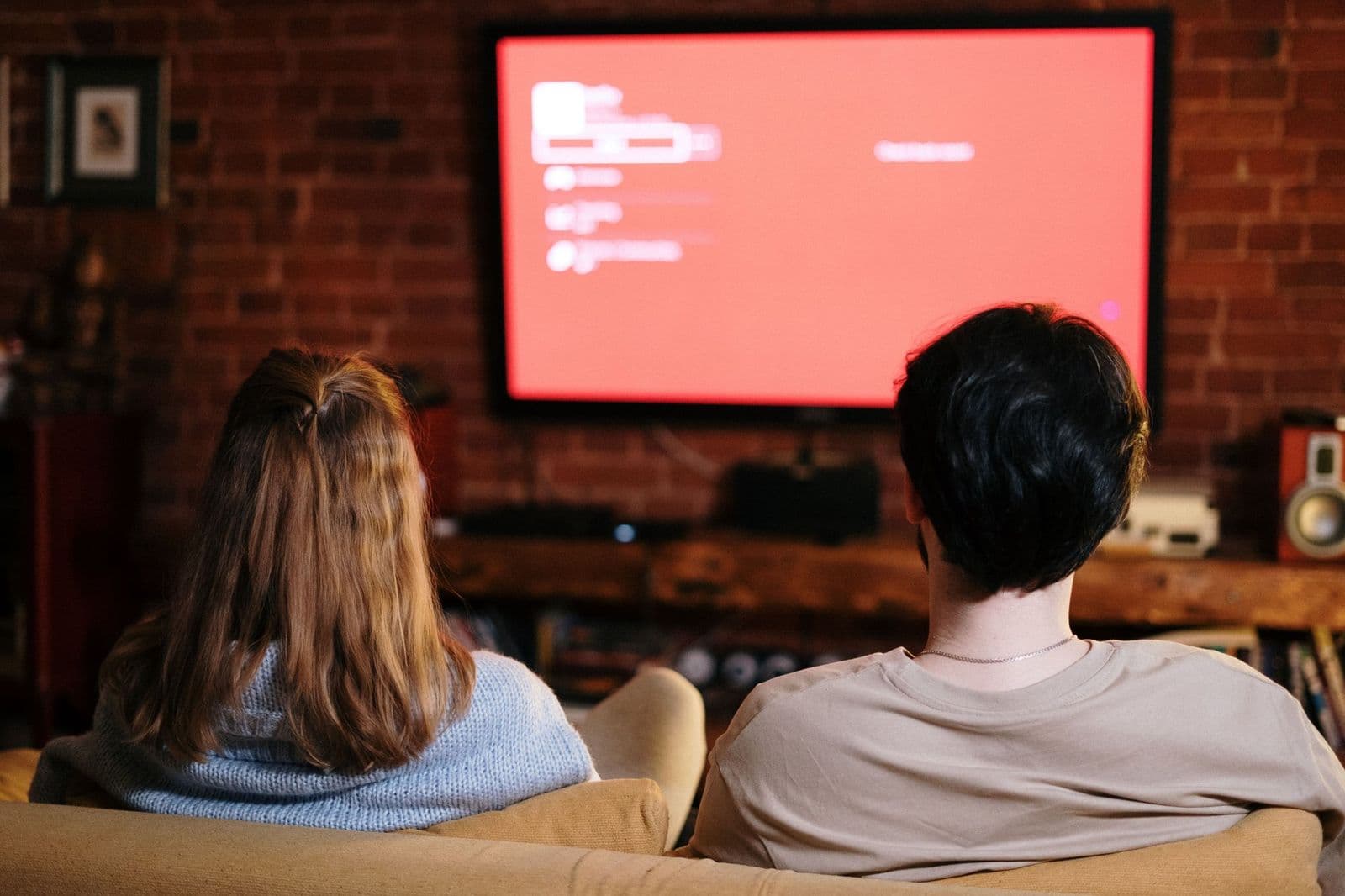
A GitHub repository published on 17 October 2026 had collected about 19,200 stars and 2,100 forks by 22 October, five days later. The project, cleanyourtv, is a single prompt file written by a developer identified in press coverage as Gathin T., who built it after getting tired of the advertising on his parents' Xiaomi television. Pasted into a coding agent such as Claude Code, Codex or Gemini CLI, it connects to a television over Wi-Fi using Android's debug bridge, disables the preloaded advertising and telemetry packages, and installs a 445 KB launcher in place of the manufacturer's home screen. No root access, no cable. The repository ships a restore script, carries an MIT licence, and was renamed from tv-vibehack on 19 October.
It does not work on a Samsung or an LG.
Why This Is Worth Reading Closely
The coverage has read this as a consumer revolt against the advertising business built into modern televisions. The more useful reading is about which companies are exposed to that revolt and which are not. The tooling works on Android TV and Google TV, where the set maker licenses an operating system it did not build and where the platform revenue largely belongs to Google. It stops at Samsung's Tizen and LG's webOS, the two platforms whose owners control the operating system and the advertising sales business on top of it, and who are currently expanding that business across Southeast Asia. The practical lesson a television manufacturer takes from a week like this one is that owning the stack is what keeps the revenue defensible.
What the Tool Actually Does
Android's debug bridge is a developer utility that has shipped with the platform for years. Enabling it takes a visit to developer options and one authorisation, after which the agent runs "pm disable-user" against named packages: recommendation engines, sponsored-row services, voice assistants, telemetry collectors. Nothing is uninstalled, which is why a restore script works, and why a firmware update can quietly put the packages back. The repository includes a check.py script for exactly that case.
What the agent supplies is not a new capability. Debloating Android devices over ADB is old, and third-party launchers such as ATV Launcher, Projectivy and FLauncher predate all of this. What changed is that identifying the right packages on a specific model used to require someone who knew the platform, and an agent that can read a package list and a model number removes that step. Gathin estimates on his donation page that a few thousand people ran the prompt within two days of publication, a figure he supplied himself.
The failure modes are real. ADB over the network runs unencrypted on port 5555, and on some firmware any device on the same Wi-Fi can issue commands to the set while debugging is on. At least one user reported bricking a television.
The Pattern Around It
cleanyourtv is one of several projects that appeared in the same week. dumbtv, by Muzzammil Yasin Sabuwala and announced on 18 October, targets Amazon Fire TV, disables about 65 packages and installs a 41 KB launcher. Mihir Gupta replaced a 192 MB stock launcher with an 83 MB one. How many televisions it actually covers is the one number nobody agrees on. Android Authority reported the developer claiming tests across more than 80 models from over two dozen brands on 20 October. Decrypt counted 107 models from 37 brands the same day. The repository itself listed more than 170 two days later. The figure is self-reported and moving, and none of the three has been checked independently.
The growth curve is firmer. It's FOSS recorded 1,300 stars and 146 forks on 19 October. Decrypt recorded 10,700 stars and 1,200 forks on 20 October. GitHub showed about 19,200 stars and 2,100 forks on 22 October. The project's own press page lists 83 articles from outlets in 22 countries, a count it compiled itself.
Across all of them the coverage names the same platforms: Xiaomi, TCL, Sony, Philips, Hisense, Nvidia Shield, Amazon Fire TV. Samsung and LG appear in these articles mainly as the sets people wish they could do this to.
The Money Sits in the Platform
The reason manufacturers load a television this way is visible in the filings of the company that makes the model clearest. In the quarter ended 30 June 2026, Roku reported platform revenue of US$1.22 billion against device revenue of US$133.7 million, per its 8-K filing. Platform gross profit was US$646.8 million. Device gross profit was US$26.9 million, and Roku stated that excluding an IEEPA tariff refund, device gross margin for the quarter would have been negative 7.6 per cent. The hardware is a cost of acquiring the account.

Vizio reached the same shape earlier. In its first quarter of 2023 it turned US$231.2 million of device revenue into US$1.6 million of device profit, while its Platform Plus segment turned US$125.5 million of revenue into US$73.8 million of gross profit.
Both figures describe US-listed businesses, and neither is an Asian manufacturer. No comparable segment disclosure exists for Xiaomi's or TCL's television platforms, so the per-unit economics in Asia's markets cannot be stated with the same confidence. What can be stated is that the sales infrastructure is being built here now. On 13 February 2026, Samsung Ads named Teads its exclusive local reseller for connected-TV home screen inventory in Vietnam, the Philippines, Thailand, Malaysia, Hong Kong and Taiwan for 2026 and 2027, with Indonesia included on a non-exclusive basis and Singapore retained in-house. Emmanuel Fischmeister, Teads' senior vice-president for business development in Asia-Pacific, described the home screen as "the front page of the living room." The inventory being sold under that agreement is the surface cleanyourtv was written to remove, on the one operating system cleanyourtv cannot reach.
LG's position points the same way. LG Ad Solutions reported first-half 2026 revenue up roughly 50 per cent year on year and projects US$850 million to US$1 billion for the full year, with founder and board member Ashish Chordia saying the company will begin full-scale IPO preparations once a current tender offer closes.
The Part That Complicates This
Android TV and Google TV are not a marginal platform. Figures compiled in August 2026 by the research aggregator VoxBooster, citing Omdia, put the combined Android TV and Google TV share of global smart television operating systems at 28.6 per cent, ahead of Tizen at 21.4 per cent and webOS at 14.8 per cent. These are compilations of other people's figures, so they should be treated as indicative. On that basis the debloat tooling reaches the largest single platform by installed base, and Google sells advertising on it. The wave is not hitting an empty target.
The wall around Samsung and LG is also lower than a flat reading of it suggests. Android Authority reports a webOS launcher fork for LG sets, notes that users have attempted brute-force debloating on Samsung televisions at the risk of bricking them, and points out that DNS-level ad blocking works on any platform. What it also says is that expecting results on those platforms to match what the Android TV tooling achieves would be unrealistic. The accurate claim is narrower than the one the coverage invites: this method does not reach Tizen or webOS, and the partial workarounds that do reach them are harder, riskier and less complete. It's FOSS puts Samsung, LG and Roku in the same category, as systems the debug method simply does not apply to.
Why That May Not Matter Much Yet
One. The metric being quoted is a developer metric. Nineteen thousand GitHub stars measures interest among people who use GitHub. The only user-side number in circulation is the project author's own estimate of a few thousand installations in two days, which is three orders of magnitude below the televisions sold into these markets in the same period. Some of the adjacent projects are thinner still: TV Detox, by the YouTuber Ansub Khan, was tested on emulators and not on physical sets, per Android Authority.
Two. The change is not durable without maintenance, and it carries a cost most households will not accept. Packages are disabled and left on the device, and firmware updates restore them. A household that runs this once and never thinks about it again gets its sponsored rows back on the next update. Modifying the software also voids the warranty, which rules out the newest and most expensive sets, the ones whose owners the advertising business most wants.
Three. The door is already closing in places. ADB over the network is a platform setting, and Amazon currently blocks some actions on Fire TV outright, including replacing the home screen. Google and the set makers can restrict or remove network debugging in a firmware release, and nothing in the current wave gives them a reason not to. There is a second-order risk pointing the same way: a tool assembled by a coding agent and pasted from a public prompt file is a plausible target for prompt injection, which is an argument platform owners will be happy to make.
The real test is whether any manufacturer tightens developer access in a shipping firmware update over the next two quarters. That would be the clearest evidence that the behaviour registered as a commercial risk. None of the companies named here has commented publicly on the projects as of 22 October 2026, and none of the coverage reviewed for this piece carries a manufacturer response.
What to Watch
Three things are checkable. First, whether Android TV or Fire TV firmware releases in the coming months restrict network ADB or launcher replacement, which would appear in platform release notes. Second, whether Samsung Ads and Teads extend the Southeast Asia reseller agreement beyond 2027, and whether Samsung's home screen ad formats expand into the markets currently held in-house. Third, whether LG Ad Solutions files publicly, which would put audited segment numbers for a television maker's advertising arm into the record for the first time.
Until one of those moves, the sensible reading is that a few thousand households rearranged their home screens, and the companies with the most advertising revenue at stake were not among the ones affected.
Sources. Reporting by TechCrunch (19 October 2026), It's FOSS (19 October 2026), Decrypt, Android Authority and TechRadar (20 October 2026); the cleanyourtv repository and its README on GitHub; repository statistics from Trendshift; Roku's Form 8-K for the quarter ended 30 June 2026, filed with the US Securities and Exchange Commission; Samsung Ads and Teads company announcement of 13 February 2026; trade reporting on LG Ad Solutions and on Vizio; and smart television operating-system share figures compiled in August 2026 citing Omdia and others.