Pony.ai and Uber Target London for Next Robotaxi Deployment
The Chinese autonomous vehicle maker's seventh-generation fleet will extend a European partnership that began in Zagreb and aims for 2,000 vehicles across five cities.
London Trials Mark Next Phase
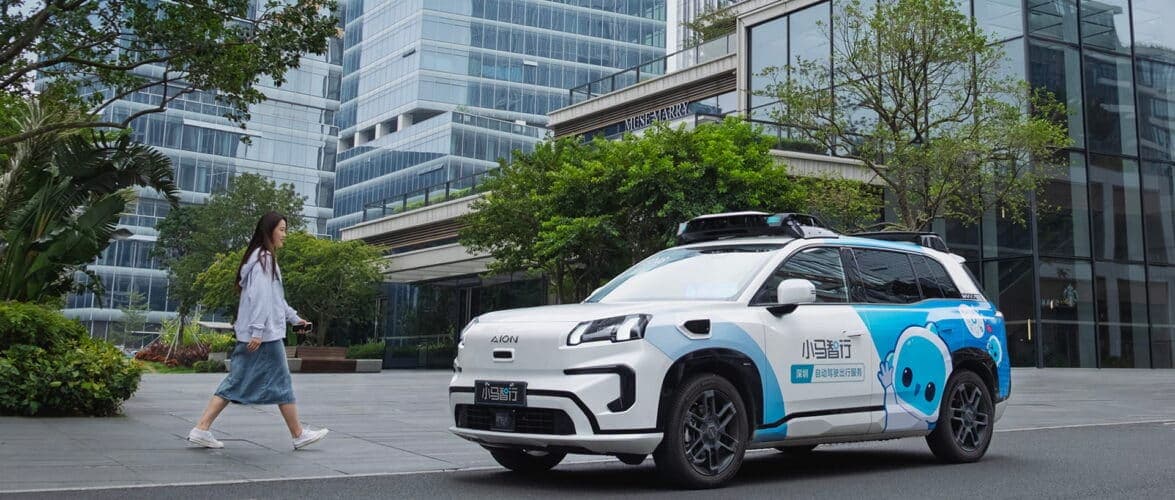
Pony.ai and Uber announced on 8 October that London will host trials of the Chinese firm's seventh-generation autonomous vehicles in the coming weeks, pushing their European autonomous ride-hailing partnership beyond its initial Croatian foothold. The move follows an August agreement between the two companies to deploy more than 2,000 robotaxis across five European cities, though neither has disclosed the full list of target markets.
London represents a more complex regulatory and operational environment than Zagreb, where Pony.ai launched what it describes as Europe's first commercial robotaxi service. The capital's dense traffic, intricate road network, and variable weather conditions will test the seventh-generation platform's perception and decision-making systems in ways that smaller European cities cannot replicate. At Opentechwire, we've tracked autonomous vehicle rollouts across Asia and North America for three years; the shift to Europe's varied regulatory regimes and urban layouts marks a pivot that requires fresh homologation work and operational playbooks.
Zagreb as European Beachhead
Pony.ai's Croatian operation began earlier this year through a dual-channel booking model. Passengers can request rides via Uber's app or through Verne, a local mobility partner, with service covering central Zagreb and connections to the airport. The company frames the Zagreb deployment as commercial rather than pilot, suggesting fare-paying passengers and continuous availability rather than invitation-only trials.
Croatia's regulatory environment has proven more accommodating than larger Western European markets, allowing Pony.ai to establish a reference deployment that can inform subsequent launches. The Zagreb fleet provides operational data on European road behaviour, pedestrian patterns, and seasonal weather effects that the company's previous work in China and the United States did not capture at scale.
Fifth-Generation Platform Underpins Rollout
The seventh-generation vehicles heading to London build on hardware and software stacks Pony.ai has refined through earlier iterations. The company has not disclosed full technical specifications for this generation, but prior platforms integrated lidar, radar, and camera arrays with redundant compute and braking systems designed to meet automotive safety integrity levels.
European deployments demand compliance with UN Regulation 157 for automated lane-keeping systems and emerging frameworks for higher levels of automation. Pony.ai must demonstrate that its perception algorithms handle European road signage, roundabout priority rules, and mixed traffic including cyclists and e-scooters. London in particular enforces strict low-emission zone standards and congestion charging, adding operational cost layers absent in many Asian markets.
Uber's Role as Distribution Partner
Uber provides the demand-side infrastructure that allows Pony.ai to focus on autonomous technology rather than building a consumer-facing mobility brand from scratch. The ride-hailing platform brings an established user base, payment rails, and driver-partner fallback capacity if autonomous vehicles encounter edge cases requiring human takeover.
This partnership model contrasts with Waymo's vertically integrated approach in Phoenix and San Francisco, where Alphabet's unit operates its own app and customer service. Uber's multi-supplier strategy lets it hedge technology risk across several autonomous vehicle developers while leveraging its global footprint. For Pony.ai, the arrangement accelerates market entry but cedes customer data and pricing power to the platform.
Regulatory and Competitive Context
London's transport authority has historically taken a cautious stance on autonomous trials, requiring comprehensive safety cases and insurance arrangements before permitting on-road testing. The upcoming Pony.ai trials will likely operate under a geofenced area and may include safety operators during initial phases, similar to protocols other developers have followed in the UK.
European autonomous vehicle activity has lagged behind the US and China in both investment and deployment scale. Waymo began fare-charging service in San Francisco in 2022; Baidu's Apollo Go has operated in multiple Chinese cities since 2021. Pony.ai's European push, backed by Uber's distribution, represents one of the most ambitious attempts to close that gap, though it enters a market where local players including Wayve in the UK and Vay in Germany are pursuing their own paths to commercialisation.
Economics of a 2,000-Vehicle Fleet
The target of 2,000 robotaxis across five cities implies an average of 400 vehicles per market, assuming equal distribution. In practice, fleet size will vary by city population, regulatory approval, and operational economics. Each vehicle requires charging or refuelling infrastructure, remote operations centres for edge-case support, and maintenance facilities capable of servicing sensor suites and high-voltage battery packs.
Capital intensity remains a central challenge. Autonomous vehicles carry sensor and compute costs well above conventional ride-hail vehicles, and European labour and real estate expenses exceed those in many Asian markets. Pony.ai and Uber will need to demonstrate unit economics that justify continued fleet expansion, particularly as public equity investors scrutinise cash burn rates across the autonomous vehicle sector.
What London Trials Will Reveal
The London deployment will provide a clearer view of whether Pony.ai's technology generalises beyond the environments in which it was trained. The city's mix of narrow streets, bus lanes, and aggressive driving behaviour differs markedly from the grid layouts and rule-following norms that characterise many Chinese urban areas. Success in London would strengthen the case for further European expansion; persistent disengagements or regulatory friction would force a reassessment of the timeline and investment required.
For Uber, the trials represent a test of its autonomous strategy in a market where it holds significant ride-hail share but faces political pressure over driver employment status and emissions. Autonomous vehicles offer a long-term path to margin expansion if technology costs decline, but near-term operational complexity and public acceptance remain open questions. The coming weeks will offer early signals on whether that path is navigable in one of Europe's most demanding urban environments.