SK Hynix Offers US Factory in Exchange for China Equipment Access
Solidigm seeks American approval for Dalian plant gear as Washington tightens semiconductor export controls and courts Asian chipmakers
A Transactional Calculus
Solidigm, the flash memory division of SK Hynix, is pursuing United States government authorisation to deploy American-made chipmaking equipment at the company's Dalian, China facility. The request is coupled with plans to construct a NAND flash memory fabrication plant inside the United States, with upstate New York under consideration as a potential site. The arrangement underscores how semiconductor export controls have transformed into negotiating levers rather than simple prohibitions.
NAND flash chips power solid-state storage drives across consumer electronics and enterprise infrastructure. Global supply constraints, driven largely by data centre expansion for artificial intelligence workloads, have pushed pricing upward. TrendForce projects NAND prices will climb 15 to 20 per cent in the fourth quarter of this year alone. Against that backdrop, any capacity addition carries strategic weight.
The Dalian Installation
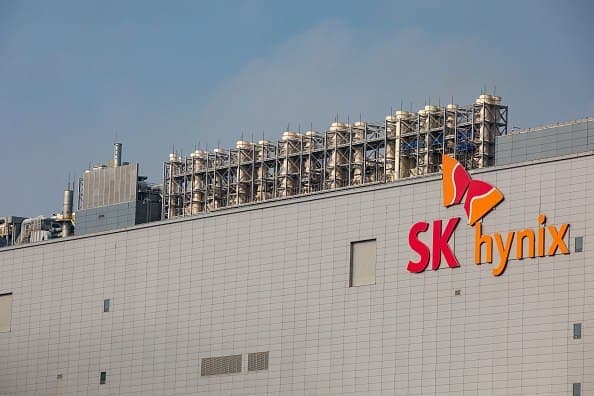
Solidigm intends to install additional manufacturing equipment in unused floor space at SK Hynix's Dalian Mod B facility, according to people familiar with the matter. That plant reached completion in 2023. SK Hynix has stated that it is not pursuing a capacity expansion at the site, characterising the equipment installation as a reconfiguration carried out in consultation with and under licence from United States authorities.
The distinction matters. Washington's October 2022 export restrictions, and subsequent tightening in 2023, placed advanced chip technology and manufacturing tools under licensing regimes citing national security grounds. In September 2025, the Trump administration revoked standing exemptions that had allowed SK Hynix, Samsung, and Intel to equip certain China-based facilities without case-by-case review. Both SK Hynix and Samsung now operate under annual licences that permit limited equipment shipments to their Chinese plants.
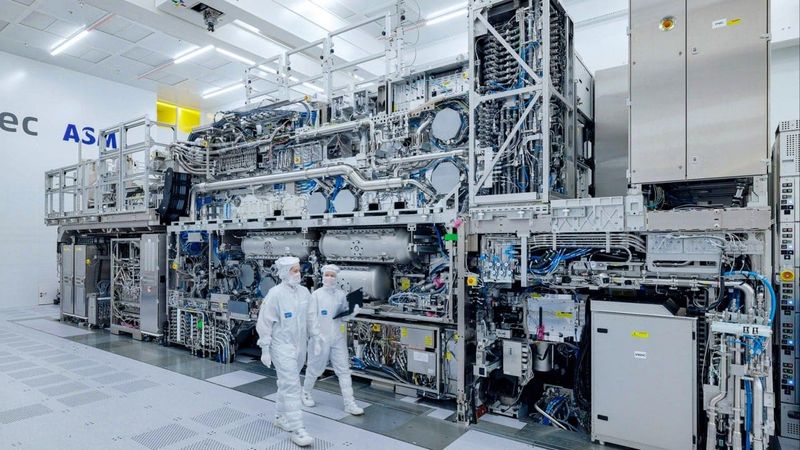
The Dalian facility produces legacy NAND products. Installing newer tools there could improve yield, lower per-unit cost, or enable modest process node transitions without triggering the most stringent export control thresholds. Yet any equipment transfer requires explicit United States approval, creating a choke point that Washington has used to extract commitments.
The American Inducement
Commerce Secretary Howard Lutnick said in July that he was in discussions with both Samsung and SK Hynix about establishing chip plants in the United States. The timing of those talks and Solidigm's reported New York site evaluation suggests the two threads are intertwined. Building a NAND fabrication plant in the United States would diversify Solidigm's manufacturing footprint and align with Washington's push to reshore semiconductor production, particularly for technologies integral to data centre and defence applications.
Solidigm is also preparing for an initial public offering in 2027 that could raise approximately ten billion US dollars and value the unit at up to one hundred billion dollars. A United States manufacturing commitment would burnish the company's profile with American institutional investors and reduce regulatory friction ahead of that listing. The IPO timeline gives both sides a deadline: Solidigm needs clarity on China equipment access to maintain production ramps, and Washington wants a visible commitment to domestic capacity before the offering roadshow begins.
Export Controls as Industrial Policy
At Opentechwire, we've tracked how United States semiconductor export restrictions have evolved from blunt instruments into negotiating frameworks. The initial 2022 rules aimed to deny China access to cutting-edge logic and memory chips, along with the lithography and deposition tools required to make them. Subsequent rounds added entity-list designations, tightened performance thresholds, and closed loopholes around foreign-produced items incorporating American technology.
Revoking the SK Hynix and Samsung exemptions in September 2025 marked a shift. Rather than grandfathering existing operations, Washington made continued access conditional on new investments. The policy operates less as a ban than as a licensing regime with implicit quid pro quo expectations. Asian chipmakers with established China operations now face a recurring negotiation: access to legacy fabs in exchange for capacity additions in the United States or allied jurisdictions.
The arrangement carries risks for both parties. For SK Hynix, splitting advanced and legacy production across jurisdictions increases complexity, raises capital expenditure, and exposes the company to policy reversals in either Washington or Beijing. For the United States, relying on foreign firms to build domestic capacity creates dependencies of a different kind. If Solidigm's New York plant relies on SK Hynix's South Korean research and development pipeline, or on components sourced from the company's Asian supply chain, the facility's operational independence remains limited.
NAND Supply Dynamics
NAND flash sits at the intersection of consumer electronics, enterprise storage, and AI infrastructure. Hyperscalers procuring solid-state drives for training clusters and inference deployments have absorbed much of the available supply, leaving consumer and enterprise channels with tighter allocations. That demand imbalance has lifted contract prices and spot rates, improving margins for the three dominant producers: Samsung, SK Hynix, and Kioxia.
Solidigm's Dalian capacity, even with equipment upgrades, addresses the lower end of the NAND market: older process nodes, lower layer counts, and applications where performance and endurance requirements are less stringent. A new United States facility would likely target higher-margin products for data centre and government customers, where security-of-supply and provenance carry premium pricing. The two sites would serve distinct segments, reducing direct competition between Solidigm's Chinese and American output.
Yet the gap between legacy and leading-edge NAND is narrowing. As layer counts rise and cell architectures improve, even mid-tier NAND delivers performance adequate for many AI storage workloads. Solidigm's ability to maintain competitiveness in China while ramping a greenfield United States plant will depend on process technology transfer, yield learning curves, and how quickly Washington's licensing regime adapts to shifting product definitions.
Broader Implications
The SK Hynix case offers a template for other memory and logic chipmakers with China exposure. Micron Technology, which has faced Chinese government restrictions on its products, has already committed to expanding its United States and Japanese facilities. Samsung, the world's largest memory producer, is navigating similar equipment licence constraints at its Xi'an NAND complex. Intel, despite its American headquarters, operates assembly and test facilities in China subject to the same export control framework.
Each negotiation is bilateral, but the cumulative effect is a reconfiguration of global semiconductor manufacturing. Capacity is being pulled toward the United States, Europe, Japan, and South Korea, with China increasingly siloed into legacy nodes and domestic supply chains. That bifurcation raises costs, fragments standards, and complicates logistics for multinational customers operating in both spheres.
For Solidigm, the near-term calculus is straightforward: secure equipment access to sustain Dalian output, commit to a United States plant to satisfy Washington, and position the combined footprint as a strength rather than a liability when the IPO roadshow begins in 2027. The longer-term question is whether that model remains stable if either government changes the terms, or if geopolitical tensions escalate further.
Washington's willingness to trade equipment licences for manufacturing commitments reveals both the leverage export controls provide and their limits. SK Hynix is not being coerced; it is bargaining. The company has options, capital, and technology that multiple governments want. The outcome will shape not only Solidigm's production map but the broader equilibrium between industrial policy and market forces in the semiconductor sector.