Beijing Clears Alibaba AI for Apple Handsets After Year-Long Delay
Regulatory approval for three Qwen models unblocks Apple Intelligence rollout in China, ending a standoff that left the world's largest smartphone market without Apple's flagship AI feature.
A Regulatory Unlock After Months of Silence
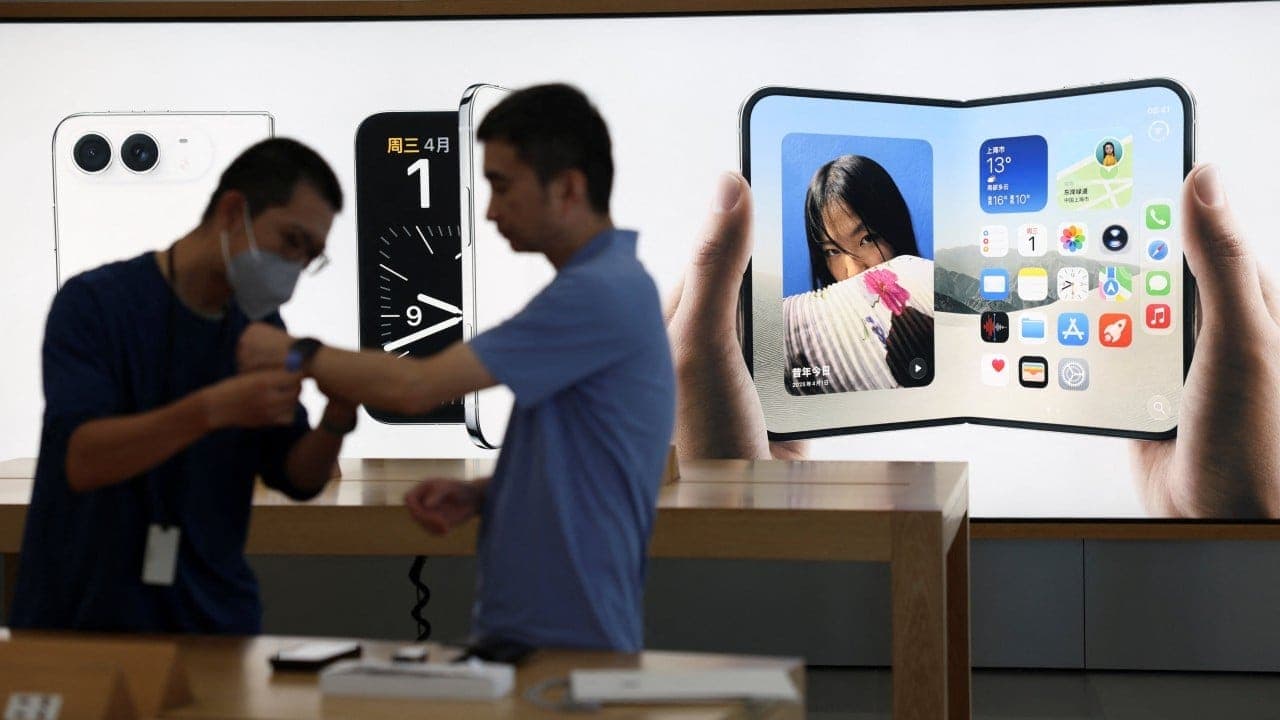
China's Ministry of Industry and Information Technology has authorised three Alibaba artificial intelligence systems for deployment on Apple mobile devices sold in the mainland, according to updated network access permits issued this month. The approval covers the iPhone Duo, iPhone 18 Pro, and several legacy models, finally resolving a regulatory bottleneck that has kept Apple Intelligence unavailable to Chinese consumers since its global debut.
The three approved systems - identified in ministry filings as Qwen-based large language models - represent the first third-party AI infrastructure cleared for integration into Apple hardware within China's borders. Apple Intelligence, the company's suite of generative features introduced last year, had launched in dozens of markets but remained absent from the People's Republic, where regulators require explicit approval for any AI model deployed at scale.
At Opentechwire, we've tracked similar approval queues across the region. Vietnam's Ministry of Information and Communications maintains a comparable pre-deployment review for generative systems, though enforcement has been uneven. China's process, by contrast, is both mandatory and strictly enforced: no AI model may be offered to the public without a filing number from the Cyberspace Administration of China and corresponding network access clearance from the telecom ministry.
Why Alibaba, and Why Now
Apple's decision to partner with Alibaba Cloud's Qwen family - rather than build a China-specific model in-house or license from a Western provider - reflects the practical realities of operating in a market where data residency, content filtering, and algorithmic transparency are non-negotiable regulatory requirements. Qwen models are trained on datasets curated to align with mainland content standards, and Alibaba Cloud maintains the domestic infrastructure necessary to meet latency and sovereignty mandates.
The timing of the approval is less clear. Regulatory filings show that Apple submitted its network access applications for the iPhone Duo and iPhone 18 Pro in the first quarter of this year, yet permits were issued only in recent weeks. Industry observers in Shenzhen and Shanghai have speculated that the delay stemmed from ongoing negotiations over data handling protocols, particularly around user queries processed by the AI systems. Unlike Apple's proprietary models, which route inference requests through the company's own data centres, the Qwen integration requires that certain processing occur on Alibaba Cloud infrastructure located within China.
This arrangement introduces a structural dependency: Apple's ability to deliver AI features in its second-largest market now hinges on the operational reliability and regulatory standing of a third-party cloud provider. For Alibaba, the partnership represents a validation of its AI capabilities and a significant revenue opportunity, as licensing fees and inference costs scale with device activations.
What Changes for Users
With regulatory clearance in hand, Apple can now enable a subset of its AI-powered features on eligible devices in China. These include on-device text summarisation, intelligent photo search, and natural language processing for Siri queries - functions that rely on the approved Qwen models for language understanding and generation tasks specific to Mandarin and simplified Chinese script.
However, the feature set will not be identical to what users in other markets experience. Apple Intelligence in the United States and Europe incorporates real-time web search, integration with third-party services, and multimodal capabilities that blend text, image, and voice inputs. Some of these functions depend on Apple's own foundational models, which have not received approval in China and may never clear the regulatory threshold given their training data provenance and lack of mainland hosting.
The bifurcation of Apple's AI offering is a microcosm of a broader trend: technology companies are increasingly shipping region-specific feature sets not because of market preference, but because of divergent regulatory frameworks. Samsung's Galaxy AI, Google's Gemini integrations, and Microsoft's Copilot have all faced similar constraints in China, forcing vendors to either partner with domestic AI providers or forgo certain capabilities entirely.
Implications for the AI Supply Chain
The approval carries weight beyond Apple and Alibaba. It establishes a template for how foreign hardware manufacturers can navigate China's AI governance regime: by embedding pre-approved domestic models rather than attempting to clear their own. This dynamic strengthens the position of Chinese AI firms - Alibaba, Baidu, and others - who now function as gatekeepers for foreign entrants seeking to offer generative features in the mainland market.
For developers building applications atop Apple's platforms, the split between China and non-China AI backends introduces complexity. Apps that rely on Apple Intelligence APIs will need to account for behavioural differences between the Qwen-powered implementation and Apple's proprietary stack. Edge cases around content filtering, response latency, and model capabilities will vary, requiring additional testing and conditional logic.
At the infrastructure level, the arrangement also highlights the enduring importance of data sovereignty in AI deployment. Despite advances in federated learning and on-device processing, the regulatory expectation in China remains that sensitive inference workloads must touch domestic compute resources. This is not a technical constraint but a policy one, and it applies regardless of whether the model itself runs on the handset or in the cloud.
What Comes Next
The approval does not resolve all outstanding questions. It remains unclear whether Apple will seek clearance for additional models - either its own or those from other partners - or whether the current Qwen-based implementation will remain the sole AI offering in China for the foreseeable future. The ministry's network access permits are subject to periodic review, and any change to the underlying model architecture, training data, or deployment infrastructure could trigger a fresh approval cycle.
There is also the matter of performance. Qwen models, while competitive in Mandarin language tasks, have not been benchmarked as extensively as Apple's proprietary systems in multilingual or multimodal scenarios. If user experience lags noticeably behind what is available in other regions, Apple may face pressure to either invest in improving the Qwen integration or pursue alternative partnerships.
More broadly, the episode underscores the extent to which AI deployment has become entangled with industrial policy. China's regulatory posture is not unique - the European Union's AI Act imposes its own set of compliance burdens, and several Southeast Asian governments are drafting similar frameworks - but the mainland's combination of scale, enforcement capacity, and strategic intent makes it a particularly consequential arena. Companies that treat regulatory approval as an afterthought, or assume that technical excellence alone will suffice, are likely to encounter delays measured in quarters, not weeks.
For now, the path forward is clear: Apple can proceed with its China launch, Alibaba gains a marquee client, and consumers in the mainland will finally have access to AI features that have been available elsewhere for more than a year. Whether this arrangement proves durable, or whether it represents merely the first chapter in a longer negotiation over data, control, and market access, will depend on factors that extend well beyond the technical merits of the models themselves.