One Writer's Reckoning with On-Device AI Models
Running large language models locally promises privacy and control, but the hardware tax is steep and the learning curve real.
The Privacy-Performance Bargain
Antonio Di Benedetto has spent the past two years watching the AI boom from the sidelines. Not because he doubts the technology's utility, but because sending personal data to remote servers felt like too steep a price. Now he's testing whether the alternative - running inference on his own hardware - makes sense for anyone outside the enthusiast fringe.
His setup is a Mac Studio, chosen specifically for its unified memory architecture. The machine ships with enough RAM to load multi-billion-parameter models into memory without swapping to disk, a prerequisite for acceptable latency. He's been cycling through Hermes and Qwen variants, two open-weight families popular among developers who prioritise instruction-following and multilingual capability over raw benchmark scores.
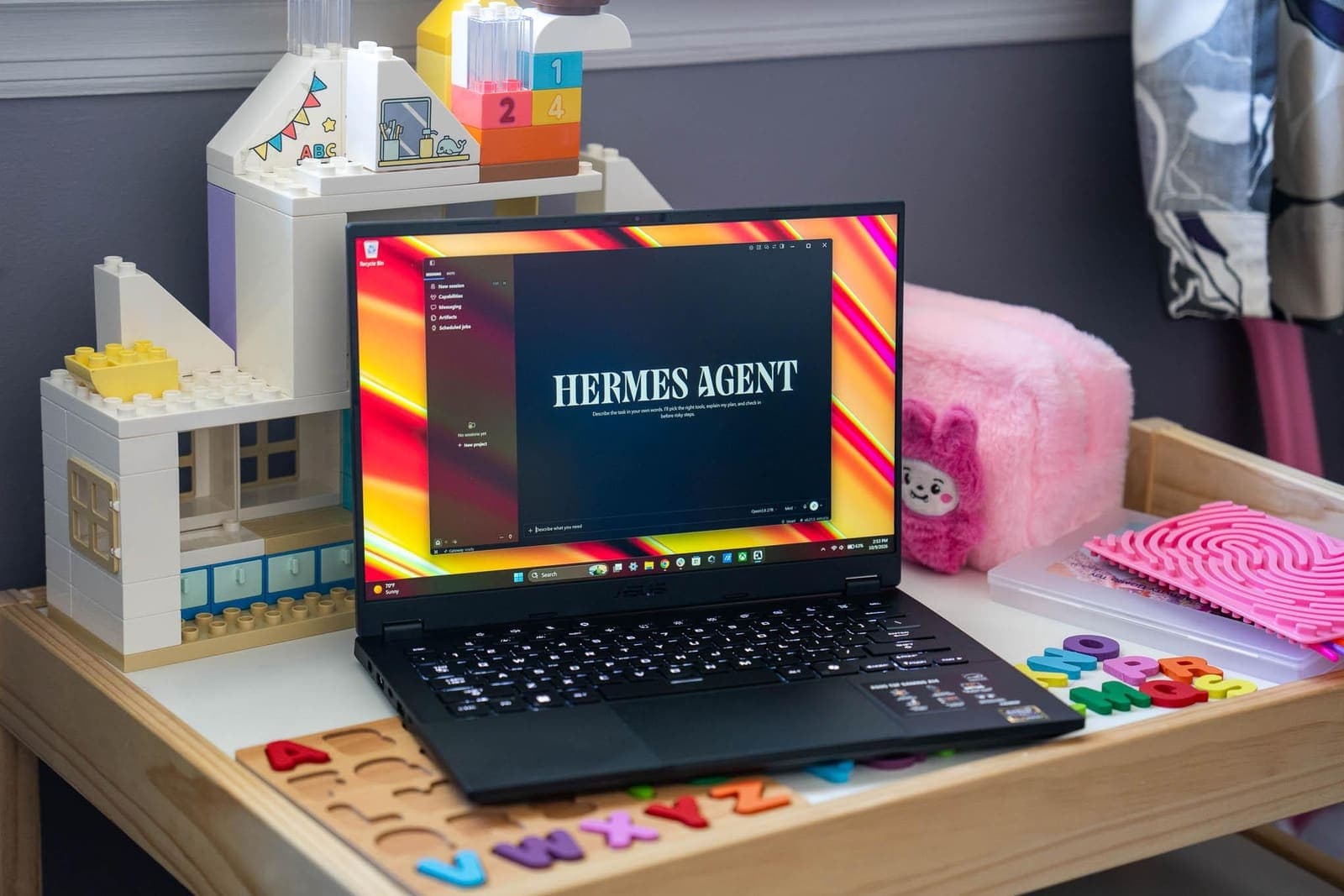
The early verdict is mixed. The models work. They generate coherent text, answer questions, and handle multi-turn dialogue without the catastrophic context collapse that plagued earlier local experiments. But the experience is far from polished. Every model requires its own configuration file, its own prompt template, its own quirks around stop tokens and temperature settings. Di Benedetto describes the process as "exciting, overwhelming, and frustrating" - three adjectives that capture the state of local AI in late 2024.
The Hardware Constraint
Apple's pitch for its latest Mac desktops leans heavily on AI workloads. The M-series chips, with their tight integration between CPU, GPU, and memory, are designed to keep data on-package rather than shuttling it across a bus. For transformer inference, where memory bandwidth is often the bottleneck, this architecture offers measurable advantages over discrete graphics cards.
But the advantages come at a cost. Upgrading a Mac Studio from 64 GB to 128 GB of unified memory adds several hundred dollars to the bill. For a 192 GB configuration - enough to run 70-billion-parameter models comfortably - the premium climbs into four figures. Di Benedetto's experiment is, in part, a test of whether that expenditure can be justified by privacy gains and the ability to work offline.
The calculus is different for users who already own high-end Windows or Linux workstations. A desktop with 64 GB of system RAM and a recent NVIDIA GPU can offload some layers to VRAM and handle the rest in main memory, albeit with slower throughput. The fragmentation of the local AI toolchain - LM Studio, Ollama, llama.cpp, vLLM, and half a dozen other runtimes - means setup varies wildly depending on your operating system and hardware.
What Local Models Can and Cannot Do
Di Benedetto is not trying to replace cloud services wholesale. He's testing whether local models can handle the subset of tasks where privacy matters most: drafting sensitive emails, summarising confidential documents, generating code snippets that touch internal systems. These are use cases where the risk of data exfiltration, however small, outweighs the convenience of a hosted API.
The models he's running - mid-sized variants in the 7- to 34-billion-parameter range - are competent at these tasks but noticeably weaker than frontier cloud models. They struggle with complex reasoning, produce more hallucinations, and require more careful prompt engineering. Fine-tuning can close some of the gap, but that introduces another layer of complexity: curating datasets, running training loops, managing checkpoints.
There's also the question of multimodality. Vision-language models that can ingest images and PDFs are starting to appear in local-friendly sizes, but they're still a generation behind what's available via API. Di Benedetto has not yet tested these, but they represent the next frontier for anyone serious about replacing cloud workflows.
The Learning Curve and the Community
One surprise in Di Benedetto's writeup is how much tacit knowledge is required to get local AI working well. Choosing a quantisation level - 4-bit, 5-bit, 8-bit - involves trade-offs between model quality and memory footprint that are poorly documented outside Reddit threads and Discord servers. Knowing which sampler settings to tweak, or when to switch from greedy decoding to nucleus sampling, is the kind of detail that separates a usable system from one that generates nonsense.
The open-source community has built an impressive amount of tooling to smooth these rough edges. Model hubs host quantised versions of popular weights; GUI applications abstract away command-line complexity; benchmarking suites let users compare performance before downloading tens of gigabytes. But the ecosystem is still young, and the pace of change is punishing. A model that's state-of-the-art in September may be obsolete by November.
Di Benedetto plans to document his progress publicly, posting updates as he moves from basic text generation to more ambitious agent-like behaviour. The goal is not to become an AI researcher but to see whether a motivated generalist can extract enough value to justify the investment.
Why This Matters Now
The broader context for experiments like Di Benedetto's is a growing unease with centralised AI infrastructure. Every major cloud provider now offers hosted inference, and every hosted service collects usage data - sometimes for model improvement, sometimes for compliance, sometimes for reasons that remain opaque. For users in regulated industries, or in jurisdictions with strict data-sovereignty rules, this is a non-starter.
At the same time, export controls on advanced GPUs are pushing more inference workloads onto consumer hardware. Developers in regions where high-end data-centre chips are restricted have little choice but to run models locally or settle for degraded service. The gap between what's available via API and what's feasible on a workstation is narrowing, but it has not closed.
Apple's renewed focus on AI-capable desktops is one signal that the market for local inference is being taken seriously. NVIDIA's recent launch of consumer cards with 24 GB and 32 GB of VRAM is another. The question is whether software maturity will catch up to hardware capability - and whether the trade-offs involved will ever make sense for users who aren't already deep in the weeds.
Di Benedetto's experiment will not answer that question definitively. But by documenting the friction points, the small wins, and the moments of genuine frustration, he's providing a data point that's currently in short supply: what it's actually like to use this technology day to day, outside the idealised demos and benchmark tables.
For now, local AI remains a hobbyist pursuit with a steep on-ramp. Whether it evolves into something more accessible - and more essential - depends on dozens of variables, from model efficiency gains to regulatory pressure to the willingness of hardware vendors to subsidise memory. Di Benedetto is betting that the trajectory points upward. We'll see if the frustration gives way to something resembling fluency.