Two Visions for Always-On AI: What Separates OpenAI's Dot from Meta's Muse
Persistent agents from both companies promise to work independently, but their architecture, pricing and trust models reveal fundamentally different bets on how people will delegate control.
The Shift to Persistent Execution
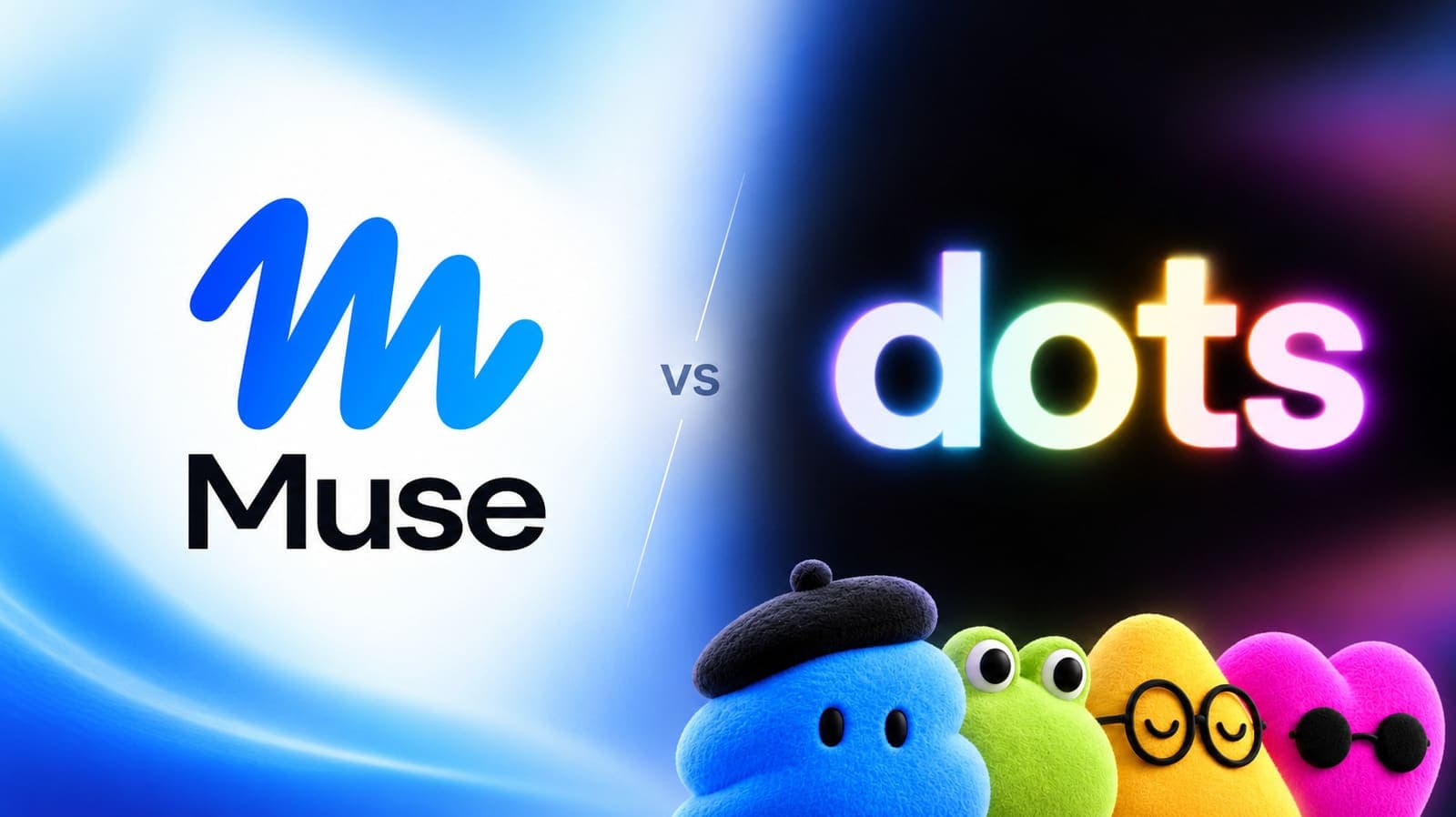
Within three weeks in September and early October 2026, Meta and OpenAI each shipped a new category of product: AI agents designed to operate independently once you walk away. Meta's Muse arrived on 8 September; OpenAI followed with Dot integration into ChatGPT on 29 September. Both run their own cloud compute environments, connect to third-party services, and tackle tasks that span hours or days rather than seconds. The pitch is simple - hand off a job and stop micromanaging every step - but the execution models and trade-offs are anything but uniform.
At Opentechwire, we have tracked the evolution of agentic frameworks across the region, from Alibaba's Qwen-Agent to Naver's HyperCLOVA X assistants. What makes this pair noteworthy is not the underlying capability - fine-tuned large language models with tool-use APIs have been production-ready for over a year - but the decision by two of the largest consumer AI platforms to surface persistent, semi-autonomous operation as a headline feature. The question is whether the infrastructure, pricing and permissions each company has chosen will prove durable when users start linking their email, calendars and payment accounts.
Architecture: Messaging Metaphor Versus ChatGPT Integration
Muse runs on a dedicated secure virtual machine equipped with its own browser instance. Meta has designed the interface to resemble a conversation with another person; users interact through Muse's standalone mobile applications, the web client, or WhatsApp. Once a user grants permission, Muse can authenticate into email providers, calendar services and other APIs. In one demonstration, the agent collated saved posts from Instagram and Facebook into structured recipe and restaurant lists - a workflow that required cross-platform data retrieval and formatting.
Dot, by contrast, lives inside ChatGPT and is powered by the GPT-6 Astra model. Each Dot instance receives its own ephemeral cloud container, can invoke any plugin the user has connected, and maintains conversational context across sessions. OpenAI also allows a Dot to request access to files on the user's local machine or to browse the open web through the user's own browser session. The company has indicated that multi-Dot management - running several agents in parallel, each with distinct permissions and task queues - will be enabled in a future update.
The architectural split reflects different theories of where the agent should sit. Meta is betting that a standalone, browser-equipped VM feels safer and more legible to users who worry about an AI rummaging through their desktop. OpenAI is betting that tighter integration with an existing conversational interface and work suite - ChatGPT, ChatGPT Work and Codex - will reduce friction and encourage delegation.
Permission Models and the Supervision Tax
Neither company is claiming full autonomy. Meta states that Muse will prompt the user before executing sensitive actions such as sending an email or completing a purchase. OpenAI layers three controls: explicit permissions, Custom Rules that define boundaries, and an Auto-review system that flags certain operations for human approval. Both firms include cautionary language in their documentation acknowledging that the agents can make errors.
The supervision tax extends beyond the user interface. Amazon has already blocked Muse's browser agent from navigating its retail site, a reminder that website operators can detect and restrict automated activity even when it originates from a user-sanctioned AI. This is not a novel problem - scraping and bot-traffic policies have existed for decades - but it becomes more visible when the agent is marketed as capable of "shopping" or "monitoring prices."
For developers and enterprise users, the permission model determines how much latency and interruption a workflow can tolerate. If every API call that touches customer data requires a human checkpoint, the agent's value proposition narrows to research, summarisation and other read-heavy tasks. OpenAI has noted that proactive research conducted by a Dot remains read-only until a subsequent write action passes the usual permission gate, a design choice that tries to balance exploration with control.
Pricing: Consumer Tier Versus Enterprise Floor
Meta offers three Muse subscription tiers. A free tier exists but carries an unspecified usage cap. The Power tier is priced at twenty US dollars per month, and the Maximum tier at one hundred US dollars per month. By consumer AI standards, this is in line with ChatGPT Plus and similar offerings.
OpenAI's pricing structure for Dot is enterprise-first. The lowest entry point for an individual user is the Pro 100 plan at one hundred US dollars per month. Business Premium seats cost one hundred US dollars per user per month when billed annually, or one hundred and twenty-five US dollars per user per month on a rolling basis. Enterprise access remains in controlled beta. The company has stated that Dot activity will not count against a user's broader ChatGPT usage quota unless the Dot is operating inside ChatGPT Work or Codex, but the headline subscription price is an order of magnitude higher than Meta's consumer tier.
The gap suggests different target customers. Muse is positioned as a personal productivity tool with a freemium on-ramp. Dot is positioned as a professional or team resource where the return on investment is measured in hours saved across knowledge work, software development or operations. For a solo developer or consultant, one hundred US dollars per month is a meaningful threshold; for a fintech startup in Singapore or a logistics company in Seoul looking to automate report generation and API monitoring, the per-seat cost may be justifiable if it replaces contractor hours.
Data Governance and Model Training
Linking an agent to email, calendar, file storage and browser sessions creates a wide surface area for data collection. Meta states that conversations and data processed inside the Muse VM are not shared with its advertising systems. Users can opt out of having their Muse interactions contribute to model training, though in at least one walkthrough the model-improvement toggle was enabled by default. The permission system also defaults to prompting only for certain high-risk actions, rather than all actions, unless the user adjusts the setting.
OpenAI's policy varies by subscription tier. Activity from personal-plan Dots may be used to improve models, depending on the user's existing ChatGPT privacy setting. Business and Enterprise tiers exclude training by default, a standard practice in the SaaS industry where contractual data-processing terms are negotiated. The distinction matters for any organisation subject to regulatory compliance: a law firm in Hong Kong or a healthcare provider in Bangalore will require contractual assurance that case files or patient scheduling data remain outside the training corpus.
Neither company has yet published a transparency report specific to these agent products, so it is difficult to assess how often sensitive actions are flagged by automated review, how frequently users override permission prompts, or what share of errors result from hallucination versus API failure. Those metrics will become important as adoption scales and as regulators in the European Union, Singapore and elsewhere begin to examine agentic AI under existing consumer-protection and data-governance frameworks.
Geographic and Regulatory Constraints
Rollout geography reveals both market priorities and regulatory caution. Muse is currently available in the United States and Canada. Dot access is more fragmented: eligible Pro users outside the European Economic Area, Switzerland and the United Kingdom can enable Dots; Business Premium users can do so across all supported ChatGPT regions; Enterprise access remains invite-only. The exclusion of the EEA and UK for consumer-tier Dots likely reflects uncertainty around liability and automated decision-making under the General Data Protection Regulation and the forthcoming AI Act.
For companies building on top of these platforms - marketing agencies in Jakarta using Muse to draft and schedule social posts, or software teams in Taipei using Dots to triage GitHub issues - the geographic patchwork introduces planning risk. A feature available in one office may be unavailable in another, and cross-border teams may need to architect workflows that degrade gracefully when an agent is unavailable.
What Persistence Costs
The shared promise of Muse and Dot is that you can delegate a task and move on. The shared reality is that delegation requires trust, and trust requires transparency, recourse and predictable failure modes. Both products are early, and both companies are learning in public. The price gap - twenty US dollars versus one hundred US dollars per month for entry-level access - signals different hypotheses about who will pay for always-on AI and what return they expect.
In the near term, we expect Muse to gain traction among consumers willing to link a narrow set of accounts - email, calendar, a shopping wishlist - and tolerate occasional mistakes in exchange for convenience. Dot's higher price and ChatGPT integration position it for teams that already rely on OpenAI's suite and can justify the cost by measuring time saved on repetitive research, code review or data-pipeline monitoring.
The longer-term question is whether either model proves robust enough to handle the truly high-value, high-risk tasks that organisations care about: contract negotiation, financial reconciliation, incident response. Those workflows demand not just persistence but auditability, rollback and formal verification - capabilities that remain outside the scope of today's agentic products. Until then, both Muse and Dot will occupy the middle ground: capable enough to be useful, limited enough to require supervision, and priced at levels that reflect very different bets on where the market will land.