Huawei Pushes Tau-Based Chips Into Mate 90 Lineup as XT 2 Nears Million-Unit Mark
Shenzhen's self-developed processor architecture reaches volume production across flagship phones, underscoring pivot to indigenous silicon amid persistent US restrictions
Indigenous Silicon at Scale
Huawei Technologies has begun shipping its Mate 90 smartphone series with processors built on the company's Tau Scaling Law architecture, according to Huawei consumer division executives. The deployment represents one of the clearest signs yet that Shenzhen's multi-year effort to internalise chip design has moved from prototype to volume manufacturing - a transition that matters as much for supply-chain sovereignty as for device performance.
At Opentechwire, we've tracked the arc of China's semiconductor self-sufficiency drive since Washington tightened Entity List restrictions in 2019 and again in 2022. Huawei's Tau initiative - a compute-scaling methodology the firm unveiled in research papers eighteen months ago - was initially dismissed by some analysts as vaporware. The Mate 90 integration suggests otherwise.
The Tau Scaling Law diverges from conventional transistor-density roadmaps by prioritising workload-specific optimisation and heterogeneous core clusters. In plain terms, Huawei is tuning silicon for the tasks its devices actually run - inference for on-device language models, image-signal processing, power gating during standby - rather than chasing bleeding-edge node sizes it cannot reliably access. Whether that approach closes the performance gap with Qualcomm's Snapdragon 8 Gen 4 or Apple's A18 remains an open question; early Mate 90 benchmarks circulating in Shenzhen developer circles show competitive multi-core scores but lower single-thread peaks.
XT 2 Foldable Momentum
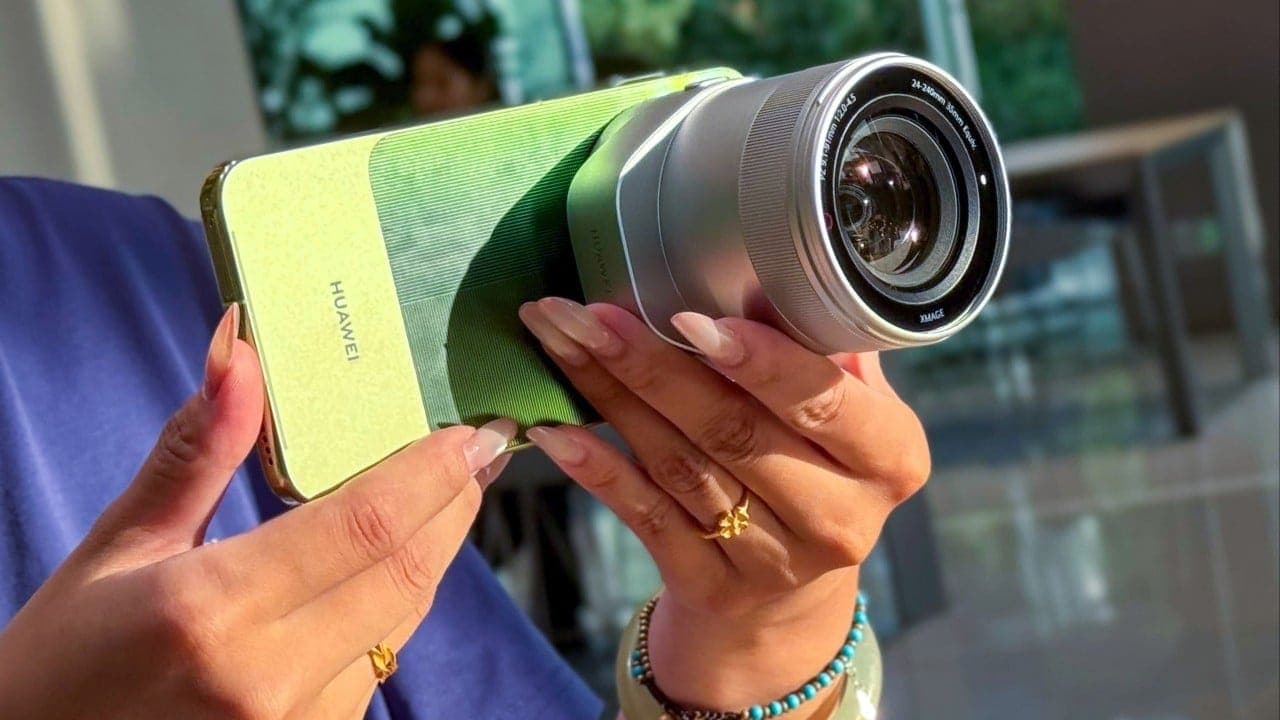
Separately, Huawei disclosed that its Mate XT 2 foldable is on track to surpass one million units shipped, according to the company. The tri-fold design - which unfolds to a 10.2‑inch diagonal - launched in July and has found traction in China's tier-one cities, where foldables command 18 per cent of the premium segment by value.
One million units would place the XT 2 ahead of Samsung's Galaxy Z Fold 6 in mainland China sell-through for the July-September quarter, based on third-party channel checks. It would also vindicate Huawei's bet that a second iteration could smooth the cost and durability concerns that limited the original XT to roughly 600,000 cumulative sales. Hinge longevity and crease visibility were the two most cited pain points in user surveys last year; the XT 2 uses a revised hinge mechanism and ultra-thin glass supplied by domestic materials firms.
Still, the device retails at ¥15,999 (approximately USD 2,250), a price that narrows addressable demand even in affluent coastal markets. Huawei has not disclosed XT 2 margins, but foldable bill-of-materials typically run 40-50 per cent higher than slab flagships, and the Tau chip's manufacturing yield remains unconfirmed.
What Tau Means for the Roadmap
The Mate 90 rollout also signals a strategic fork. Huawei is no longer attempting to mirror the product cadences of rivals that enjoy unfettered access to TSMC, Samsung Foundry, and ASML's extreme-ultraviolet lithography tools. Instead, the company is building around the constraints: designing for mature nodes, over-provisioning thermal headroom, and leaning into software-hardware co-design to extract performance.
This path carries trade-offs. Tau-based chips are believed to be fabricated on a modified 7‑nanometre process at Semiconductor Manufacturing International Corporation, which lacks EUV and relies on multi-patterning - a slower, lower-yield technique. Power efficiency suffers relative to 3‑nanometre rivals, which in turn compresses battery life and thermal envelopes. Huawei's solution has been to pair the processors with larger battery cells and vapour-chamber cooling, adding thickness and weight that run counter to the industry's thinness trend.
Yet the approach is proving viable in the one market that matters most to Huawei: China's domestic installed base. The Mate 90 series went on pre-order in late September; initial allocation sold out within 48 hours across JD.com and Tmall, according to Huawei. Brand loyalty - forged during the US blacklist years - remains a powerful lever, and the "self-reliant tech" narrative resonates with a segment of consumers willing to accept performance concessions in exchange for supporting indigenous innovation.
Implications Beyond Handsets
Huawei's Tau scaling work is not confined to smartphones. The company has hinted that the architecture will underpin future server processors, automotive compute modules, and edge-inference accelerators - domains where single-thread speed matters less than aggregate throughput, power efficiency, and cost. If Tau chips can deliver competitive performance-per-watt at mature nodes, they offer a template for other Chinese firms navigating similar export restrictions.
The broader question is whether this model scales beyond China's borders. Huawei's smartphone share outside mainland China has collapsed to low single digits since 2020, and the lack of Google Mobile Services remains a non-starter in most markets. Tau silicon alone will not reverse that. But for a company that shipped 60 million smartphones domestically in the first half of this year - third behind Apple and Vivo - the architecture represents a credible path to sustaining a high-end product line without reliance on US-controlled supply chains.
The Mate XT 2's trajectory will be an early test. If the device sustains momentum into the year-end shopping season and Huawei can demonstrate acceptable return rates and customer satisfaction scores, it will validate both the foldable form factor and the underlying chip strategy. If yields falter or performance complaints mount, the company's room for iteration narrows quickly; competitors are not standing still, and China's smartphone market contracted 3 per cent year-on-year in the second quarter.
For now, Huawei is executing on the roadmap it set when external options disappeared. The Tau rollout is less a breakthrough than a grinding proof of concept - evidence that a sufficiently resourced firm can build around export controls, even if the resulting products carry visible compromises. Whether that resilience translates into sustained market share, or merely prolongs a slow decline, will depend on factors well beyond chip architecture: software ecosystems, retail channel strength, and the willingness of Chinese consumers to continue backing a national champion whose best days, by some measures, are behind it.