Chinese AI-Manufacturing Firm Microintelligence Opens 37-Million-Share Hong Kong Listing
The company is seeking up to USD 101.9 million through a dual-tranche offering targeting institutional and retail investors, with pricing at the top end set at HKD 21.46 per share.
A Manufacturing-AI Play Hits Hong Kong's Capital Markets
Microintelligence kicked off subscriptions for its Hong Kong initial public offering on 20 October, with a target raise of HKD 800 million (USD 101.9 million) at the top of its pricing range. The subscription window runs through 23 October, and shares are expected to begin trading on 28 October.
The offering comprises 37,275,800 H shares split across two tranches: 3,727,600 shares allocated to the Hong Kong public offering and 33,548,200 shares reserved for international institutional investors. At Opentechwire, we've tracked a growing appetite among Hong Kong-listed technology firms to weight their offerings heavily towards institutional books, a structure that typically reduces retail volatility but also narrows local participation.
Pricing sits between HKD 16.63 (USD 2.10) and HKD 21.46 per share. If the company prices at the upper bound and exercises its overallotment option, proceeds could climb above the headline figure, though the base raise stands at roughly USD 102 million. That places Microintelligence in the mid-tier of recent technology listings on the Hong Kong Stock Exchange, well below the mega-deals of 2023 and 2024 but larger than many single-product software plays.
Industrial AI in a Crowded Field
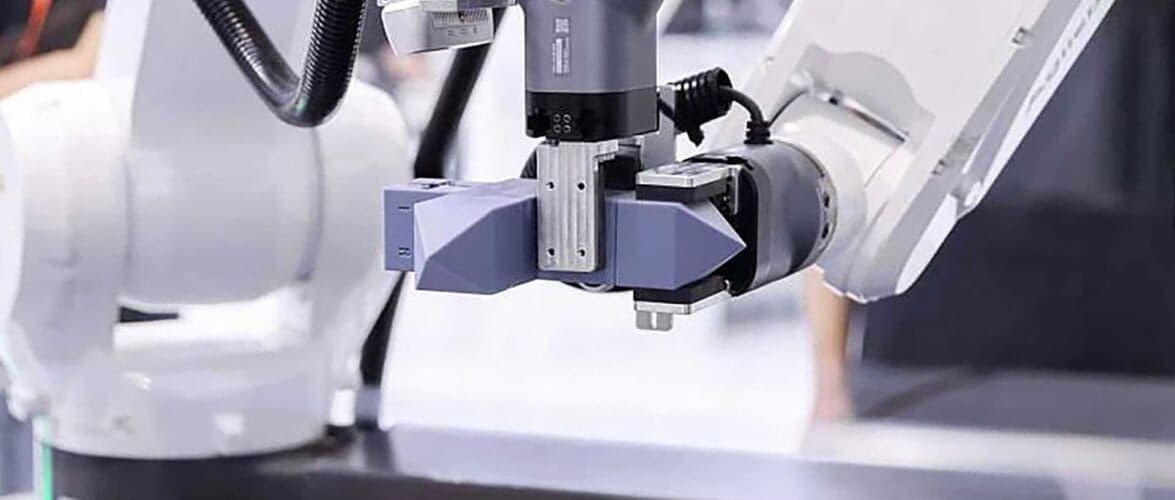
Microintelligence positions itself at the intersection of artificial intelligence and industrial manufacturing, a segment that has drawn venture and public-market capital across Shenzhen, Shanghai, and increasingly Seoul over the past eighteen months. The pitch centres on deploying machine-vision systems, predictive-maintenance algorithms, and yield-optimisation models inside factories, particularly those producing electronics, semiconductors, and precision components.
The competitive landscape is dense. Established automation vendors are retrofitting AI modules into legacy systems, whilst specialist startups from Hangzhou to Bengaluru are chasing the same factory-floor contracts. Differentiation often hinges on domain expertise, whether a vendor understands the specific tolerances of chip packaging or the defect modes of lithium-cell assembly, rather than on foundational model architecture.
What remains unclear from public filings is the extent to which Microintelligence has locked in recurring revenue through multi-year service agreements or whether its business tilts towards one-off system integrations. The former would command a higher valuation multiple; the latter exposes the company to quarterly lumpiness and makes scaling more capital-intensive.
Timing and Valuation Context
The timing of the offering coincides with a modest recovery in Hong Kong's new-issue market after a quiet third quarter. Year-to-date, technology IPOs in the city have raised approximately USD 3.8 billion, down from USD 6.1 billion over the same period in 2025, according to exchange data. Investor sentiment has improved marginally in October, driven in part by stabilisation in US Treasury yields and a less volatile renminbi.
Microintelligence's pricing range implies a post-money valuation in the vicinity of USD 500 million to USD 650 million, depending on dilution and the final share count. That sits below the valuations of listed peers in machine-vision and factory-automation software, though direct comparisons are complicated by differences in revenue mix, customer concentration, and geographic exposure.
The weighting towards international institutional investors, who will receive nearly 90 per cent of the base offering, suggests the company and its underwriters expect stronger demand from asset managers in Singapore, London, and New York than from Hong Kong retail accounts. Retail appetite for technology IPOs in the city has been uneven this year, with several listings trading below their offer prices within weeks of debut.
Capital Deployment and Expansion Plans
Proceeds from the offering are earmarked for scaling artificial-intelligence applications within the industrial sector, a broad mandate that typically encompasses hiring machine-learning engineers, expanding sales teams in target markets, and funding pilot deployments with anchor customers. The company has not disclosed a detailed use-of-proceeds breakdown in materials available at the time of launch.
Manufacturing-AI vendors face a structural challenge: large industrial customers often require extensive proof-of-concept work before committing to full-scale deployments, which means cash conversion cycles can stretch across multiple quarters. Raising growth capital through equity rather than debt makes sense in that context, but it also means dilution for early backers unless the company can demonstrate rapid margin expansion post-listing.
Asia's manufacturing heartlands, particularly in China, Vietnam, and Thailand, represent a substantial addressable market. However, export-control restrictions on advanced AI chips and inference accelerators have introduced friction for vendors serving cross-border customers, especially those with facilities in both China and the United States. Microintelligence's ability to navigate those regulatory boundaries will influence its growth trajectory over the next two to three years.
What Comes After the Bell
If the offering prices near the top of the range and trades up on debut, it will provide a tailwind for other AI-industrial companies considering Hong Kong listings in the first half of 2027. Conversely, a weak aftermarket performance could prompt bankers to counsel caution and push more companies towards private funding rounds or delayed timelines.
The Hong Kong Stock Exchange has been working to attract technology listings through streamlined approval processes and adjusted profitability thresholds, but momentum remains fragile. Microintelligence's debut will serve as a data point for how much institutional capital is genuinely available for mid-cap AI plays with exposure to China's manufacturing base, a question that has divided fund managers since the sector's resurgence earlier this year.
Trading begins on 28 October. The first few sessions will reveal whether the book was built on genuine demand or whether underwriters had to lean heavily on cornerstone commitments to get the deal across the line.