NextDC Loses $2.8 Billion in Market Value as Melbourne Power Dispute Halts AI Ambitions
Community opposition to electricity upgrades forces Australia's largest data centre operator to slash forecasts, exposing infrastructure bottlenecks across the region
A Flagship Site Runs Into a Wall
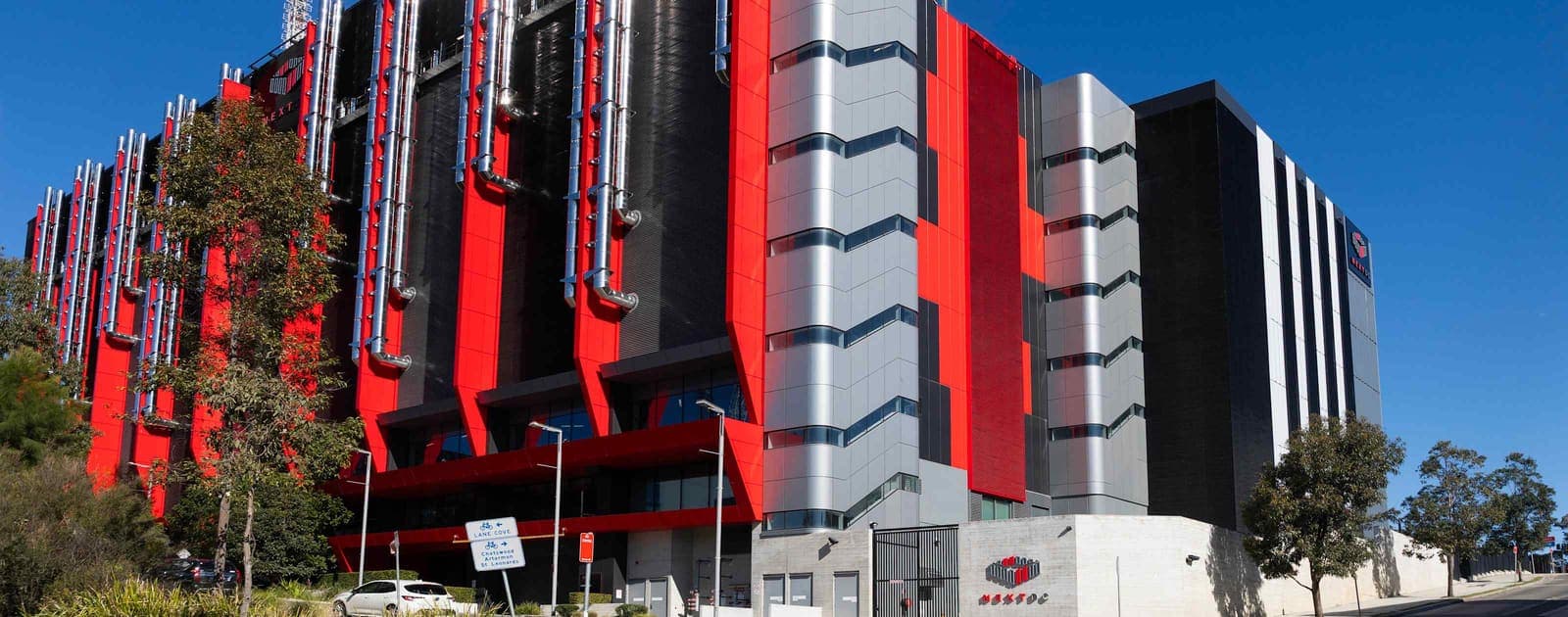
NextDC, Australia's dominant data centre operator, watched approximately AUD 4.2 billion (USD 2.8 billion) evaporate from its market capitalisation on 21 October 2026 when shares closed down 40 per cent. The trigger was not a technical failure or a lost contract. Instead, the Brisbane-based company disclosed that community pushback had blocked efforts to secure additional electricity supply for one of its most important facilities in Melbourne, forcing management to revise growth projections downward.
The Melbourne site is central to NextDC's strategy to capitalise on surging demand for AI workloads, which require significantly more power density than traditional cloud computing. At Opentechwire, we have tracked similar capacity bottlenecks emerging across Sydney, Singapore, and Tokyo over the past eighteen months, but the scale of this single-day share price correction underscores how quickly investor sentiment can shift when infrastructure assumptions prove fragile.
NextDC operates facilities in Australia, New Zealand, Malaysia, and Japan. The company has positioned itself as a key enabler of the region's AI buildout, including a collaboration with OpenAI in Sydney. Yet the Melbourne setback suggests that technical capability and customer demand are no longer the only variables in the data centre growth equation.
The Power Problem Behind the Sell-Off
Data centres running inference and training workloads for large language models can consume three to five times the electricity per rack compared with conventional virtualised server environments. NextDC had planned to increase the power allocation at its Melbourne campus to accommodate this shift, but securing that capacity required approval from local energy distributors and, in many cases, consultation with surrounding communities.
According to NextDC, opposition from residents and local stakeholders stalled the process. The company did not specify whether the resistance centred on grid reliability concerns, environmental objections, or broader unease about industrial-scale facilities in urban or peri-urban zones. What is clear is that the delay was significant enough to force a reassessment of near-term revenue and capacity timelines, prompting the sharp downgrade that triggered the sell-off.
The Melbourne case is not isolated. Across Asia-Pacific, we have observed mounting friction between data centre developers and communities that bear the externalities - noise from cooling systems, strain on local electricity grids, and the visual footprint of large installations. In Japan, Tokyo Electric Power Company has begun implementing measures to address so-called "capacity squatters," entities that reserve grid capacity without deploying workloads, partly in response to the surge in speculative data centre projects. In Singapore, land scarcity and power constraints have led the government to impose a moratorium on new facilities in certain zones, redirecting investment toward neighbouring markets such as Malaysia and Indonesia.
Investor Expectations Meet Ground Reality
NextDC's valuation had priced in aggressive expansion, buoyed by optimism around AI infrastructure demand. The company's partnerships - including the OpenAI collaboration in Sydney - lent credibility to the thesis that Australia could serve as a regional hub for compute-intensive workloads, leveraging renewable energy potential and stable regulatory frameworks.
The 40 per cent drop suggests that investors had underestimated execution risk on the supply side. Securing megawatts is now as critical as securing customers, and the timeline for both has become less predictable. The Melbourne delay likely prompted analysts to re-evaluate assumptions not only for NextDC but for the sector more broadly, given that similar approval processes govern expansion at competing facilities.
Other regional operators have faced analogous headwinds. Firmus, a data centre provider backed by Nvidia, scrapped plans for a USD 5 billion initial public offering in Australia earlier in 2026, citing market conditions and infrastructure uncertainties. The episode reinforced a pattern: while demand signals remain strong, the path from term sheet to operational capacity is increasingly contested terrain.
The Asia-Pacific Infrastructure Gap
Australia's experience mirrors broader challenges across the region. In India, data centre operators in Bengaluru and Hyderabad have encountered delays in securing reliable grid connections, with some projects relying on captive power plants to bypass distribution bottlenecks. In South Korea, Seoul's municipal government has tightened permitting for new facilities, prioritising residential and commercial load over data centre expansion.
The issue is not a shortage of capital. Private equity and infrastructure funds have allocated tens of billions of dollars to Asia-Pacific data centre projects over the past three years. The constraint is physical: transmission capacity, substation availability, and, increasingly, social licence to operate. AI workloads have compressed the timeline from planning to deployment, but electricity infrastructure operates on longer cycles, creating a mismatch that no amount of venture funding can resolve.
At Opentechwire, we have noted that the most successful projects tend to involve early and sustained engagement with local authorities and communities, rather than treating regulatory approval as a final-stage formality. NextDC's Melbourne setback suggests that even established operators with strong track records can stumble when stakeholder alignment is assumed rather than secured.
What This Means for the AI Buildout
The NextDC share price collapse is a signal that the market is recalibrating its view of data centre execution risk. Demand for AI infrastructure remains robust - enterprises across financial services, healthcare, and manufacturing are increasing spending on model training and inference - but supply is no longer a given.
For operators, the Melbourne case is a reminder that community opposition can be as consequential as a delayed equipment shipment or a cost overrun. For investors, it highlights the need for due diligence that extends beyond customer pipelines and power purchase agreements to include permitting status, stakeholder mapping, and contingency plans for delays.
The broader implication is that the Asia-Pacific AI infrastructure buildout will likely be slower and more uneven than many forecasts have assumed. Markets with streamlined approval processes, cooperative utilities, and proactive community engagement frameworks will attract disproportionate investment. Those where regulatory uncertainty or local resistance persists will see capital flow elsewhere, regardless of underlying demand.
NextDC has not indicated whether it will abandon the Melbourne expansion or pursue an alternative path, such as securing capacity at a different site or negotiating revised terms with local stakeholders. What is certain is that the 40 per cent share price drop has reset expectations, not just for the company but for the sector it represents.