Meta Pushes Muse AI Assistant to Wrist-worn Devices
The company's month-old AI agent now runs on Apple Watch and Wear OS, part of a rapid expansion that has seen Muse add video chat, collaborative spaces and cross-device availability since September.
Smartwatch Integration Arrives One Month After Tablet Launch
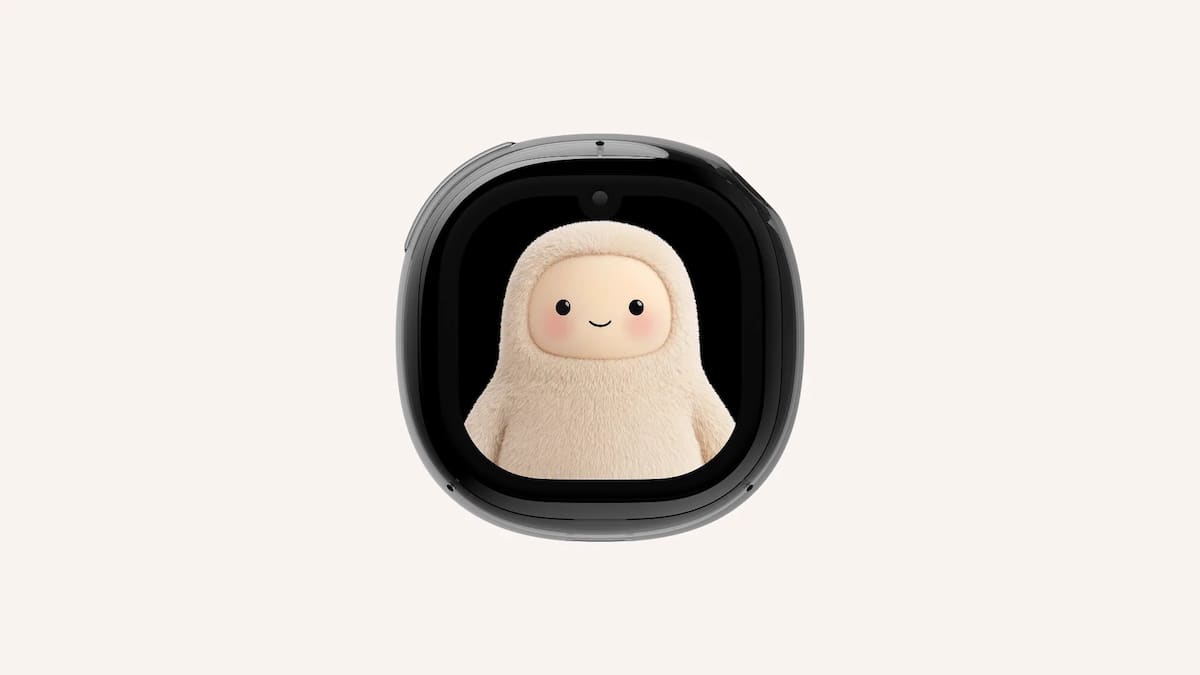
Meta announced on 9 November that its Muse AI assistant now operates on Apple Watch and devices running Google's Wear OS. The wrist-based deployment allows users to communicate with the agent through voice calls, text messages, or dictation without reaching for a phone or tablet.
The smartwatch rollout follows by four weeks the introduction of a dedicated iPad application for Muse. Meta first released the AI assistant on the iOS App Store in September, and the subsequent push across Apple's product line - iPhone, iPad, and now Watch - reflects a deliberate strategy to embed the agent across consumer hardware ecosystems rather than confine it to a single platform.
Muse competes in a crowded field of consumer AI agents that promise to manage calendar entries, handle correspondence, pay bills, and execute errands such as restaurant bookings or grocery orders. The product permits users to link external accounts for email and scheduling, and offers avatar customisation that ranges from humanoid representations to animals or abstract characters.
Rapid Feature Additions Since September
Within two months of its App Store debut, Meta has introduced several capabilities that go beyond text-based question answering. Earlier this month the company unveiled Spaces, a feature that generates task-specific mini-applications on demand. Spaces appear in the sidebar of the Muse interface and create focused threads in which the assistant works toward a defined objective - organising a trip, tracking a project, or researching a purchase, for example.
Last week Meta enabled video chat with the Muse avatar for users in the United States. During these sessions the avatar displays facial expressions and gestures intended to match conversational tone and context. The assistant can hear the user and respond in real time, though it does not process video input from the user's camera.
The pace of updates suggests Meta views Muse as a priority product rather than an experimental side project. By layering voice, video, collaborative workspaces, and now smartwatch access onto a two-month-old platform, the company is testing whether rapid feature velocity can help a latecomer carve out share in an AI assistant market already populated by established players.
Download Momentum and Ecosystem Lock-in
Data from app analytics providers indicates that Muse crossed ten million downloads in the United States within its first 40 days on the App Store, a threshold reached by only eleven other mobile applications. The most recent app to achieve that milestone was Meta's own Threads social network in July 2023.
Strong early adoption does not guarantee sustained engagement, particularly in a category where users often trial multiple assistants before settling on one. Meta's advantage lies in its ability to integrate Muse with Instagram, WhatsApp, and Facebook - channels that together claim more than three billion monthly active users globally. If the company chooses to surface Muse prompts or shortcuts inside those applications, distribution becomes less of a hurdle than differentiation.
The smartwatch expansion addresses a use case where voice interaction has structural advantages over typing. Wrist-based devices have smaller screens and limited input methods, which makes them better suited to quick voice queries or dictated messages than to extended text composition. By placing Muse on the wrist, Meta positions the assistant for scenarios in which pulling out a phone is inconvenient - during exercise, while driving, or in brief moments between meetings.
Competitive Pressure and Platform Strategy
Meta's decision to extend Muse across iOS, iPadOS, watchOS, and Wear OS reflects a broader shift in how technology companies approach AI deployment. Rather than anchor an assistant to a single operating system or device category, firms are racing to establish presence wherever users spend time. The smartwatch, despite its smaller installed base compared to smartphones, represents a beachhead in ambient computing - the idea that AI should be accessible in every context, not just at a desk or with a phone in hand.
The challenge for Meta will be demonstrating that Muse offers capabilities competitors cannot match. Many of the features announced in recent weeks - task-specific workspaces, video avatars, multi-device sync - have analogues in rival products. Meta's differentiator may ultimately rest on integration depth with its social and messaging platforms, where the company controls both the data and the distribution channel.
The smartwatch launch also signals Meta's willingness to support Android alongside iOS, a pragmatic choice given that Wear OS devices account for a meaningful share of the global smartwatch market outside the United States. By committing to cross-platform availability early, Meta avoids the fragmentation risk that has hampered other consumer AI products launched exclusively on a single ecosystem.
Whether Muse sustains its early download trajectory will depend on retention rates and daily active use, metrics that remain undisclosed. For now, the company's strategy appears to favour breadth - more devices, more features, more surfaces - as it works to establish Muse as a default AI assistant before user habits solidify around a competitor.