Apple's M6 MacBook Pro Caught Between Generations
The entry-level 14-inch model receives the latest silicon but retains the 2021 chassis, missing the OLED display and design refresh reserved for higher-tier machines.
A Processor Upgrade, Not a Platform Leap
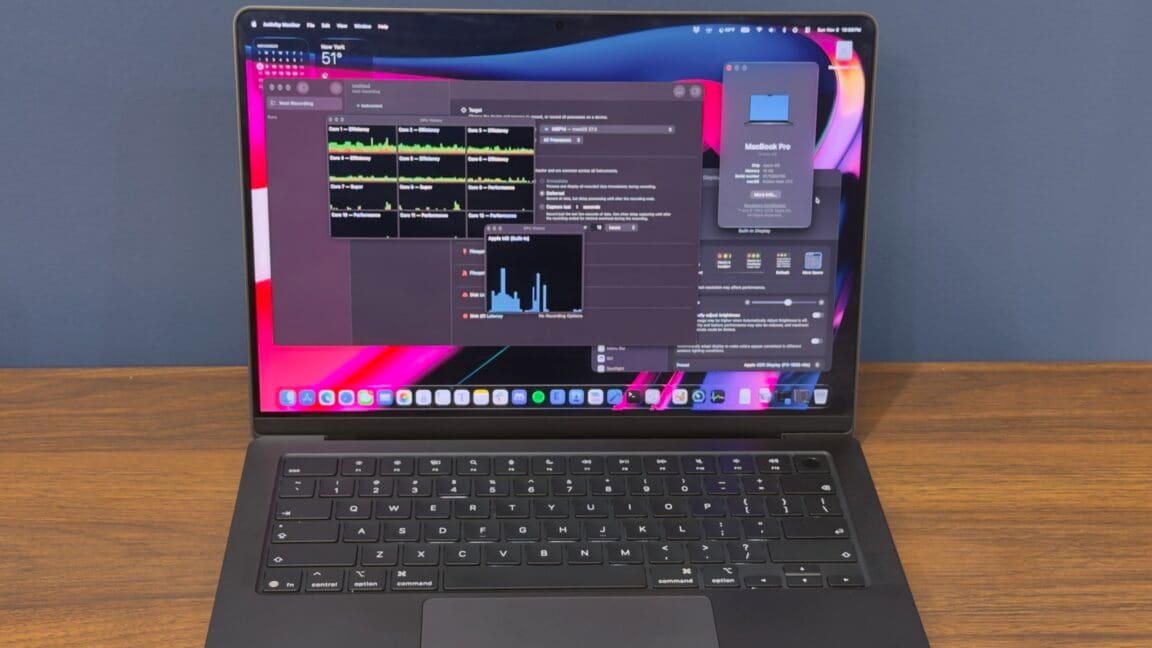
Apple's newest entry-level 14-inch MacBook Pro illustrates a familiar pattern: the company's most affordable professional laptop receives a processor generation bump whilst the chassis, display technology, and industrial design remain anchored to an earlier era. The machine now carries an M6 chip - Apple's latest silicon - but the enclosure, screen, and port layout mirror the design language Apple introduced in 2021.
The M6 processor itself delivers measurable gains in single-thread performance and efficiency, and because Apple has opted not to produce M6 Pro, Max, or Ultra variants this generation, the base chip represents the only path to the architecture's specific advantages. For workloads that scale with per-core speed rather than core count - certain compilers, single-threaded simulations, and latency-sensitive audio processing - the entry model now holds a narrow technical edge over machines sold at higher price points but running previous-generation silicon.
Yet the positioning creates tension. Buyers choosing the entry-level MacBook Pro gain access to the latest instruction sets and power-per-watt curves but forfeit the hardware refinements that define Apple's 2026 notebook line: an OLED panel with deeper contrast, a touchscreen layer, a redesigned top bezel incorporating Dynamic Island UI elements, and a reduction in chassis mass approaching 230 grams.
The Pattern of Staggered Refreshes
This is not the first time Apple has allowed its entry-level professional notebook to lag behind flagship models in everything but processor. The 13-inch MacBook Pro models equipped with M1 and M2 chips retained the 2016 industrial design, including the Touch Bar - a capacitive strip that replaced the function-key row - long after Apple had moved its higher-tier machines to a new keyboard layout and port selection.
Maintaining legacy designs extends component lifecycles and spreads tooling costs across multiple product years, but it also creates segmentation that is visible to the customer. The result is a machine that reads as current in benchmark results yet dated in hand, particularly when placed beside the redesigned models occupying the next pricing tier.
What the Entry Model Omits
The 2026 flagship MacBook Pro models introduced several material changes. The OLED display replaces the mini-LED backlight array used since 2021, offering per-pixel luminance control and eliminating the blooming effect that occurs when bright UI elements sit against dark backgrounds. The touchscreen layer, Apple's first in a Mac notebook, supports direct manipulation of on-screen elements and integrates with macOS gestures introduced earlier this year.
The Dynamic Island - a software-driven UI region that adapts the shape of the front camera and sensor cutout - migrated from iPhone to Mac in this generation, providing persistent access to background task status and notifications. The chassis redesign shaved approximately half a pound from the 14-inch model's travel weight, a reduction achieved through thinner aluminium extrusions and a smaller battery enabled by the M6's efficiency gains.
None of these features appear in the entry-level machine. The display remains mini-LED, the bezel houses a conventional notch, the lid carries no backlit logo, and the overall mass stays consistent with the 2021 specification. For a buyer prioritising the latest processing architecture, these omissions may be acceptable trade-offs. For one expecting the complete 2026 experience, they represent a clear demarcation.
The M6 Advantage, Narrow but Real
The M6 chip does deliver specific benefits that higher-priced MacBook Pro models running M5 Pro or M5 Max silicon cannot match. Single-core Geekbench scores for the M6 sit roughly 12 per cent higher than the M5 Pro, reflecting increases in clock speed and improvements to the branch predictor and instruction decode logic.
For tasks that cannot parallelise across additional cores - certain JavaScript engines, single-threaded Python scripts, and real-time audio plug-ins with strict latency budgets - the M6's per-core performance advantage translates into measurable reductions in processing time. The chip also incorporates updated media encode blocks that accelerate AV1 encoding, a codec increasingly used for web video distribution.
Battery life extends modestly, with the entry MacBook Pro recording approximately 18 hours of continuous web browsing over Wi-Fi at 200 nits display brightness, compared to 16.5 hours for the M5-equipped predecessor under identical conditions. The improvement stems from the M6's 3-nanometre process refinements, which reduce leakage current and lower idle power draw.
A Machine for a Specific Buyer
The entry-level M6 MacBook Pro serves a defined segment: buyers who require macOS, need more sustained performance than the MacBook Air can provide under load, and are willing to accept last-generation industrial design in exchange for current-generation silicon at a lower entry price. The machine starts at USD 1,999, positioning it USD 500 below the base configuration of the redesigned 14-inch MacBook Pro with M6 Pro.
For organisations purchasing notebooks in volume, the price gap and the absence of features that complicate IT management - touchscreens introduce new support variables, OLED panels carry higher repair costs - may make the entry model a rational choice. For individual buyers who have followed Apple's product line and understand what the higher-tier machines offer, the decision becomes a matter of budget and priority.
The Cost of Segmentation
Apple's staggered refresh strategy allows the company to introduce new technologies at the top of the line, amortise development costs, and then cascade those features downward in subsequent generations. It also permits price discrimination, offering a lower entry point without cannibalising sales of higher-margin configurations.
The trade-off is customer confusion and a product line that can feel fragmented. A buyer walking into a retail environment sees two 14-inch MacBook Pro models at different price points and must parse not only processor differences but also display technology, input methods, and chassis generation. The cognitive load is higher than it would be if all machines in a given model year shared the same design foundation.
The entry-level M6 MacBook Pro is a capable machine. It runs macOS Sequoia without compromise, handles 4K video editing in Final Cut Pro, and compiles large codebases faster than most Windows laptops in its price range. But it is also a machine that embodies the compromises inherent in Apple's tiered product strategy, offering the latest processor in a package that omits the latest platform innovations. For some, that equation will make sense. For others, it will feel like paying for yesterday's laptop with tomorrow's chip inside.