Ghost Ships a Desktop Computer Designed to Run AI Agents Locally for $3,499
A 19-year-old founder and Andreessen Horowitz are betting that consumers will pay for dedicated hardware to keep their personal AI data encrypted and independent of cloud providers.
A Local-First Bet in a Cloud-First Era
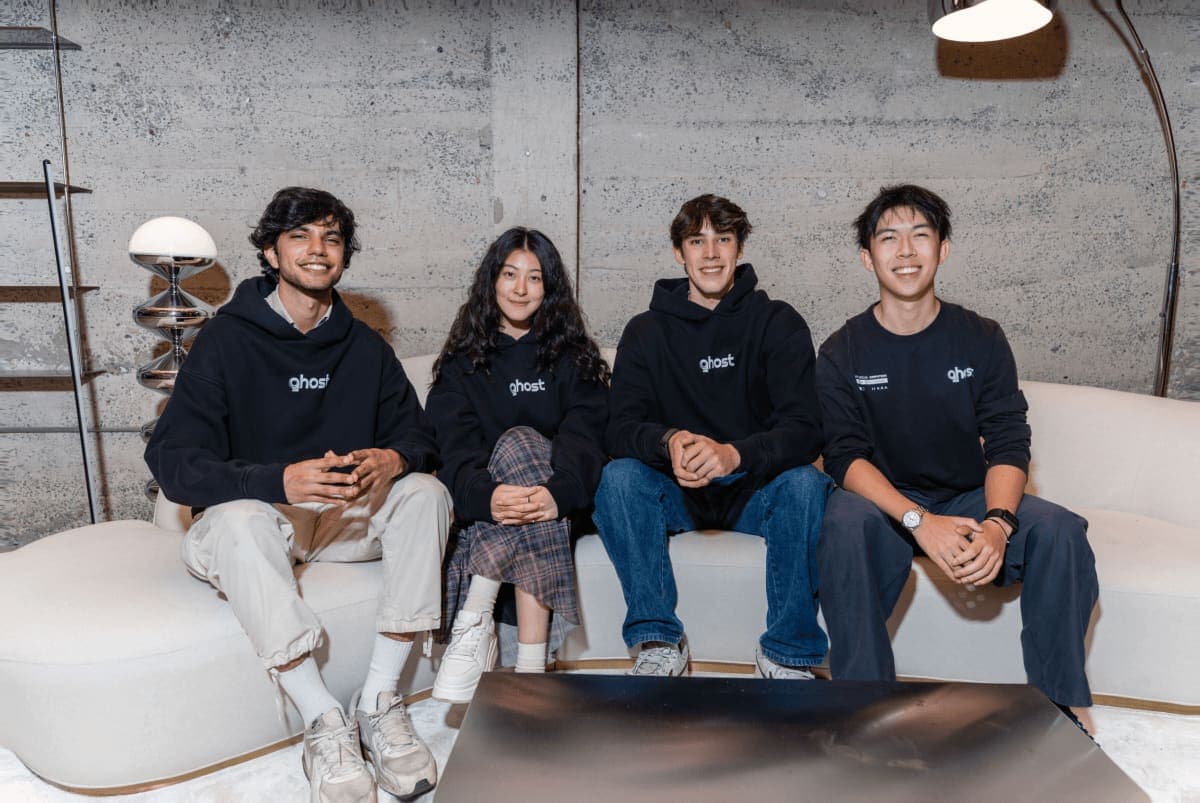
Ghost, a San Francisco-based startup, launched Monday with $11 million in seed funding led by Andreessen Horowitz and a product thesis that runs counter to the prevailing architecture of consumer AI: that people will pay a premium for hardware that keeps models, memory, and credentials entirely on-device. The company's first product, Core, is a screenless desktop computer priced at $3,499, shipping in late October.
Founded by Zain Javaid, 19, alongside Nicholas Chua, 19, Yifei Chen, 24, and Gautam Sharda, 23, Ghost has spent the past year building Core in stealth. The funding round also includes backing from Abstract, Audacious Ventures, SV Angel, and Nova.
Core bundles an Nvidia RTX Pro 4000 SFF Blackwell GPU, a chip class typically deployed in professional AI inference workloads. Javaid, who serves as chief executive, said the company developed its own software layer, browser, and filing system to allow AI agents to run continuously without repeated user prompts. Users access Core through a mobile or desktop app; the box itself has no screen or microphone.
What's Preloaded and What's Modular
Three models ship with Core: Qwen-3.8-Next, Qwen-3.8-27B, and Gemma-4-31B. Users can install additional models from Hugging Face or load custom-trained weights. Ghost pushes over-the-air updates when new model versions are released, asking users whether to adopt them or enabling automatic updates if preferred.
The device is assembled at Ghost's San Francisco facility. Javaid said the team designed Core to ship fully configured, eliminating the need for users to source GPUs separately or manage complex installations.
The Privacy and Autonomy Pitch
Ghost's central claim is that all inference, personal memory, and credentials remain encrypted on the device. The company says it cannot access user data, and that Core is architected to continue functioning even if Ghost ceases operations. Source code, logic, and model weights reside on the hardware, not on external services.
The company is also building a firewall to monitor outgoing network requests. If an agent attempts an unauthorised action or tries to exfiltrate data, the firewall blocks the request and flags it for user review. Users can adjust the autonomy granted to agents.
Javaid offered an example of Core's intended workflow: the system might send a notification that the user may be falling ill, correlating an elevated resting heart rate from a wearable device, late-night work sessions visible in desktop activity logs, and seasonal flu data for the user's location.
A Young Team and a Sceptical Market
At Opentechwire, we've tracked a wave of dedicated AI hardware launches over the past 18 months, from wearables to standalone inference boxes. Most have struggled to articulate why a consumer would invest in single-purpose hardware when general-purpose devices and cloud APIs already deliver AI capabilities with less friction and lower upfront cost.
Ghost's answer hinges on two assumptions: that a meaningful segment of users will prioritise data sovereignty over convenience, and that the performance and user experience of locally run agents will outpace what cloud-tethered systems can offer. The $3,499 price point places Core above most consumer desktops but below entry-level workstations.
Javaid acknowledged the comparison to Apple's Mac Mini, which some developers configure to run local AI tools. He argued that Core's hardware and preinstalled software are optimised specifically for agent workloads, whereas the Mac Mini remains a general-purpose machine requiring user configuration.
When asked about competition from incumbents, Javaid said he does not view established technology companies as the primary threat. He credited Apple with strong hardware design but argued that Core's differentiation lies in software: how the model reasons over a user's life, how it remembers context, how it decides when to act, and how it maintains continuity across applications and devices.
The Funding and the Road Ahead
Andreessen Horowitz's decision to lead the round signals continued venture interest in infrastructure that enables personal AI, even as the firm maintains large positions in cloud-native model providers. Abstract, Audacious Ventures, SV Angel, and Nova joined the round.
Ghost's founding team is notably young. Javaid previously worked as a quantitative analyst before shifting focus to personal AI after the release of large language models in late 2022. Chua, Chen, and Sharda bring engineering and product backgrounds.
The company's immediate priority is shipping the first batch of Core units and gathering feedback from early adopters. Preorders opened Monday, with delivery scheduled for the final week of October.
Open Questions on Adoption and Economics
Several risks attend Ghost's model. Local inference on consumer hardware limits the size and capability of models users can run compared to cloud endpoints backed by data-centre-scale clusters. Core's architecture may appeal to privacy-conscious users and developers, but it remains unclear whether that cohort is large enough to sustain a hardware business at this price point.
The company must also navigate the rapid pace of model improvement. Over-the-air updates can refresh software and swap model weights, but if inference requirements outpace the RTX Pro 4000's capacity within a year or two, Ghost will face pressure to offer upgrade paths or risk obsolescence.
Javaid said the company's success hinges on building a product people genuinely want to use. If Ghost cannot achieve that, he argued, the presence or absence of competition from Apple or other incumbents will be beside the point.
For now, Ghost is betting that a slice of the market will pay for a "brain in a box" that keeps their digital life encrypted, local, and under their control. Whether that bet pays off will depend on execution, model performance, and whether the benefits of on-device autonomy outweigh the convenience of the cloud.