DeepSeek Stands by Open AGI Strategy as Beijing and Washington Tighten Scrutiny
A Hangzhou-based AI lab defends its decision to publish AGI research openly, even as dual pressures mount from national security hawks and international regulators.
A Public Defence in Wuzhen
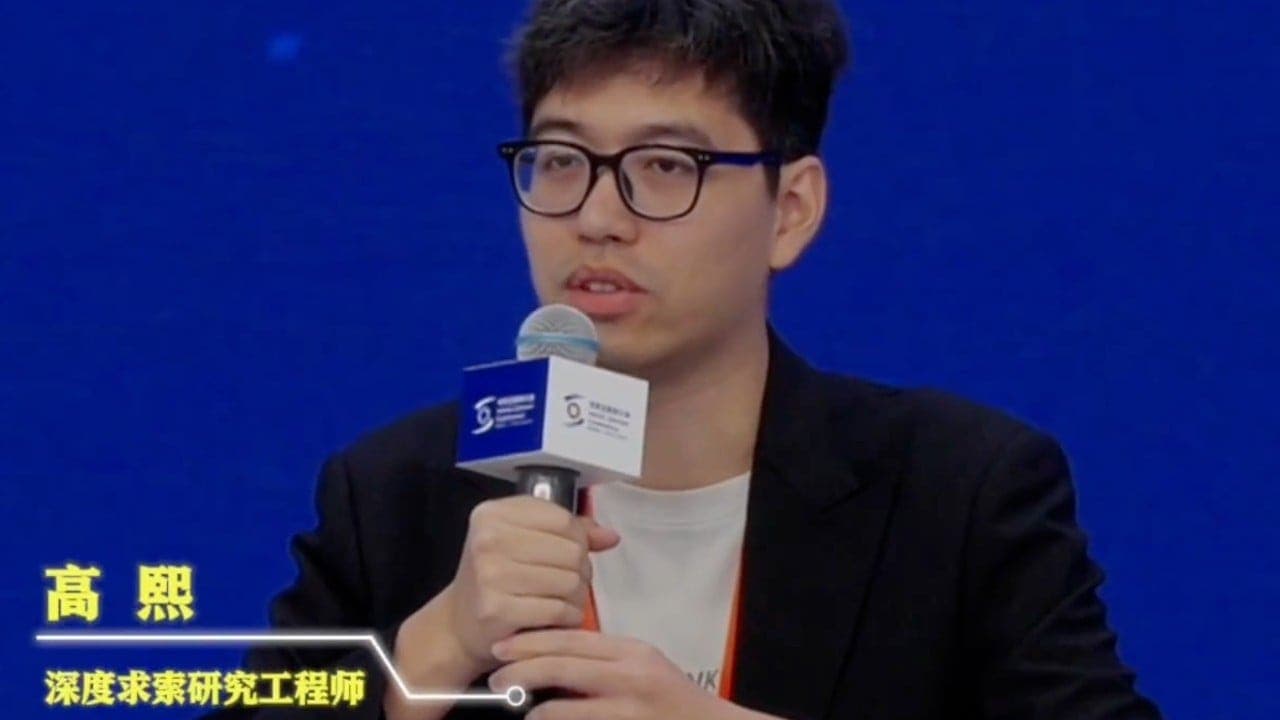
At the World Internet Conference on 4 November, DeepSeek engineer Gao Xi made a case that has become increasingly contentious across both sides of the Pacific: that open-source artificial general intelligence research is worth the added risk. Speaking on a panel in Wuzhen, Gao argued that publishing AI models and training techniques accelerates collective progress toward AGI, even if it means adversaries, competitors, and bad actors gain the same access.
The remarks arrive at a delicate moment. In Washington, export controls on advanced semiconductors and training clusters have tightened around the premise that open models can be weaponised or misused. In Beijing, regulators have grown warier of domestic labs that publish frontier research without prior vetting, particularly when that research might leak sensitive compute optimisations or algorithmic advances to foreign competitors. DeepSeek, a Hangzhou-based lab that has published several large language models under permissive licences over the past eighteen months, now finds itself navigating both sets of concerns.
The Open-Source Wager
Gao framed DeepSeek's approach as a bet on network effects. By releasing model weights, fine-tuning recipes, and inference code, the lab invites contributions from universities, independent researchers, and enterprises that lack the capital to train frontier models from scratch. The result, he contends, is faster iteration: bugs surface sooner, novel applications emerge in unexpected domains, and the broader AI community converges on architectural improvements that no single lab could discover alone.
This philosophy echoes the early years of deep learning, when academic labs routinely published pre-trained models and training scripts. Yet the stakes have risen. Models approaching or claiming AGI-level reasoning can automate tasks across cyber-security, biological research, and autonomous systems. What was once a research courtesy has become a geopolitical variable.
DeepSeek has released at least three large models since early 2025, each with parameter counts exceeding 60 billion and each under licences that permit commercial use with minimal restrictions. The lab's most recent release includes a multi-modal architecture capable of processing text, images, and structured data in a unified latent space. Within weeks of publication, developers in Seoul, Singapore, and São Paulo had fine-tuned versions for vertical applications ranging from medical imaging to legal document review.
Dual Pressures
The tension is not purely ideological. In the United States, the Department of Commerce has floated rules that would require AI labs to obtain export licences before publishing models above a certain capability threshold. The threshold remains undefined, but the intent is clear: to prevent adversaries from leap-frogging domestic labs by downloading state-of-the-art weights. Open-source advocates argue the proposal is unenforceable and will drive research offshore; national security officials counter that the alternative is handing rivals a blueprint.
China's regulatory posture has been more opaque but no less firm. The Cyberspace Administration of China introduced guidelines in mid-2025 requiring labs to register large models and undergo security assessments before public release. The assessments examine both content safety and the potential for models to be repurposed in ways that undermine social stability or national interests. Several Chinese labs have delayed releases or opted to restrict access to domestic users only. DeepSeek's continued international distribution suggests either a high degree of regulatory confidence or a calculated risk.
The AGI Timeline Argument
Central to Gao's defence is the belief that AGI is close enough to warrant urgency. If general intelligence is a decade away, the argument goes, then slowing down to address every hypothetical risk may simply cede leadership to a competitor willing to move faster. If it is two decades away, the calculus shifts: there is time to build robust safety frameworks, international agreements, and verification mechanisms.
DeepSeek's public statements have consistently leaned toward the shorter timeline. Internal research notes, cited in technical reports accompanying model releases, describe AGI as a systems integration challenge rather than a fundamental science problem. The implication is that the core components - large-scale transformers, reinforcement learning from human feedback, multi-modal fusion - already exist; what remains is scaling, alignment, and deployment infrastructure.
This framing has drawn scepticism. Critics point out that labs with a commercial or reputational interest in appearing ahead often overstate proximity to AGI. Others note that even if the technical components are in place, the gap between a capable model and a safe, aligned one remains vast. Open-sourcing a near-AGI system without robust alignment guarantees, they argue, is not accelerating progress - it is externalising risk.
What Open Really Means
The term "open-source" itself has become contested. DeepSeek's releases include model weights and inference code but not the full training corpus or the compute logs that would allow independent verification of claimed efficiency gains. This is common practice among labs that publish under open licences; training data often includes proprietary or sensitive material, and compute details can reveal strategic advantages.
Yet it creates an asymmetry. Researchers can fine-tune and deploy DeepSeek's models, but they cannot fully audit the training process or reproduce the base model from scratch. This partial openness satisfies some definitions of open-source - the Open Source Initiative's AI guidelines focus on post-training accessibility - but frustrates transparency advocates who argue that true openness requires reproducibility at every stage.
The distinction matters for safety. If a model exhibits unexpected behaviour in deployment, downstream developers need to trace the issue back to training data, hyperparameter choices, or architectural quirks. Without that visibility, they are left patching symptoms rather than diagnosing root causes.
Regional Dynamics
DeepSeek's position also reflects a broader regional dynamic. China's AI ecosystem has historically been more open than its US counterpart, in part because Chinese labs have had less to lose. When OpenAI, Anthropic, and Google were keeping models proprietary, Chinese competitors gained mindshare by publishing. Now that the gap has narrowed and Chinese labs are producing frontier models, the incentive structure has inverted. Keeping models closed protects leads; publishing them invites commoditisation.
Yet there remains a strategic case for openness. If Chinese labs publish while US labs close, the global developer community gravitates toward Chinese toolchains, Chinese cloud platforms, and Chinese AI standards. This is not hypothetical. Across Southeast Asia, Latin America, and parts of Europe, developers report that open Chinese models have become the default base for local-language fine-tuning and vertical applications. The network effects Gao described at Wuzhen are already materialising, and they are tilting the ecosystem.
The Safety Trade-Off
Gao acknowledged that open-source AGI carries heightened safety risks but argued that the alternative - concentrating AGI development in a handful of closed labs - poses its own dangers. Centralised control, he suggested, reduces the diversity of safety research, creates single points of failure, and invites regulatory capture. If only three labs in the world can build AGI, then the values, biases, and blind spots of those labs become embedded in the technology.
This argument resonates with parts of the AI safety community, particularly those who worry about corporate governance and the concentration of power. It is less persuasive to those who believe AGI alignment is a technical problem that requires careful, coordinated effort rather than a governance problem that benefits from decentralisation.
The debate is unlikely to resolve soon. What is clear is that DeepSeek's strategy has forced both governments and competitors to articulate their own positions. If open-source AGI is unacceptable, then what enforcement mechanisms are feasible? If it is acceptable, then what safety standards must accompany it? These are no longer theoretical questions. The models are already circulating.
What Comes Next
DeepSeek has not announced its next release, but internal signals suggest the lab is training a model with parameter counts in the hundreds of billions, potentially crossing the threshold at which export controls or registration requirements would apply. How regulators in Beijing and Washington respond will set precedents that extend far beyond one lab.
For now, Gao's remarks in Wuzhen stand as a marker: a public articulation of a philosophy that much of the AI industry has adopted quietly but few have defended openly. Whether that philosophy proves wise or reckless will depend on variables no one can yet measure - how close AGI really is, how robust alignment techniques become, and whether the international system can coordinate fast enough to matter.