Anthropic Hands Early-Stage Companies a Year of Team Access and API Credits
The move expands the Claude for Startups programme with free premium seats and marketplace access, part of a broader push to embed AI into emerging product layers.
The Package
Anthropic announced on 6 October that it will provide qualifying startups with a year of free access to Claude Team, its group-oriented paid tier, including up to five premium seats. The package also includes 1,000 US dollars in API credits, entry to the Claude Marketplace for building plug-ins, and the option to book virtual office hours with the company's Applied AI team.
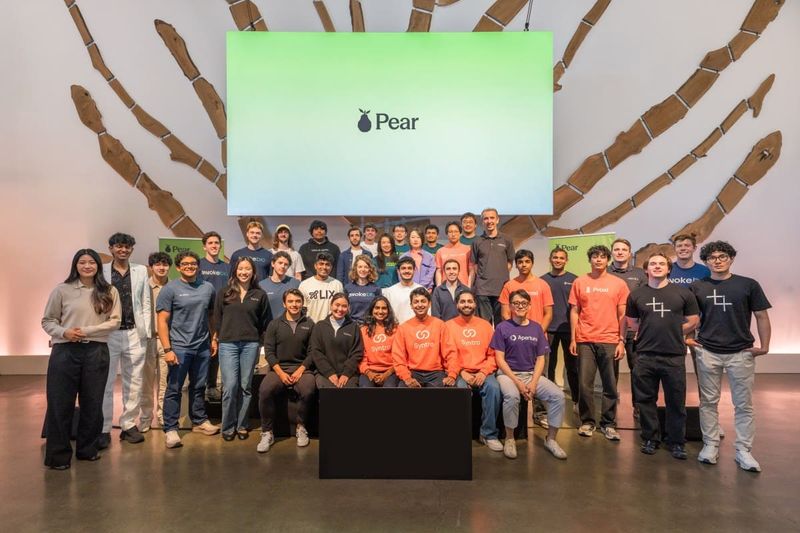
The offer is part of an expanded Claude for Startups programme, which Anthropic unveiled during SF Tech Week. Companies are eligible if they were founded within the past five years or have received funding in the past two years. Applications are open through the programme's dedicated page.
Why This Structure
At Opentechwire, we've tracked similar subsidy programmes from OpenAI, Google, and Cohere over the past eighteen months, and the pattern is consistent: model vendors recognise that direct consumer adoption of large language models remains narrow. The real distribution comes through application layers - tools, vertical SaaS, workflow automation, and niche products that embed inference behind a domain-specific interface.
Anthropic's framing makes that logic explicit. The company stated that it expects AI's benefits to reach most users "through the companies that build on top of models, rather than through the models alone." That acknowledgement shifts the competitive ground from pure model performance to ecosystem velocity. A startup that builds a legal research tool or a customer-support agent on Claude becomes a distribution node, and each node locks in usage that flows back to Anthropic's API infrastructure.
The five-seat cap on the free Team tier is a deliberate constraint. It targets pre-Series A or early Series A companies - small enough that five seats cover core product and engineering, but past the solo-founder stage where API credits alone would suffice. The 1,000-dollar credit allocation maps to roughly 1.5 to 2 million tokens on Claude 3.5 Sonnet, enough for prototyping or low-volume production but insufficient for a breakout consumer app. In other words, the programme is designed to get a product live, not to subsidise scale.
Marketplace and Office Hours as Retention Levers
Access to the Claude Marketplace is less about immediate revenue - plug-in ecosystems remain small - and more about creating switching costs. A startup that builds a plug-in for Claude now has integration debt that makes migration to a competing model more expensive. The marketplace also signals to investors and early users that a startup is part of an "official" ecosystem, a form of social proof that matters in crowded categories.
The virtual office hours with Anthropic's Applied AI team are a higher-touch element. These sessions typically cover prompt engineering, fine-tuning strategy, latency optimisation, and cost management. For a startup, that kind of access can compress months of trial and error into a few guided sprints. It also gives Anthropic early visibility into what developers are building, which use cases are gaining traction, and where the model falls short - data that feeds back into training priorities and product roadmap decisions.
The Timing Context
The expansion arrives as competition for developer mindshare intensifies. OpenAI's developer programme offers tiered credits and priority support. Google Cloud has been aggressive with Vertex AI subsidies, particularly in Asia-Pacific, where it bundles credits with startup accelerators in Singapore, Seoul, and Sydney. Cohere, focused on enterprise, has rolled out similar packages targeting fintechs and healthcare startups in regulated markets.
Anthropic's positioning has historically leaned on safety and transparency, but that brand advantage matters less to a pre-revenue startup optimising for speed and cost. The expanded programme is a recognition that developer adoption is won through friction reduction - free seats, fast onboarding, and direct access to expertise - not just through a superior constitutional AI framework.
Regional Implications
The programme is open globally, but the SF Tech Week launch venue and the application process suggest a primary focus on US-based startups. That's a gap. Across Southeast Asia, India, and Korea, startups building on large language models face higher API costs relative to local revenue potential, and many are already defaulting to open-weight models or regional alternatives like Naver's HyperCLOVA X or Alibaba's Qwen for cost reasons.
Anthropic has not announced localised pricing or region-specific credit multipliers, which means the 1,000-dollar allocation has less marginal impact in markets where a typical Series A is two to three million dollars rather than ten. If the company wants to compete seriously in Asia, it will need to adapt the programme's economics, not just translate the landing page.
What Startups Should Weigh
For a qualifying company, the calculation is straightforward. The free Team tier eliminates a recurring expense - around 30 US dollars per seat per month, or 1,800 dollars over the year - and the API credits cover early experimentation. The real value, however, is conditional on two factors: whether the startup's product roadmap aligns with Claude's strengths in long-context reasoning and nuanced instruction-following, and whether the team can absorb the office-hours guidance quickly enough to justify the time investment.
Startups that have already built on OpenAI's API or are committed to open-weight models like Llama 3.1 may find the switching cost outweighs the subsidy, especially if their infrastructure is already tuned for a different tokenisation scheme or latency profile. For those still in the model-selection phase, the programme lowers the barrier to testing Claude in production, but it does not eliminate the need to benchmark across vendors.
The Broader Bet
Anthropic's expansion of the startup programme is less about the immediate cohort of participants and more about seeding the next generation of AI-native products with a dependency on Claude. If even a fraction of the companies that apply go on to raise Series B or C rounds, their aggregate API spend will dwarf the cost of the free tier and credits. The office hours and marketplace access are designed to accelerate that path, turning subsidised users into long-term customers before they have the leverage to negotiate volume discounts or the technical capacity to migrate.
The programme also serves a signalling function. By positioning itself as a partner to founders, Anthropic differentiates from OpenAI's more transactional developer relations and Google's cloud-first bundling. Whether that positioning translates into durable market share depends on execution - how quickly applications are approved, how useful the office hours prove, and whether the marketplace gains traction beyond a handful of showcase integrations.
For now, the expanded programme is a straightforward subsidy play in a market where developer attention is the scarce resource. The companies that benefit most will be those that move quickly, use the office hours strategically, and build products where Claude's specific capabilities - long context, instruction adherence, and tone control - create a defensible edge. The rest will take the free credits, run a few experiments, and move on.