Who Guards China's AI Frontier?
A small group of organisations is tasked with testing, advising and defending against risks from the world's second-largest AI ecosystem
Testing the Frontier
China's AI sector is expanding at breakneck speed, with foundation models emerging from research labs and commercial teams on what feels like a weekly cadence. Yet as the technology advances, a less visible layer of the ecosystem has begun to take shape: organisations dedicated to evaluating, advising and defending against the risks these models carry.
One such entity is a start-up that has positioned itself as an independent testing ground for the country's most capable systems. The firm evaluates flagship models from major technology groups, probing for vulnerabilities, alignment failures and edge-case behaviours that standard benchmarks miss. Its work sits at the intersection of technical rigour and policy pragmatism, a space that has become essential as regulators in Beijing demand greater accountability from developers.
The approach reflects a broader shift. Where early AI governance in China leaned heavily on ex-ante licensing and content moderation, the current phase emphasises continuous assessment and post-deployment monitoring. Testing organisations provide a bridge between developers eager to ship and authorities wary of uncontrolled release.
From Start-Up to Strategic Adviser
A second player in this landscape began as a small Beijing-based safety consultancy and has since grown into an adviser to some of the industry's largest companies. The firm's trajectory illustrates how quickly expertise in AI safety has become a scarce and valuable commodity.
Its client roster now includes household names in Chinese technology, groups that operate at scale and face mounting pressure to demonstrate that their systems are robust, interpretable and aligned with regulatory expectations. The consultancy offers red-teaming services, policy guidance and bespoke evaluation frameworks tailored to each client's risk profile.
What distinguishes this firm is its willingness to operate in grey zones where technical best practice and regulatory ambiguity overlap. It does not simply audit models; it helps clients navigate a compliance landscape that is still being written, translating vague directives into concrete engineering and governance tasks.
The firm's rise also signals a maturation of the ecosystem. Five years ago, AI safety in China was largely an academic concern. Today it is a commercial imperative, with dedicated teams, budgets and executive attention.
Defending Against Real-Time Threats
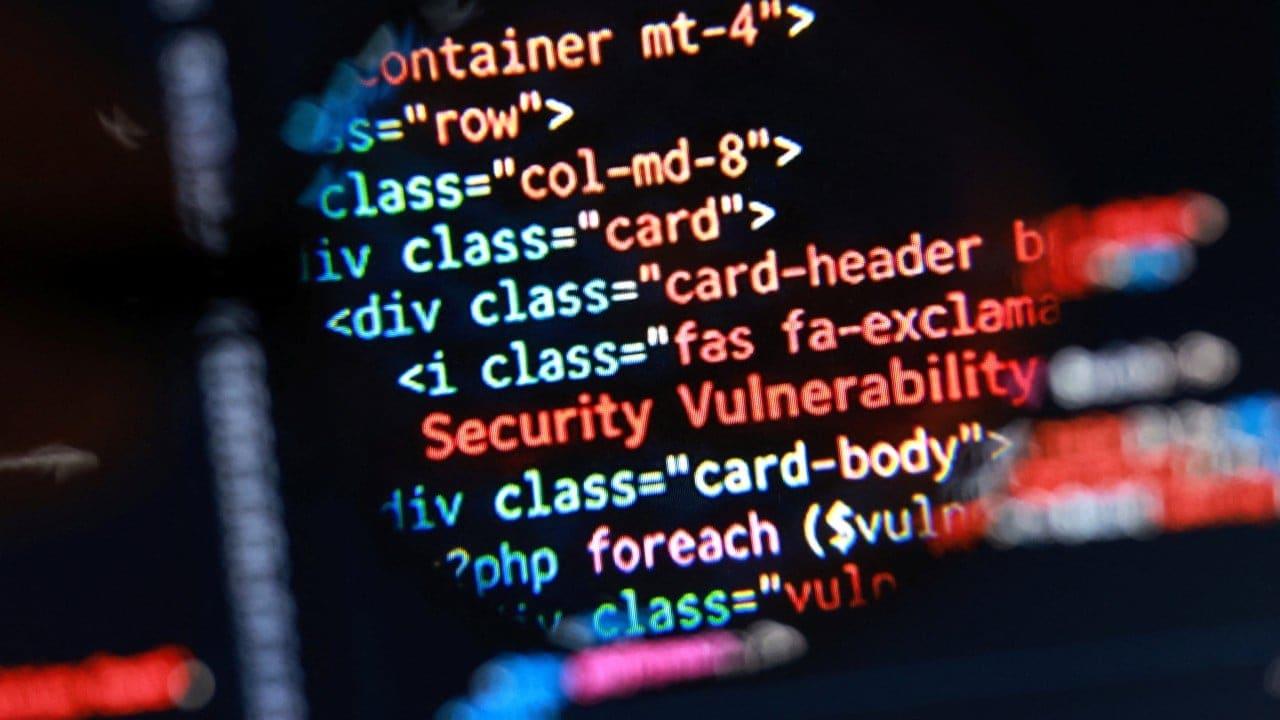
While testing and advisory work address risks embedded in models themselves, a third category of organisation focuses on external threats. One established cybersecurity group has adapted its infrastructure to counter AI-enabled attacks, which it reports are now mounting on an hourly basis.
The firm integrates machine learning into its defensive stack, using automated systems to detect and neutralise adversarial probes, data exfiltration attempts and prompt-injection exploits. The volume of incidents has grown in tandem with the proliferation of large language models, as attackers experiment with new vectors that traditional security tools struggle to catch.
This work underscores a dimension of AI safety that often receives less attention than alignment or fairness: the operational security of systems once they are deployed. A model may perform well in controlled evaluation, but if its API can be manipulated or its training data poisoned, the safety guarantees evaporate.
The cybersecurity group's experience also highlights the feedback loop between offence and defence. As AI capabilities improve, so do the tools available to malicious actors. Defensive measures must evolve at the same pace, a race that shows no sign of slowing.
A Fragmented But Functional Landscape
Taken together, these organisations represent a nascent but increasingly coherent safety infrastructure. They operate with different mandates, serve different clients and address different layers of risk. Yet their collective presence suggests that China's AI industry is beginning to internalise the idea that unchecked innovation carries costs.
The ecosystem remains fragmented. There is no single regulatory authority with comprehensive oversight, no unified standard for what constitutes adequate safety, and no guarantee that voluntary measures will scale as models become more capable. But the existence of dedicated testing labs, advisory firms and cybersecurity teams is itself a departure from the early days of the sector, when safety was an afterthought.
Whether this infrastructure will prove sufficient is an open question. The pace of model development continues to outstrip the pace of governance, and the tools available for evaluating frontier systems remain imperfect. But the direction of travel is clear: safety is no longer optional, and the organisations profiled here are building the scaffolding that will support the next phase of China's AI ambitions.
What Comes Next
The immediate challenge is coordination. Testing labs, advisers and cybersecurity firms each hold pieces of the puzzle, but they do not yet operate within a unified framework. Regulators in Beijing have issued guidelines on algorithmic accountability, content moderation and data security, but these documents leave significant room for interpretation.
The next twelve months will likely see efforts to harmonise standards, establish clearer lines of responsibility and create formal channels for information-sharing between industry and government. Several ministries are already drafting proposals, though the details remain under discussion.
For now, the organisations at the forefront of AI safety in China are navigating a landscape that is part technical frontier, part regulatory experiment and part geopolitical proving ground. Their work will shape not only the trajectory of the country's AI sector but also the global conversation about how to govern technologies that are advancing faster than the institutions designed to oversee them.