Apple Pursues Multi-Step Agent Technology to Challenge Meta, Anthropic and Google
A job listing reveals plans for an assistant capable of orchestrating tasks across browsers, terminals and APIs, signalling the iPhone maker's ambition to close the gap in agentic AI.
A Hiring Signal in the Agent Race
Apple has opened a position for an engineer to lead development of an agentic AI assistant, a move that places the company squarely in competition with Meta's Muse, Anthropic's Duet, OpenAI's Dots and Google's Tasks. The listing, which surfaced in mid-November, describes a system designed to plan and execute multi-step workflows that span web browsers, command-line interfaces, code editors and application programming interfaces.
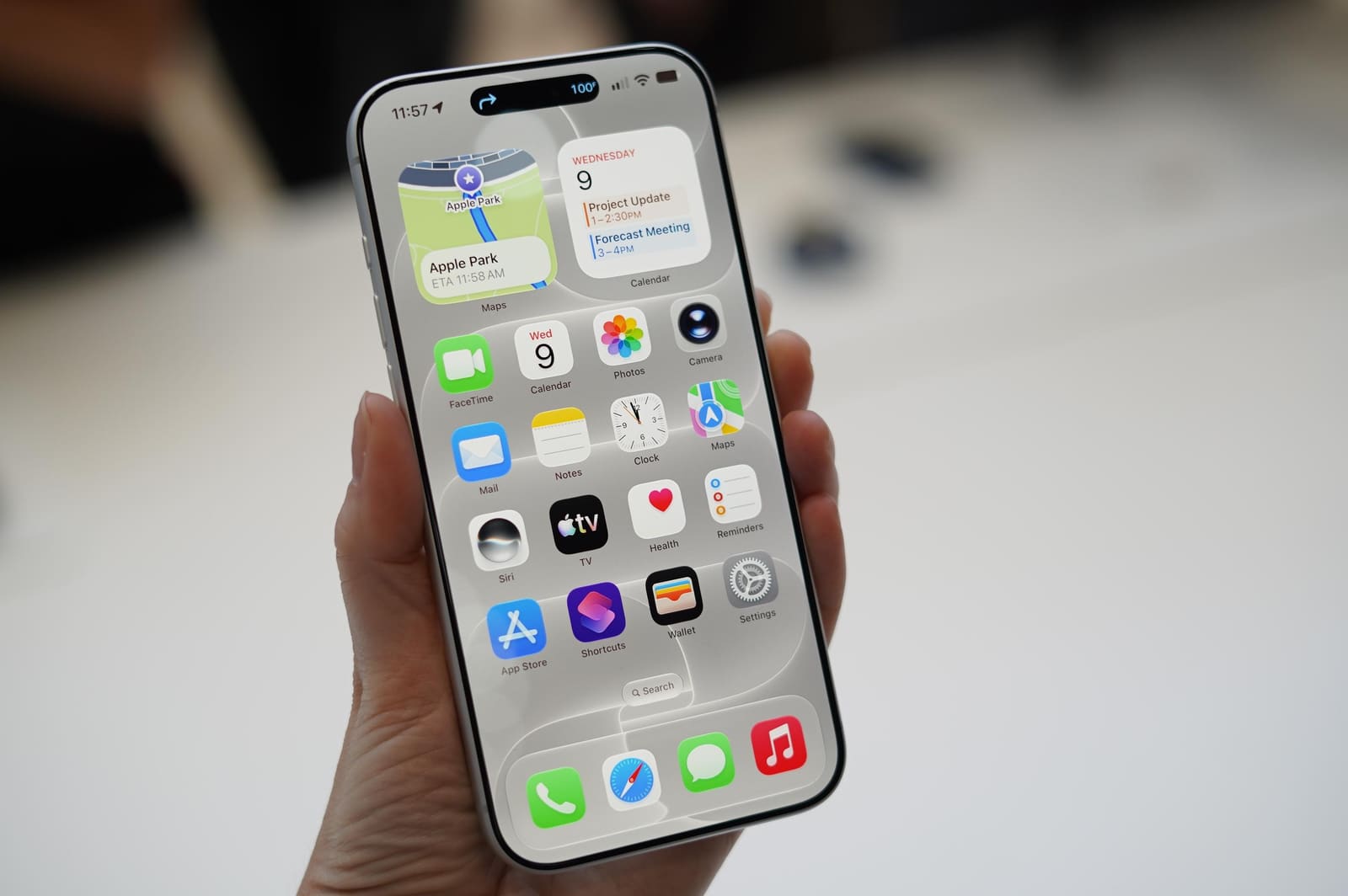
The posting marks a public acknowledgement of Apple's intent to extend its artificial intelligence capabilities beyond the conversational upgrades shipped with Siri in September. Where those enhancements enabled users to query on-screen content and trigger actions inside individual applications, the advertised role points to a more autonomous architecture. The agent under development would coordinate specialised sub-agents, routing tasks between tools in the manner that knowledge workers already do manually.
That ambition arrives at a moment when rival platforms have begun to demonstrate computer control. Meta's Muse, OpenAI's ChatGPT and Perplexity have all released Mac applications that can manipulate desktop environments, and Google recently enabled similar functionality in Gemini. For Apple, which has historically guarded the user experience inside its walled ecosystem, the challenge is not simply to match those capabilities but to integrate them in a way that preserves privacy and performance standards across hardware.
The Architecture of Multi-Step Coordination
The job listing outlines a system that moves fluidly between distinct environments. An engineer in the role would work alongside teams responsible for Siri, user-interface frameworks and Apple's foundation models, suggesting that the agent will draw on the company's existing language infrastructure while adding a layer of task orchestration.
In practical terms, this means the assistant would need to parse a user's intent, decompose it into discrete steps, select the appropriate tools for each stage, execute those steps in sequence, and handle errors or ambiguities that arise along the way. A request to research a topic, draft a summary and email it to a colleague, for instance, would require the agent to open a browser, query search engines or databases, extract relevant information, launch a text editor, generate prose, format the message and interface with a mail client.
Such workflows are commonplace in software engineering and data analysis, where practitioners routinely script sequences that bridge multiple applications. Translating that scripting logic into natural-language control, however, introduces complexity. The agent must maintain context across tools, manage authentication and permissions, and recover gracefully when an API call fails or a service times out. It must also respect the boundaries that operating systems impose on inter-process communication, a constraint that becomes more acute on mobile devices with stricter sandboxing policies.
Apple's listing emphasises the ability to "coordinate specialised sub-agents along the way," a design choice that reflects broader industry trends. Rather than building a monolithic model that attempts every task, the architecture would delegate subtasks to smaller, domain-specific agents. One sub-agent might handle web navigation, another might parse code repositories, and a third might interface with cloud services. The orchestrator's role is to route requests, merge results and present a coherent outcome to the user.
Competitive Pressure from Established Agents
The timing of Apple's recruitment aligns with a wave of agent releases from competitors. Meta introduced Muse earlier in the year, positioning it as a personal assistant capable of managing schedules, retrieving information and automating workflows. Anthropic's Duet and OpenAI's Dots followed, each offering conversational interfaces that can invoke external tools and maintain state across sessions. Google's Tasks, integrated into the Gemini ecosystem, extends similar functionality to Android and ChromeOS users.
What distinguishes these systems is not merely their ability to answer questions but their capacity to act. They can book appointments by calling calendar APIs, purchase items by navigating e-commerce sites, and generate reports by querying databases and formatting output. In each case, the agent operates with a degree of autonomy that traditional voice assistants lack.
For Apple, the strategic imperative is clear. Siri's upgrades in September brought the assistant closer to parity with Google Assistant and Amazon Alexa in terms of contextual awareness, but they did not address the gap in task automation. Users who want to chain actions across multiple applications still rely on Shortcuts, a scripting tool that requires manual configuration. An agentic system would abstract that complexity, allowing users to describe outcomes rather than steps.
The competitive landscape also includes smaller entrants. Startups in the agent space have demonstrated prototypes that can navigate graphical user interfaces by interpreting pixel data, a technique that sidesteps the need for API integrations. If these approaches prove scalable, they could erode the advantage that platform owners enjoy. Apple's response, as signalled by the job listing, is to build agent capabilities directly into the operating system, leveraging privileged access to system APIs and user data.
Regional Considerations in Agent Deployment
Apple's agent ambitions must navigate a fragmented regulatory environment. In the European Union, the Digital Markets Act imposes interoperability requirements on gatekeepers, compelling Apple to allow third-party applications greater access to system functions. An agent that coordinates tasks across apps would need to interface with software from outside Apple's ecosystem, raising questions about how the company will enforce privacy and security standards when delegating actions to external services.
In China, where Apple derives roughly one-fifth of its revenue, the regulatory framework for AI is more prescriptive. Models must undergo approval before deployment, and systems that generate content are subject to oversight. An agent that drafts emails, edits images or synthesises information from the web would fall within the scope of those rules. Apple has historically partnered with local firms to host data and comply with content regulations; extending that approach to an agentic assistant would require coordination with Chinese cloud providers and model developers.
Across Southeast Asia, where smartphone penetration is high but connectivity can be inconsistent, the challenge is technical rather than regulatory. An agent that relies on cloud inference to plan and execute tasks will struggle in environments with high latency or intermittent access. Apple's investment in on-device processing, visible in the Neural Engine that powers recent iPhone and Mac models, offers a pathway to offline agent functionality. The extent to which the company will prioritise that capability remains an open question.
In India, where Apple has been expanding manufacturing and retail presence, the diversity of languages and scripts presents a distinct hurdle. An agent that works across apps must handle input in Hindi, Tamil, Bengali and other regional languages, each with its own conventions for date formats, honorifics and command phrasing. Apple's foundation models, trained predominantly on English-language corpora, would require substantial fine-tuning to achieve parity in non-English contexts.
Integration with Developer Tools and APIs
Apple announced in its iOS 27.3 update that developers will gain the ability to integrate Siri's AI capabilities into their applications, a feature rolling out initially through a Developer Preview. This move signals a shift from a closed assistant model to a platform approach, where third-party software can invoke the same language understanding and task execution primitives that Apple's own apps use.
For developers, the opportunity is to offload complex natural-language processing to the operating system rather than embedding proprietary models in each application. A note-taking app, for instance, could allow users to instruct Siri to "summarise the last meeting and add action items to my task list," with the assistant parsing the command, extracting relevant text from the note, generating a summary and calling the task manager's API. The result is a more consistent user experience across applications and a lower barrier to adding AI-driven features.
The challenge, however, lies in the design of the interface between Siri and third-party apps. Developers will need documentation that specifies which intents the assistant can handle, how parameters are passed, and how errors are surfaced. They will also need assurances that Apple's agent will not prioritise first-party services over alternatives, a concern that has drawn scrutiny from regulators in multiple jurisdictions. The Developer Preview offers a testing ground for these interfaces, but widespread adoption will depend on the clarity and stability of the APIs.
Apple's history with developer relations has been uneven. HomeKit, the company's smart-home framework, struggled for years due to certification requirements and limited device support. Shortcuts, while powerful, remains a niche tool because its scripting model is opaque to non-technical users. An agentic assistant that relies on third-party integrations risks repeating those missteps if the onboarding process is cumbersome or if Apple imposes restrictions that limit functionality.
The Path to Siri's Agentic Evolution
Earlier reporting indicated that Apple is considering enhancements to Siri that would enable the assistant to perform more complex actions within native applications. Potential capabilities include rotating and cropping images in Photos, organising tabs in Safari, and managing files across iCloud. These additions would represent incremental steps toward a fully agentic system, each requiring the assistant to maintain state, interpret user intent and invoke the correct sequence of API calls.
The job listing's emphasis on multi-step task execution suggests that Apple is aiming beyond these discrete enhancements. A true agentic assistant would not simply automate individual actions but would construct workflows dynamically based on context. If a user asks to "prepare a presentation on last quarter's sales," the agent would retrieve data from a spreadsheet, generate charts, draft speaker notes and assemble slides in Keynote, adjusting the sequence based on available information and user preferences.
Achieving this level of autonomy requires advances in planning algorithms, which must balance exploration and exploitation. The agent needs to predict which actions are most likely to satisfy the user's goal while remaining flexible enough to adapt when assumptions prove incorrect. It also needs to manage computational resources, offloading inference to the cloud when tasks are complex and relying on on-device models when privacy or latency constraints apply.
Apple's foundation models, referenced in the job listing, provide the language understanding and reasoning capabilities that underpin these workflows. The company has invested heavily in model efficiency, optimising architectures to run on the limited memory and power budgets of mobile devices. Extending those models to support agentic behaviour will require additional training on task-oriented datasets, where the model learns not just to generate text but to predict sequences of actions that achieve specified outcomes.
What Lies Ahead for Platform Competition
The agent race is reshaping expectations for what operating systems should provide. Where previous generations of assistants served as information retrieval tools, the emerging class of agents positions itself as a delegation layer, handling tasks that once required manual coordination. For Apple, success will depend on whether it can deliver that functionality without sacrificing the control and polish that define its user experience.
The job listing offers a glimpse of the company's technical priorities, but questions remain about deployment timelines, supported languages and the degree of autonomy users will be willing to grant. As competitors roll out increasingly capable agents, Apple's challenge is to close the feature gap while maintaining the trust that underpins its ecosystem. The engineer hired for this role will inherit that responsibility, building the infrastructure that determines whether Siri evolves into a true agent or remains a voice-activated remote control.