Waymo Secures First Debt Financing as Robotaxi Operations Enter Global Phase
Alphabet's autonomous vehicle unit closes $5 billion loan from institutional investors, marking a shift from equity-only funding as it scales commercial service across three continents.
From Equity to Debt
Alphabet's autonomous vehicle subsidiary has closed a $5 billion credit facility with a syndicate led by PIMCO, Blackstone, and Sixth Street, according to the company. The transaction represents Waymo's inaugural debt financing after more than a decade of relying exclusively on equity injections from its corporate parent and venture investors.
Goldman Sachs structured the deal as sole lead bookrunner. The lending group includes Capital Group, Loomis Sayles, T. Rowe Price, Apollo, Blue Owl, Diameter Capital Partners, Franklin Templeton, Fidelity Management & Research Company, HPS Investment Partners, and Oaktree.
At Opentechwire, we've tracked Waymo's capital trajectory since its 2020 Series B. The decision to add debt signals that institutional credit markets now view robotaxi economics as sufficiently predictable to underwrite. That marks a departure from the venture-only funding model that has characterised autonomous vehicle development over the past eight years.
Capital Structure Shift
Waymo raised $16 billion in equity earlier this year at a $126 billion valuation, according to the company. Dragoneer Investment Group, DST Global, and Sequoia Capital led that round, with Alphabet maintaining majority ownership. Prior rounds included $5.6 billion in 2024, $2.5 billion in 2021, and $3.2 billion in 2020.
The new debt facility provides what the company describes as balance-sheet flexibility. In practical terms, debt is cheaper than equity when a business can service interest payments from operating cash flow. Waymo's move suggests it expects consistent revenue generation from its 15-market footprint, enough to justify fixed obligations.
The capital will fund expansion in existing cities and entry into new geographies, the company stated. Waymo is already testing in London and Tokyo and has indicated plans to launch commercial service in both markets.
Geographic Footprint
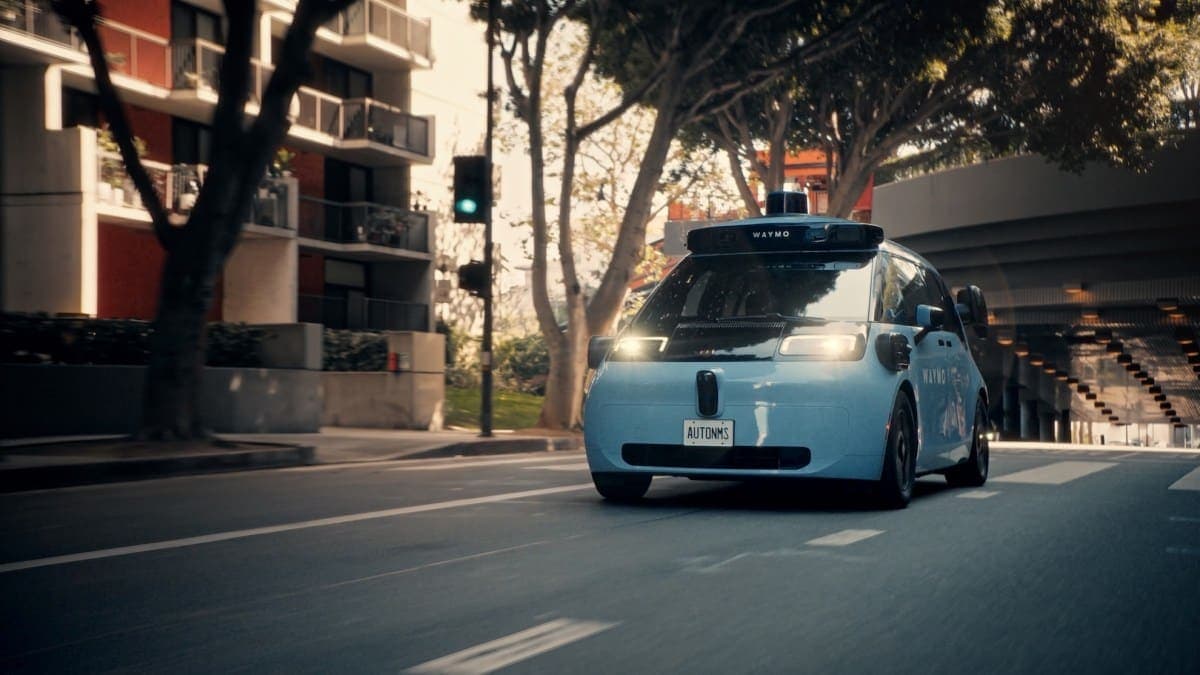
Waymo began commercial operations in Phoenix in 2016 after years of closed testing in California's Bay Area. The company received final regulatory clearance to charge for rides in California in August 2023, a milestone that accelerated deployment. Since then, it has launched paid service in San Francisco, Los Angeles, and San Diego.
Outside California, Waymo operates in Austin, Dallas, and Houston in Texas, and Miami, Orlando, and Tampa in Florida. The 15-market count positions it as the largest autonomous ride-hailing operator by city coverage in the United States.
International expansion represents the next inflection point. London and Tokyo tests are under way, with both cities offering dense urban environments and regulatory frameworks that differ substantially from US municipal oversight. Success in either market would provide a template for further European and Asian rollouts.
Regulatory Friction
Scale has brought scrutiny. The National Highway Traffic Safety Administration opened an investigation into Waymo robotaxis that allegedly violated school-bus stop laws. Federal regulators are also examining an incident in which a Waymo vehicle struck a child near a school at approximately six miles per hour, resulting in minor injuries.
Separately, the National Transportation Safety Board launched its own inquiry after Waymo vehicles were observed illegally passing stopped school buses in at least two states. The pattern of violations suggests edge-case failures in perception or routing logic, issues that become statistically visible only at high mileage.
Waymo has positioned its safety record as superior to human drivers, citing collision and injury rates per mile travelled. Regulators, however, apply a different standard: any software-related failure that would be obvious to a human observer invites heightened scrutiny, particularly in school zones.
Debt Market Entry and Robotaxi Economics
The willingness of institutional credit investors to participate in a $5 billion facility reflects an evolving view of autonomous vehicle unit economics. Debt holders care primarily about cash flow stability and asset recovery in downside scenarios. Their participation implies confidence that Waymo can generate predictable revenue, manage operating costs, and maintain asset value in its vehicle fleet.
Robotaxi operators face high upfront capital expenditure on vehicles, sensors, and compute infrastructure, followed by ongoing costs for fleet maintenance, remote assistance, insurance, and charging or refuelling. Revenue depends on ride volume, pricing power, and utilisation rates. The debt market's endorsement suggests that Waymo's data on these variables has crossed a credibility threshold.
This is a departure from the broader autonomous vehicle sector, where several well-funded competitors have scaled back or exited. Cruise, General Motors' robotaxi unit, paused operations last year after a series of incidents and regulatory interventions. Argo AI, backed by Ford and Volkswagen, shut down in 2022. Waymo's ability to secure debt financing at this scale underscores its operational lead.
Implications for the Sector
Waymo's debt raise sets a precedent. If credit markets are willing to finance autonomous vehicle expansion, other operators with credible safety and utilisation metrics may follow. That could accelerate deployment timelines, particularly for companies that have exhausted equity appetite among venture and corporate investors.
It also shifts the competitive dynamic. Debt-financed expansion allows Waymo to preserve equity ownership and valuation headroom while still deploying capital aggressively. Rivals relying solely on equity must either accept dilution or slow their pace.
For cities and regulators, the influx of debt capital into robotaxi operations raises stakes. A well-capitalised operator can afford prolonged market-building periods, undercutting human-driven ride-hailing on price and flooding streets with vehicles to improve availability. That creates municipal planning challenges around curb access, congestion, and labour displacement.
Waymo's London and Tokyo tests will be closely watched. Both cities have robust public transport networks, high labour costs for taxi and ride-hail drivers, and regulatory environments that demand extensive safety documentation. A successful international launch would validate the business model beyond US sunbelt cities and open the door to licensing or partnership arrangements in other metros.
The $5 billion facility gives Waymo runway to execute that strategy. Whether debt markets will extend similar terms to competitors remains an open question, and one that will shape the autonomous vehicle landscape through the end of the decade.