A $320 Million Bet That Silicon Valley Has Tunnel Vision
Endeavor Catalyst closes its fifth fund to back high-growth founders in markets the Bay Area barely watches, with half of all profits flowing back to mentor the next cohort.
The Geography Problem in Venture Capital
Endeavor Catalyst has secured $320 million for its fifth fund, pushing total assets under management past $850 million. The timing is pointed: as venture capital firms compress their attention spans around artificial intelligence companies clustered in San Francisco, the investment arm of a 30-year-old global nonprofit is doubling down on what it calls "elsewhere" - everywhere that isn't a major tech hub.
The fund operates under an unusual structure. Endeavor Catalyst is the venture arm of Endeavor, a New York-based nonprofit that has spent three decades building support infrastructure for entrepreneurs in secondary and tertiary markets. The nonprofit itself serves as general partner, which means half of all fund profits flow back into Endeavor's mentoring and network programmes. Every exit, in effect, subsidises the next generation of founders working outside the traditional centres of capital.
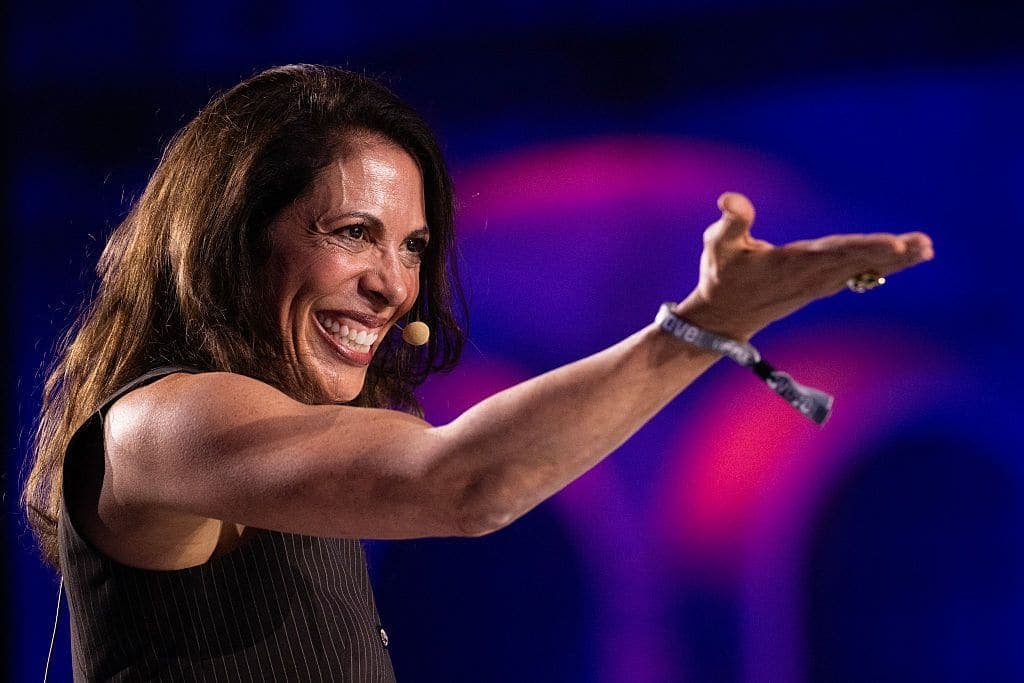
Managing partner Allen Taylor, who has spent two decades at Endeavor, leads a 16-person team alongside managing director Jackie Carmel, who joined 12 years ago. Over the next few years, the team expects to deploy the capital across 40 to 50 investments annually, targeting up to 150 companies in total.
A Filtration System With Extreme Selectivity
Access to Endeavor Catalyst's capital requires clearing a high bar. Founders must first be admitted to Endeavor's core network, which last year screened more than 10,000 candidates and selected 88. The network now comprises over 3,100 entrepreneurs operating in more than 50 countries.
Once inside, founders gain access to Endeavor's mentoring apparatus and a web of connections that includes board members such as Reid Hoffman, career venture capitalist Nick Beim (formerly of Matrix Partners and Venrock), and Edgar Bronfman Jr., the former Warner Music and Seagram chief executive who chairs Endeavor's board. Greek Prime Minister Kyriakos Mitsotakis, a Harvard contemporary of Endeavor co-founder Linda Rottenberg, maintains close ties to the organisation.
When a network founder's company raises at least $5 million in a round led by an institutional investor, Endeavor Catalyst can participate on identical terms. Cheques typically range from $1 million to $3 million and cannot exceed 10 per cent of the round. The model is co-investment at scale, piggybacking on lead investors who have already conducted diligence whilst injecting capital that carries a secondary benefit: strengthening the nonprofit's endowment.
Portfolio Concentration in Billion-Dollar Outliers
Across five funds, Endeavor Catalyst has backed 437 companies in 44 markets. Eighty-three of those are currently valued at $1 billion or more. The venture arm has recorded 39 exits and 11 initial public offerings.
The current portfolio includes several high-profile holdings. ElevenLabs, the maker of AI voice tools founded in Poland, was recently valued at $22 billion in a secondary sale. Bending Spoons, a 13-year-old Italian conglomerate, went public in July and now carries a $26 billion market capitalisation. New York-based Reflection AI, founded by two former Google DeepMind researchers (one of whom was born in Greece), is valued at $25 billion.
Other significant positions include Checkout.com, whose Swiss founder built a payments company valued at $12 billion; Flutterwave, an African payments infrastructure firm valued at $3.2 billion; and Replit, the AI coding startup co-founded by Palestinian-Jordanian entrepreneur Amjad Masad, which secured a $9 billion valuation earlier this year.
Taylor declined to share cash-on-cash return multiples for earlier funds, but the concentration of unicorns and exits suggests the portfolio has produced substantial gains. The model's reliance on co-investment mitigates some entry-point risk, though it also means Endeavor Catalyst is dependent on other investors to set terms and lead rounds.
Europe Accelerates, Latin America Remains Core
Roughly 90 per cent of Endeavor Catalyst's investments sit outside the United States. Europe is the fastest-growing region: the fund made 12 new investments in the first half of 2026, nearly matching the 14 it completed in all of 2025. Latin America remains the largest geographic allocation by volume.
The shift towards Europe reflects both the maturation of startup ecosystems in cities such as London, Berlin, Paris, and Stockholm, and the fact that Endeavor has maintained local teams and mentor networks in dozens of countries for years. That on-the-ground presence offers deal flow and operational intelligence that remote investors struggle to replicate.
Repeat founders are becoming a larger share of the portfolio. In Endeavor Catalyst's fourth fund, roughly 14 per cent of capital went to second companies launched by Endeavor network founders at seed or Series A stage. The team expects that figure to reach 20 per cent in fund five, a sign that the network is beginning to generate its own compounding effects.
The Structural Advantage of Patient, Distributed Capital
The newest fund includes 400 limited partners. Roughly 30 per cent are Endeavor founders themselves, including the founders of Nubank, Revolut, and Checkout.com. Hoffman and hedge fund manager Bill Ackman are among the individual backers; Dutch investment group Prosus is also a participant.
The LP base is notable because it aligns incentives in an unusual way. Founders who have already built billion-dollar companies are reinvesting in the next cohort, creating a feedback loop of capital and expertise. The nonprofit structure adds a second layer: exits don't just return capital to LPs; they fund the mentoring and network-building that feeds future deal flow.
At Opentechwire, we've tracked how venture capital's geographic concentration has intensified over the past 18 months, with US funds directing an outsized share of new capital into San Francisco-based AI startups. That focus has produced spectacular outcomes for a handful of firms, but it has also left large swathes of the global startup landscape under-resourced. Endeavor Catalyst's model - patient, distributed, and structurally aligned with long-term network effects - offers a counterpoint.
The question is whether the fund's co-investment approach can continue to capture outlier companies as competition for deals in secondary markets increases. European and Latin American venture ecosystems are no longer frontier territory; they are maturing rapidly, and local funds with deep expertise are proliferating. Endeavor Catalyst's edge lies in its 30-year head start on network-building and the mentoring apparatus it can offer beyond capital. Whether that proves durable as the global venture landscape continues to fragment will determine whether "elsewhere" becomes a genuine alternative to the Bay Area's gravitational pull, or simply a portfolio diversification strategy for funds hedging against geographic concentration risk.