Superhuman Buys Fathom to Turn Meeting Data into Automated Workflows
The acquisition reflects a broader shift in productivity software - from capturing conversations to triggering autonomous work without prompts.
The Buy-Over-Build Calculus
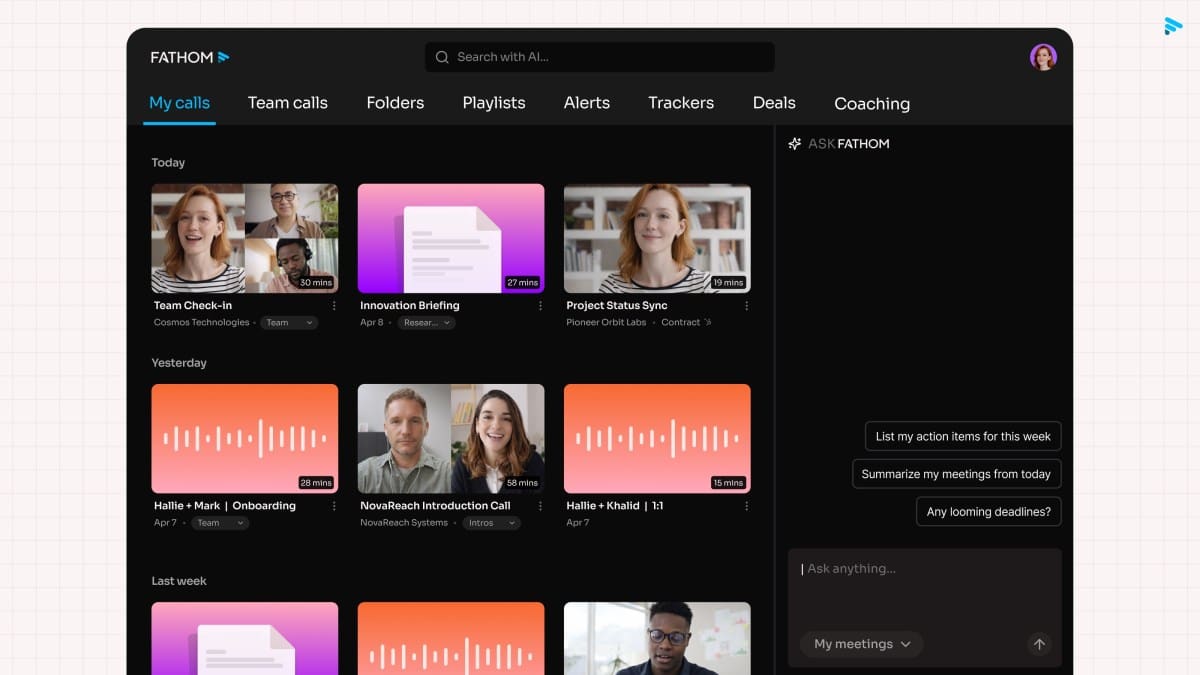
Superhuman abandoned its internal notetaker project and acquired Fathom instead, a decision that says as much about the technical complexity of meeting transcription as it does about the company's broader ambitions. Fathom, which emerged from Y Combinator in 2020, had accumulated more than 400,000 monthly active users on the back of a free tier and raised over USD 30 million in funding. Data from PitchBook placed the company's valuation at USD 94 million in 2024. Its backers include the Zoom Apps Fund, Telescope Partners, BoxOne Ventures, and Maven Ventures, alongside individual investors such as Reddit CEO Steve Huffman, former Twitch CEO Emmett Shear, and Cruise co-founder Kyle Vogt.
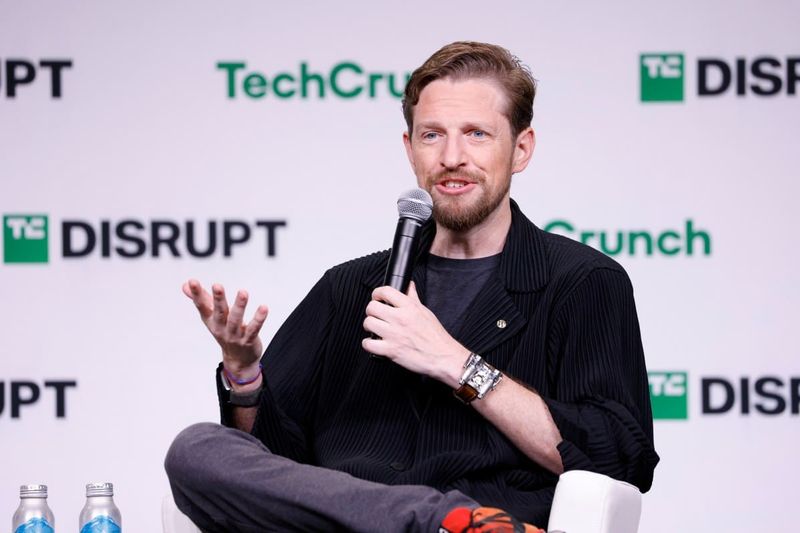
Shishir Mehrotra, Superhuman's chief executive, confirmed that the company had tested a meeting recorder internally with a limited cohort earlier this year. The experiment convinced the team that demand existed - but also that building a competitive product from scratch would require more time and engineering depth than anticipated. "A lot of these products make the job feel really easy, but it's actually quite tricky to do a great job in all parts," Mehrotra said. He pointed to technical intricacies in Fathom's stack that impressed the acquisition team, though he declined to specify which components.
From Transcription to Autonomous Execution
The strategic rationale centres on a shift in how productivity platforms define their value proposition. Traditional automation relies on users typing prompts or constructing workflows - an active, deliberate process. The next iteration, which Superhuman and its peers are pursuing, involves software that initiates work on its own by interpreting the content and context of meetings. Action items, decisions, and follow-up commitments discussed in a video call become triggers for downstream tasks: drafting emails, updating database entries, scheduling subsequent meetings, or feeding data into AI agents.
Superhuman's existing suite already includes an email client, a documents application, a calendar, a database tool, and a recently launched agent builder platform. Integrating Fathom's notetaker into this stack allows the company to position meeting data as a central input layer. Mehrotra hinted at real-time surfacing of meeting context, though he stopped short of detailing how that feature would work in practice.
The Distribution Advantage
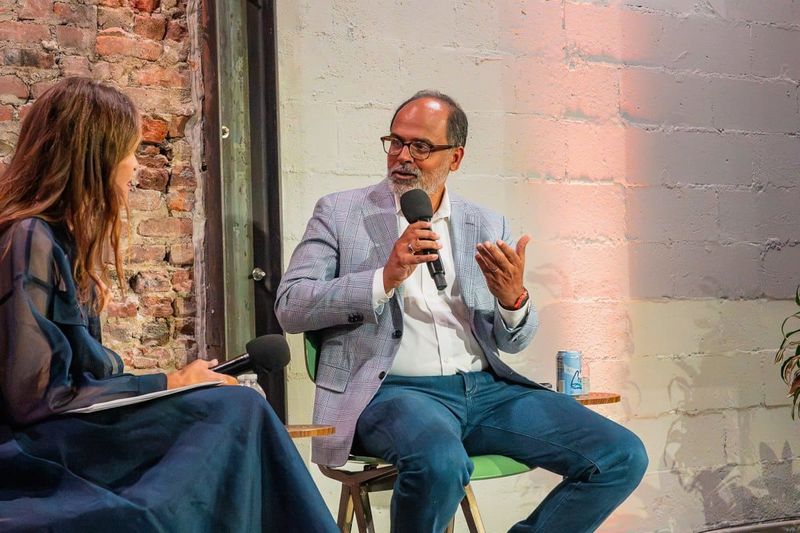
For Fathom, the deal offered a shortcut to scale. Richard White, the company's chief executive, cited Superhuman's user base of 40 million as a compelling distribution channel. "If we were to operate Fathom as a stand-alone company, we would have to build a lot of things that are already in the Superhuman platform," White said. The comment underscores a recurring challenge for venture-backed notetakers: standalone transcription and summarisation are increasingly commoditised, and investors expect more differentiated products.
Fathom has recorded over 1 million meetings to date, according to the company. That corpus of interaction data, combined with Superhuman's productivity infrastructure, creates opportunities for cross-product intelligence - surfacing patterns across email threads, calendar invitations, and meeting transcripts to inform automated suggestions or agent behaviour.
Market Pressure and the Notetaker Pile-Up
The acquisition arrives amid intense competition in the meeting notetaker segment. Startups including Granola, Read AI, and Wispr have raised substantial funding rounds in recent quarters, each betting on slightly different angles - hardware integration, real-time intelligence, or multimodal input. The proliferation of well-funded entrants has compressed margins and raised the bar for feature parity. Basic transcription and summary generation are now table stakes; platforms are expected to offer speaker diarisation, action-item extraction, integration with task management tools, and increasingly, proactive workflow automation.
This environment makes it harder for standalone notetakers to justify independent valuations, particularly when larger productivity platforms can bundle similar functionality at little marginal cost. The Superhuman-Fathom deal may prefigure further consolidation as venture-backed notetakers either fold into broader suites or exit the market.
The Agentic Work Hypothesis
The term "agentic work" has gained traction in product roadmaps and investor decks over the past year. It describes software that acts on behalf of users - not by executing pre-programmed macros, but by interpreting intent from unstructured inputs like conversations, emails, or documents. Meeting notetakers sit at a particularly useful vantage point for this model: they capture rich, contextual information about priorities, deadlines, and relationships that would otherwise require manual entry or remain siloed.
At Opentechwire, we have tracked similar moves by other productivity vendors. Grammarly, for instance, has expanded beyond writing assistance into communication intelligence, analysing tone and suggesting edits based on recipient context. Notion and Coda have introduced AI features that generate content or query databases in natural language. The common thread is an attempt to reduce the number of explicit commands a user must issue while increasing the volume and relevance of automated output.
Whether this vision translates into sustained user value remains an open question. Early experiments with autonomous agents have surfaced concerns about accuracy, transparency, and user trust - particularly when the software makes decisions or sends communications without explicit approval. The integration of meeting data adds another variable: privacy expectations around recorded conversations are higher than for other productivity inputs, and missteps can erode confidence quickly.
What the Deal Signals for Productivity Stacks
Superhuman's move reflects a broader architectural bet: that productivity platforms will consolidate around integrated suites rather than best-of-breed point solutions. This mirrors the trajectory of enterprise software over the past decade, where customers increasingly favour unified platforms that reduce integration overhead, even if individual modules lag behind specialised competitors in feature depth.
For independent notetaker startups, the message is less encouraging. As larger platforms absorb or replicate core functionality, the window to build defensible standalone businesses narrows. Success may depend on either achieving massive scale quickly - Fathom's 400,000 monthly active users were not sufficient - or carving out a niche that resists commoditisation, such as compliance-focused transcription for regulated industries or hardware-integrated solutions for specific use cases.
The acquisition also highlights the role of distribution in software exits. Fathom's cap table included prominent individual investors and reputable venture firms, but without access to a large, engaged user base, the company faced mounting pressure to either raise additional capital or find a strategic buyer. Superhuman offered both distribution and a product roadmap that could absorb Fathom's technology without forcing a pivot or shutdown.
Execution Risk and the Road Ahead
Integrating a notetaker into a productivity suite is technically and organisationally complex. Fathom's existing users will need to be migrated onto Superhuman's infrastructure, which may involve changes to pricing, feature availability, or data handling. Any disruption risks alienating a user base that chose Fathom in part for its simplicity and generous free tier. Superhuman will also need to deliver on the promise of cross-product intelligence quickly enough to justify the acquisition's strategic premium.
Mehrotra's comments suggest that the company is already testing ways to surface meeting context in real time, though he provided few specifics. The challenge will be to make that intelligence feel useful rather than intrusive - surfacing the right insight at the right moment without overwhelming users with notifications or suggestions.
For the broader productivity software market, the Superhuman-Fathom deal offers a data point in the ongoing debate over vertical integration versus modular ecosystems. If integrated suites prove more effective at delivering agentic work, we should expect further consolidation. If users continue to prefer specialised tools stitched together via APIs, the current fragmentation will persist. The next 12 to 18 months will clarify which model has more staying power.