Inside Insight Partners' Contrarian Bet on AI Lab Diversity
Whilst peers concentrate capital on OpenAI and Anthropic, Devin Parekh's $90bn firm is backing multiple foundation model rivals and navigating the awkward reality of holding stakes in competing labs.
A Different Playbook
Whilst the venture capital industry races to concentrate ever-larger sums into OpenAI and Anthropic, Insight Partners is pursuing a deliberately contrarian strategy: holding stakes in multiple competing foundation model laboratories and refusing to pick a single winner.
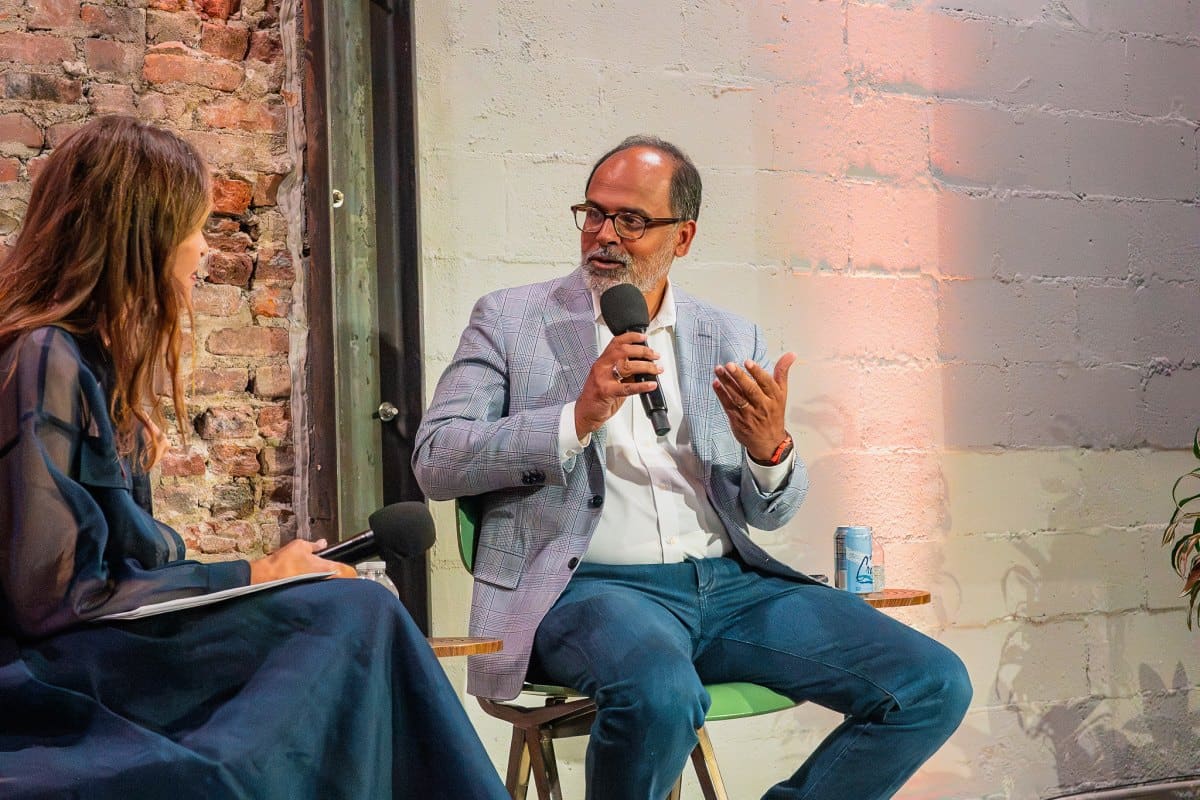
Devin Parekh, the managing director steering investment decisions at the $90 billion firm, opened up recently about the logic behind this diversification approach, the portfolio dynamics it creates, and why Insight remains comfortable sitting on boards of rival AI companies even as peers declare loyalty to specific platforms.
At Opentechwire, we've tracked how the distribution of AI infrastructure capital has narrowed dramatically over the past eighteen months. The top two foundation model companies now capture roughly 65 per cent of all venture funding flowing into large language model development, according to PitchBook data through August 2026. That concentration is historically unusual, even in winner-take-most technology markets.
Insight Partners is moving in the opposite direction.
Portfolio Tensions and Competitive Overlap
Parekh acknowledged that Insight currently holds positions in at least three foundation model laboratories that compete directly for enterprise customers, compute resources, and talent. The firm has not disclosed the full roster, but regulatory filings reviewed earlier this year show investments in both established and emerging model providers outside the OpenAI-Anthropic duopoly.
"We're comfortable with that tension," Parekh explained, noting that the firm's portfolio construction philosophy has always tolerated competitive overlap when the underlying market is large enough to support multiple scaled outcomes. He pointed to Insight's historical willingness to back rival SaaS companies in adjacent categories, a strategy that produced several exits above $1 billion over the past decade.
The approach carries operational complications. Board observers from the same firm attending strategy meetings at competing labs must navigate information barriers and potential conflicts. Insight has implemented internal walls to manage data flow between deal partners working on rival investments, according to people familiar with the firm's compliance protocols.
Yet Parekh argued that the risks of concentration outweigh the friction of diversification. "If you bet the farm on one model architecture or one scaling thesis, and the next twelve months prove that thesis incomplete, you've lost optionality," he said. The firm's view is that foundation model economics, inference costs, and downstream application value are still too uncertain to justify single-platform loyalty.
The Legora Loss and Competitive Dynamics
Parekh also addressed Insight's recent loss of Legora, an enterprise AI workflow company, to General Catalyst in a competitive late-stage round. Insight had been an early backer, but General Catalyst's term sheet included tighter integration commitments and a higher valuation that Insight declined to match.
"We passed," Parekh confirmed, framing the decision as disciplined capital allocation rather than a missed opportunity. He noted that Legora's valuation in the General Catalyst round implied a revenue multiple above 40 times forward annual recurring revenue, a level Insight considered unsustainable absent a dramatic acceleration in gross margin or market expansion.
The Legora episode illustrates a broader tension in the AI application layer. Startups building on top of foundation models are attracting competitive term sheets from growth-stage firms eager to secure exposure to AI adoption, even if that means pricing rounds at multiples that compress future return potential. Insight has walked away from several such deals this year, according to Parekh, prioritising entry valuations that preserve the possibility of a 5x or better return at exit.
Why Diversification Still Makes Sense
Parekh laid out three core arguments for Insight's diversified AI lab strategy, each rooted in the firm's analysis of model performance trends and enterprise buying behaviour.
First, no single foundation model has demonstrated durable technical leadership across all task categories. Benchmarks shift every quarter; a model that leads on reasoning tasks may lag on code generation or multimodal understanding. Enterprises are increasingly adopting multi-model stacks, routing queries to whichever model performs best for a given workload. That behaviour reduces winner-take-all dynamics and creates room for multiple scaled players.
Second, regulatory and geopolitical fragmentation is likely to produce region-specific model ecosystems. Export controls on advanced semiconductors, data residency requirements, and government preferences for domestically developed models are already shaping procurement decisions in markets from the European Union to Southeast Asia. A firm that backs only US-headquartered labs may miss the value creation happening in regional champions.
Third, inference cost trajectories remain unpredictable. If one lab achieves a step-function improvement in cost-per-token through architectural innovation or hardware co-design, it could rapidly displace incumbents in price-sensitive applications. Insight's portfolio construction assumes that such breakthroughs are possible but impossible to forecast with precision, making diversification a hedge against model obsolescence.
Portfolio Company Reactions
Insight's multi-lab strategy has generated mixed reactions from its own portfolio companies. Some enterprise software startups that rely on foundation model APIs appreciate the firm's access to multiple labs and the optionality that provides when negotiating service terms or exploring model switching.
Others, particularly those that have built deep integrations with a single provider, view Insight's divided attention as a disadvantage. One founder, speaking off the record, noted that competing firms with concentrated AI lab relationships can often broker introductions or secure early API access more readily than Insight, whose board representatives must maintain neutrality across rival labs.
Parekh conceded that the strategy does not maximise Insight's influence at any one lab. "We won't be the first call when a lab is deciding go-to-market priorities or partnership announcements," he said. But he argued that influence is less valuable than return on invested capital, and that the firm's job is to generate portfolio-level returns, not to secure strategic favours for individual companies.
The Capital Deployment Challenge
Insight Partners manages $90 billion across multiple vintage funds, with roughly $12 billion earmarked for AI-related investments through 2028, according to limited partner documents. Deploying that capital into a diversified set of AI labs whilst maintaining ownership targets and board seats is operationally complex.
The firm has responded by expanding its deal team focused on infrastructure and model layers, adding three partners over the past year with prior experience at research laboratories and semiconductor companies. Parekh said the hires reflect Insight's belief that evaluating foundation model investments requires technical depth, not just pattern recognition from prior software cycles.
Insight is also writing smaller initial cheques into earlier-stage labs, preserving dry powder for follow-on rounds in whichever models demonstrate product-market fit first. That approach contrasts with peers who commit large sums upfront to secure allocation in oversubscribed rounds at OpenAI or Anthropic, accepting higher entry prices in exchange for guaranteed access.
Forward View
Parekh expects the foundation model landscape to consolidate modestly over the next two years, with perhaps four to six labs capturing the majority of enterprise spend. But he does not believe the market will collapse into a duopoly, citing the technical and regulatory factors outlined above.
Insight's bet is that a diversified portfolio across those four to six survivors will outperform a concentrated position in the current top two, even if one of those leaders ultimately captures the largest single share. The strategy depends on Insight's ability to identify which emerging labs have staying power, a judgment that will be tested as compute costs rise and differentiation narrows.
For now, Parekh is comfortable holding the tension. "We'd rather have optionality and modest exposure to several outcomes than maximum exposure to one," he said. In a market where consensus has rarely been stronger, Insight Partners is choosing to stand apart.