Signal Disables Screenshot Function to Counter OS-Level AI Surveillance
The encrypted messenger's move reflects mounting tension between privacy guarantees and operating systems that embed machine-learning agents with screen-reading capabilities.
A Privacy Layer Against Platform-Level Scanning
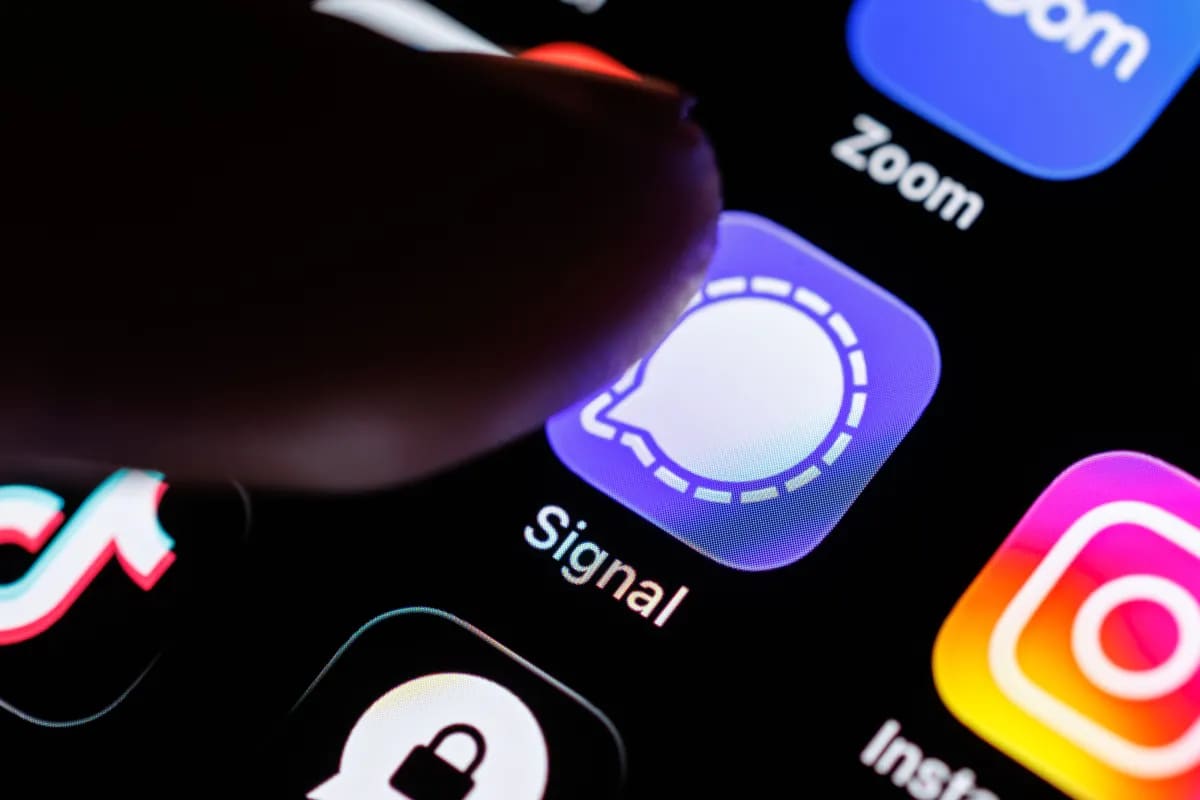
Signal has rolled out screenshot restrictions for its Android and iOS applications, a defensive measure against what the organisation characterises as operating-system surveillance through embedded artificial intelligence. The encrypted messaging service, which already blocked screenshots by default in its Windows client, extended the feature to mobile platforms on 21 November.
Meredith Whittaker, president of the Signal Foundation, framed the decision around a fundamental shift in how major operating systems handle user data. According to Whittaker, Windows, Android, and the combined macOS-iOS ecosystem now incorporate agentic AI capabilities that can capture screen content, store it locally or remotely, and make it available to machine-learning models operating at the system level. That architecture, she argued, removes Signal's ability to enforce end-to-end privacy independently once a message appears on a user's display.
The restriction is opt-out rather than mandatory. Users who disable the setting will, in Whittaker's words, break the privacy assurances Signal is designed to provide. She acknowledged that the measure is partial: it does not address alternative methods through which AI agents might extract application data without invoking the screenshot application programming interface.
Why Operating Systems Became the New Perimeter
For more than a decade, the threat model for secure messaging centred on network interception, server compromise, and device-level malware. Signal's protocol, adopted by WhatsApp and incorporated into other platforms, addressed the first two by encrypting message payloads end to end. Device security remained the user's responsibility, mitigated by features such as disappearing messages and screen-lock timers.
The introduction of agentic AI into operating systems rewrites that calculus. Unlike traditional clipboard managers or notification mirrors, which handle discrete data events, agentic systems are designed to observe continuous screen activity in order to anticipate user intent, surface relevant information, and automate multi-step tasks. Microsoft's Recall feature, announced in mid-2024 and subsequently delayed amid privacy criticism, exemplified the approach: periodic screen captures indexed by a local large language model to enable natural-language search across a user's computing history.
Apple's on-device intelligence stack in iOS 18 and macOS Sequoia, while less explicit about screen capture, similarly ingests contextual signals from across the interface. Google's Android integration of its Gemini models follows a parallel trajectory, embedding assistants that can "see" what the user sees in order to act on it.
For Signal, this shift means that even if a message remains encrypted in transit and at rest on the server, the moment it is rendered on a display it becomes visible to an operating system process that may log, index, or transmit it beyond the application's sandbox. The organisation has no visibility into what happens to that data once it leaves Signal's own memory space.
The Technical Limits of a Blocking Strategy
Screenshot blocking is not a novel technique. Financial applications, digital-rights-management video players, and enterprise communication tools have employed it for years, typically by setting a secure-content flag that instructs the operating system to exclude the application's window from screen-capture APIs and recent-app previews. Signal's Windows client has used this flag since its desktop release.
Extending the approach to mobile platforms introduces friction. On Android, the flag can prevent screenshots and exclude the app from the task switcher's thumbnail view, but it does not stop screen recording initiated through accessibility services or developer tools. On iOS, the secure-content attribute is less granular, and third-party screen-recording applications with elevated permissions can bypass it.
More fundamentally, the flag is a request, not a hard boundary. It relies on the operating system honouring the instruction. If an OS-level agent is designed to capture screen content for machine-learning inference before the compositor applies the secure flag, the application has no recourse. Whittaker's reference to "more sneaky ways" points to this asymmetry: kernel-level or compositor-level capture, memory scraping, and optical character recognition applied to frame buffers all operate below the application layer.
The opt-out design reflects this reality. By allowing users to disable the restriction, Signal acknowledges that some workflows, such as saving a confirmation code or sharing a group invite link, require screenshot functionality. But it also shifts responsibility: users who turn off the protection are informed that doing so undermines the privacy model.
Regional Implications for Secure Messaging Adoption
The collision between application-layer privacy and operating-system telemetry has uneven consequences across jurisdictions. In markets where government access to platform data is routine, either through lawful-intercept frameworks or extrajudicial means, the presence of OS-level capture introduces a new vector that sits outside Signal's control and often outside public procurement oversight.
In India, where Signal usage grew sharply among journalists and civil-society groups following the 2021 disclosure of Pegasus spyware infections, the shift to agentic operating systems complicates the threat model. If a user's device runs an AI-enabled assistant that logs screen activity to a cloud inference endpoint, the question becomes not whether the messaging app is secure, but whether the platform beneath it can be trusted. Apple's on-device processing offers some insulation, but Google's cloud-hybrid approach for Gemini on Android introduces server-side components that fall within the jurisdiction of India's data-localisation and lawful-intercept rules.
In China, where Signal remains accessible without a virtual private network but is not available through local app stores, the calculus is different. Users who sideload the application are typically aware of device-level risks, but the integration of AI capabilities into domestic Android forks, such as those from Xiaomi, Oppo, and Vivo, is proceeding without the privacy constraints that, at least nominally, apply to Google's and Apple's implementations. If local models are trained or fine-tuned using aggregated user data, messages visible on-screen become part of that corpus.
Southeast Asian markets present a third scenario. In Singapore, where government digital-identity infrastructure and smart-nation initiatives assume a high degree of platform telemetry, the boundary between legitimate system optimisation and surveillance is a matter of policy rather than technical architecture. Signal's user base in the city-state is smaller than in neighbouring Indonesia or Thailand, but its adoption among legal, financial, and advocacy communities means that any erosion of its privacy guarantees has professional consequences.
The Broader Conflict Between Apps and Platforms
Signal's move is the latest episode in a longer-running tension between application developers and platform owners over who controls the user's data. Web browsers introduced tracking-protection features that broke advertising analytics. Apple's App Tracking Transparency framework curtailed cross-app identifiers. Google's Privacy Sandbox sought to replace third-party cookies with interest-group APIs that kept behavioural data inside the browser.
Agentic AI inverts that dynamic. Rather than restricting data flows between applications, operating systems now position themselves as the aggregator of all on-screen activity in order to power predictive and generative features. The value proposition is convenience: a system that knows what the user is doing can automate routine tasks, surface forgotten information, and bridge disconnected workflows. The cost is legibility: everything the user sees becomes legible to the platform.
For privacy-focused applications, this is an architectural dead end. If the operating system is the adversary, or even simply an uncontrolled intermediary, no amount of end-to-end encryption within the application can guarantee confidentiality. The data is protected in transit but exposed at the endpoint, not to a human attacker but to an automated process whose behaviour, training data, and external connections are opaque.
Signal's response, blocking screenshots and flagging the risk in public statements, is a form of user education as much as a technical countermeasure. It signals, in both senses of the word, that the threat model has changed and that users must make informed choices about which features to enable and which platforms to trust.
What Happens Next
The screenshot restriction is unlikely to be Signal's final adjustment. Whittaker's acknowledgement that the measure is incomplete suggests that further changes are under consideration, potentially including warnings when the application detects that an AI agent is active, or even refusal to run on operating systems that do not provide hardware-backed isolation for sensitive UI elements.
Other secure-communication tools face the same calculus. Telegram, which has historically prioritised usability over maximal encryption, has not indicated whether it will follow Signal's lead. WhatsApp, whose encryption is based on Signal's protocol but whose integration with Meta's broader ecosystem introduces other data flows, has not commented publicly. Smaller platforms such as Threema and Session, which target privacy-conscious niches, may adopt similar restrictions, but their leverage over operating-system vendors is even more limited than Signal's.
The longer-term resolution will depend on whether platform owners establish clear boundaries for agentic AI. Apple's emphasis on on-device processing and its public commitment to differential privacy offer a possible model, though the technical details remain largely proprietary. Google's and Microsoft's approaches, which rely more heavily on cloud inference and cross-device synchronisation, are harder to reconcile with strong privacy guarantees unless users are given granular control over what data is captured and where it is stored.
For now, Signal's restriction is a holding action, a way to limit exposure while the architecture of agentic operating systems is still in flux. Whether it proves sufficient will depend not on Signal's engineering, but on the choices made by the companies that control the platforms beneath it.