Sierra Hits $30bn Valuation as Enterprises Pour Capital into AI Customer Service
The company co-founded by Bret Taylor doubled its price tag in six months, now serving nearly half of Fortune 50 firms and generating $400m in annual run-rate revenue from outcome-based contracts.
The Round and the Velocity
Sierra announced on Monday a $1.75 billion Series F that pegs the enterprise customer-experience platform at $30 billion, twice the valuation it carried just six months earlier, according to the company. Greenoaks and Lightspeed Venture Partners led the round, joined by Benchmark, Sequoia, GV, and Tiger Global, all of whom had participated in earlier stages.
The interval between rounds is a data point in itself. Sierra closed its previous financing in May, at a $15 billion post-money mark. The fresh raise arrives as enterprises move beyond pilot programmes and begin deploying agent-based AI for customer interactions at scale, a shift that has compressed fundraising timelines across the sector.
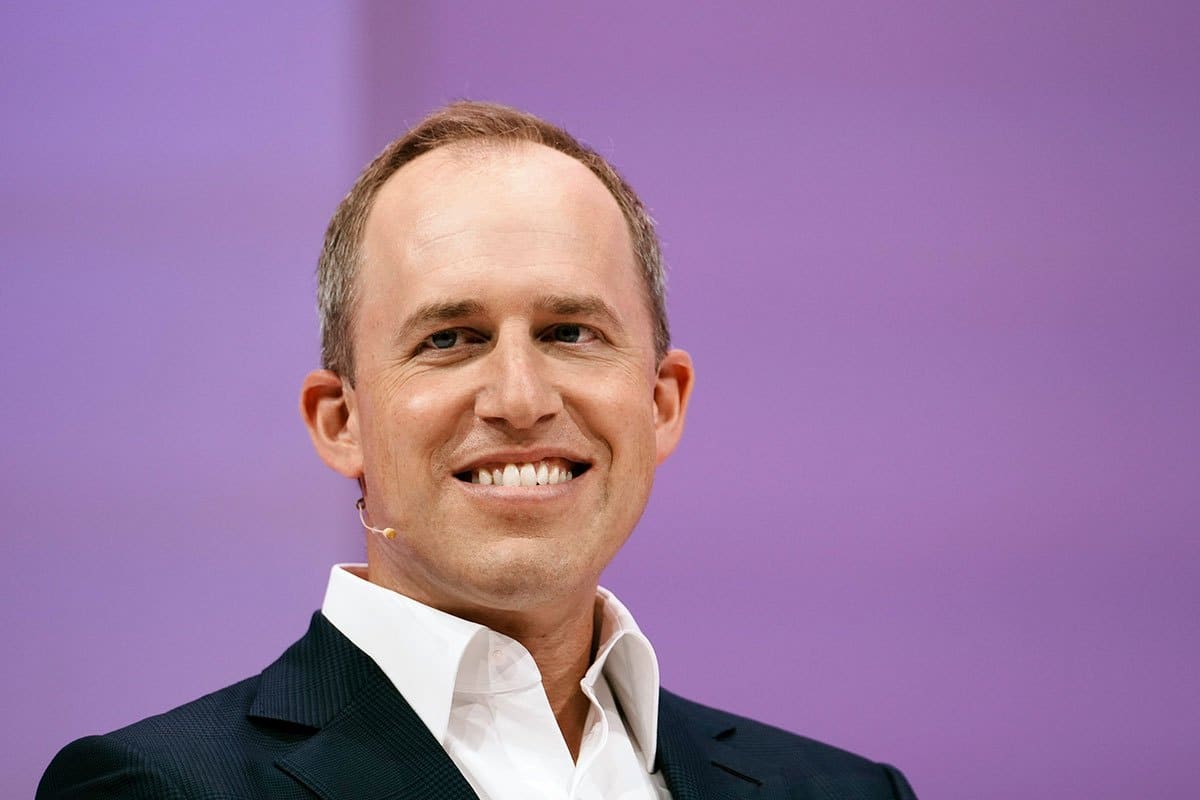
Co-founded by Bret Taylor, who previously served as co-chief executive at Salesforce and held senior roles at Google and Facebook, Sierra builds conversational agents that handle queries, escalate problems, and complete transactions inside existing workflows. The platform integrates with multiple foundation models, allowing clients to choose or swap providers without re-engineering their deployments.
Who Is Paying and How Much
Sierra disclosed that it now works with almost 50 per cent of Fortune 50 companies. Its roster includes BNY, HSBC, Singtel, Wells Fargo, JPMorgan Chase, Pearson, Next, and Cox Automotive, according to the firm. The company said late in October that it had reached $400 million in annual run-rate revenue, doubling that figure in five months.
The revenue model is outcome-based rather than seat-based. Sierra charges clients according to resolution rates, containment, and other operational metrics instead of per-agent licences. That approach aligns payment with the value enterprises actually extract and makes it easier for buyers to justify the budget internally, particularly when replacing legacy IVR systems or offloading volume from human contact centres.
The pace of revenue growth suggests that contracts are being signed and expanded quickly. Enterprise automation has emerged as one of the few segments in which AI deployments have moved from proof-of-concept to production in a matter of quarters, not years. Customer experience sits at the intersection of immediate cost pressure and measurable performance, two conditions that tend to accelerate purchasing decisions.
A Crowded Market with Diverging Architectures
Sierra operates in a customer-experience landscape that has attracted waves of venture capital over the past eighteen months. ElevenLabs, which focuses on voice synthesis and real-time conversation, is now valued at $22 billion. Decagon carries a $4.5 billion valuation, Wonderful $5 billion, and Parloa $3 billion, according to their most recent financing announcements. Dozens of other entrants have raised rounds exceeding $100 million.
The competitive dynamic is less about feature parity and more about architectural choices. Some platforms optimise for voice latency and telephony integration; others prioritise text channels and back-office workflows. Sierra's pitch centres on agent orchestration, the ability to route tasks across models and systems without locking clients into a single inference provider.
The firm is also participating in efforts to define protocols for agent-to-agent communication. It has been working alongside Meta, Stripe, and Walmart on standards that would allow personal assistants, workplace agents, and enterprise systems to exchange structured data and initiate actions across organisational boundaries. Those standards remain in early development, but their adoption would reduce integration friction and expand the addressable surface for agent-based workflows.
Deployment Plans and the Labour Question
Sierra intends to use the new capital to expand its technology stack, layering additional agent capabilities for service verticals, and to hire sales and account management teams capable of closing and supporting enterprise contracts faster than rivals can. Speed matters in a market where early deployments often result in multi-year lock-in and expansion into adjacent use cases.
One persistent question around AI-powered customer experience is what happens to the humans currently staffing contact centres. At the HumanX conference in Amsterdam in September, Sierra co-founder Clay Bavor said that the majority of the company's clients are reassigning existing employees rather than eliminating roles outright. Tasks shift from answering routine queries to handling escalations, training models, and managing exceptions, work that requires judgement rather than script adherence.
Whether that pattern holds as adoption scales remains an open question. The economic case for deploying these systems rests in part on cost per interaction, and enterprises under margin pressure may eventually reduce headcount even if initial rollouts preserve jobs. For now, the narrative from vendors emphasises augmentation over replacement, a message that eases internal resistance and smooths procurement.
What the Valuation Signals
A $30 billion price tag for a company generating $400 million in run-rate revenue implies that investors are underwriting aggressive growth and pricing in the assumption that Sierra will capture a disproportionate share of a much larger market. The multiple also reflects the scarcity of platforms that have demonstrated the ability to land and expand inside the Fortune 50, a cohort notoriously difficult to penetrate and even harder to displace once embedded.
Enterprise software markets tend to consolidate around a small number of winners, and the velocity of capital deployment suggests that investors believe the window for establishing dominant positions is narrow. The firms writing cheques at these valuations are betting that customer experience will become a core substrate for enterprise AI, not a feature bolted onto existing CRM or service software.
For competitors, the round raises the stakes. It gives Sierra more runway to subsidise pilots, hire ahead of revenue, and outspend rivals on go-to-market. It also signals to prospective customers that the company has the balance sheet to support long-term commitments, a factor that weighs heavily in enterprise procurement decisions. The next twelve months will show whether the capital translates into durable market share or simply funds a more expensive fight for the same set of contracts.