Three Late-Stage Investors Who Backed Anthropic at Sky-High Valuations
Notable Capital, GIC, and Baillie Gifford each wagered billions on the AI lab as its valuation soared past $60 billion, a contrarian bet that delivered 15-fold returns at IPO.
The Outsized Bet That Puzzled Limited Partners
When Notable Capital committed roughly 10 per cent of its US fund to Anthropic's Series E in early 2025, the $1 billion-plus allocation raised eyebrows among the firm's limited partners. At $61.5 billion, the valuation was the highest Notable had ever backed in its 25-year history as a predominantly early-stage venture investor. Claude, Anthropic's flagship model, still lagged behind OpenAI's ChatGPT in market perception, and DeepSeek had just released its R1 model weeks earlier, intensifying competition in the closed-source AI race.
Yet Hans Tung, a co-founder and managing partner at Notable - formerly GGV Capital before its 2024 separation from China operations - saw something in the data that others had missed. A team including Tung, fellow managing partner Glenn Solomon, and principal Dan Cahana analysed developer behaviour and discovered that Claude had overtaken ChatGPT in usage, capturing 70 per cent of developer time, a reversal from the previous year.
"We just knew that for AI, the developer is at the centre because they're the early adopters," Tung explained. Notable's experience navigating US-China technology tensions also shaped its thesis: mission-critical applications would continue to rely on US-based, closed-source models, insulating Anthropic from the kind of geopolitical headwinds that had reshaped the firm's own structure.
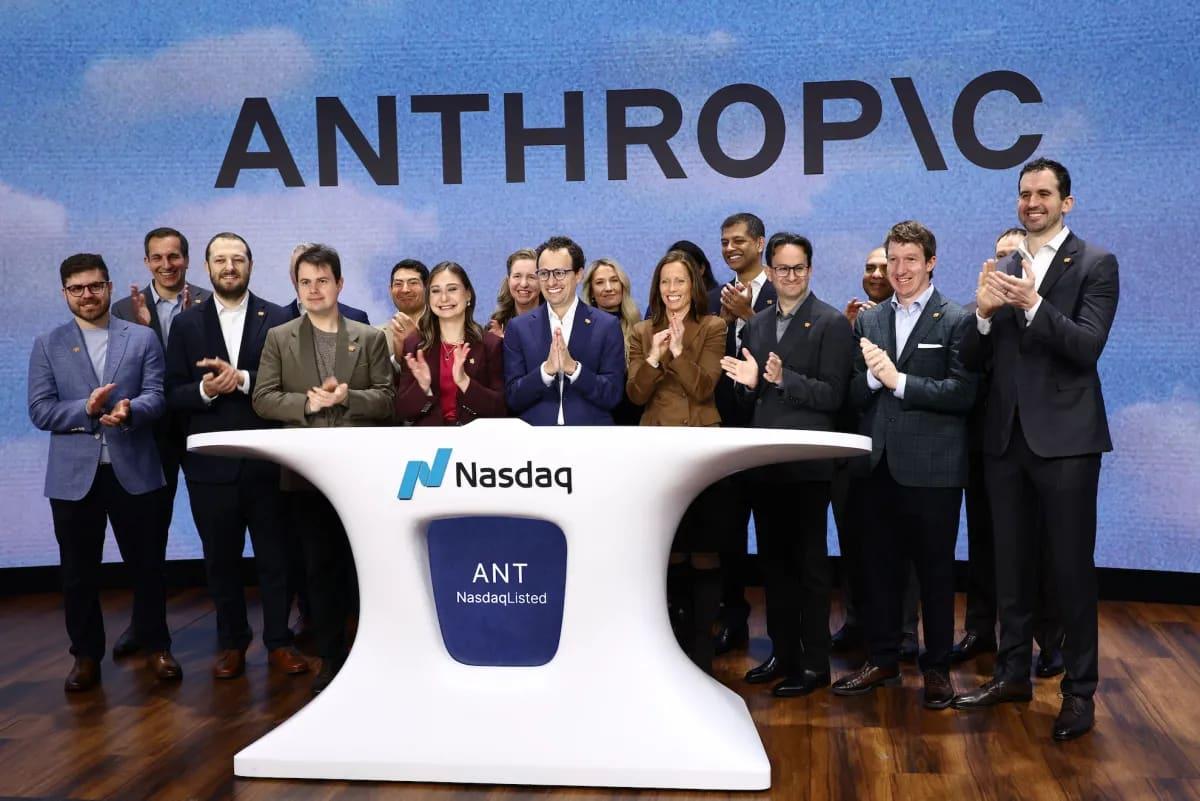
Less than two years later, Anthropic raised $81.3 billion in what became the largest initial public offering in history, reaching a fully diluted valuation of approximately $1.5 trillion before shares began trading. Notable's conviction delivered a paper return of roughly 15 times.
GIC's Methodical Entry at $183 Billion
Singapore's sovereign wealth fund GIC spent much of 2024 researching Anthropic but held off from investing until early 2025, when Chris Emanuel, who leads the fund's technology investments, met Anthropic chief financial officer Krishna Rao at Che Fico, an Italian restaurant in San Francisco. Rao presented data showing that improvements in model performance were translating into rising enterprise adoption, a correlation that Emanuel found compelling enough to warrant an entry.
GIC made its first investment in Anthropic's Series F, announced in September 2025 at a $183 billion valuation. Claude Code had just launched, and although adoption metrics were nascent, Emanuel's team saw early signals of strong developer engagement. The conviction was sufficient for GIC to return as co-lead, alongside Coatue, in Anthropic's Series G at a $380 billion valuation, and again as one of the co-leads in the pre-IPO round at $965 billion.
Across three rounds, GIC deployed more than $4.5 billion, securing a stake equal to approximately 1 per cent of the company following the IPO, according to a person familiar with the fund's finances. For a sovereign wealth fund accustomed to long time horizons and lower-risk profiles, the scale and velocity of the bet represented an unusual departure, one that required internal confidence in Anthropic's ability to defend its position against both open-source challengers and better-capitalised rivals.
Baillie Gifford's Two-Year Study Period
Lillian Li, who leads US growth investments at Baillie Gifford, began evaluating Anthropic nearly two years before the Edinburgh-based investment manager made its first commitment in the Series F. The diligence period reflected Baillie Gifford's preference for studying a company's execution cadence over multiple quarters before deploying capital at growth-stage valuations.
What convinced Li and her colleagues to invest was Anthropic's consistent delivery on its stated roadmap, coupled with revenue growth and gross margins that held up under scrutiny. After the initial Series F investment, Anthropic expanded into verticals including legal services and life sciences, and launched horizontal applications such as Cowork and cybersecurity tools, each reinforcing the thesis that Claude could capture enterprise workloads beyond software development.
"It's actually quite incredible how consistent they have been with how quickly everything's been changing," Li noted. Baillie Gifford went on to invest a total of $1.5 billion across three funding rounds, a cumulative bet that has generated substantial paper gains.
Why Late-Stage Multiples Held Up
Venture-scale returns at late-stage valuations are rare. By the time a company reaches a $60 billion valuation, the probability of a 10-times or 15-times multiple compresses sharply, as the addressable market and competitive moat must justify an exit valuation in the hundreds of billions or even trillions. Anthropic's ability to deliver that outcome rested on three factors that each of these investors identified before the broader market consensus formed.
First, developer preference shifted measurably in Claude's favour during 2024 and 2025, a leading indicator that enterprise adoption would follow. Second, enterprise gross margins remained robust even as compute costs rose, suggesting that Anthropic could price its models at a premium and still win deals. Third, the geopolitical environment continued to favour US-domiciled, closed-source AI labs for workloads involving sensitive data or regulated industries, a tailwind that insulated Anthropic from the commoditisation pressures facing open-source alternatives.
Each of these dynamics was visible to investors willing to look past the headline valuation and focus on the operational fundamentals. Notable, GIC, and Baillie Gifford each conducted independent analyses that converged on the same conclusion: Anthropic's trajectory justified entry even at valuations that seemed, at the time, astronomical.
What the IPO Means for the Venture Landscape
Anthropic's $1.5 trillion valuation at IPO resets expectations for what constitutes a plausible exit in the AI infrastructure layer. For venture investors, the outcome validates a willingness to write large cheques at high valuations when the underlying growth and margin profile support it. For sovereign wealth funds and crossover investors, the return demonstrates that venture-scale multiples remain accessible in late-stage rounds, provided the company can sustain hypergrowth and defend its competitive position.
The IPO also raises the bar for other AI labs seeking to justify nine-figure or ten-figure rounds. Anthropic's ability to expand beyond developer tools into enterprise verticals, maintain gross margins above 60 per cent, and ship new products on a predictable cadence will become the benchmark against which later-stage AI investments are evaluated.
For Notable, GIC, and Baillie Gifford, the windfall is less a matter of luck than disciplined analysis applied at a moment when market sentiment had not yet caught up to the operational reality. Whether other investors can replicate that timing in future AI rounds remains an open question, but the playbook - focus on developer adoption, verify margin sustainability, and assess geopolitical durability - is now visible to the rest of the market.