How a Short Seller Spotted the Nvidia-Megaspeed Link Before Espionage Claims Surfaced
Culper Research's May report documented an unusually close executive relationship and unexplained financing flows months before US intelligence officials raised national security concerns over chip exports and alleged Chinese influence operations.
The Timeline That Matters
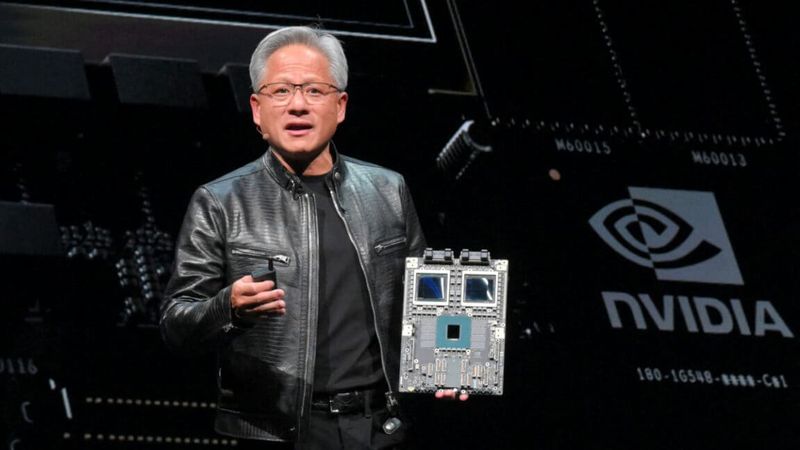
On 13 May 2026, Culper Research published a short position on Nvidia accompanied by claims that drew little mainstream attention at the time. The New York firm argued that the chipmaker faced what it termed a significant China problem, pointing to an executive relationship it described as uncomfortably close and financial patterns at a Singapore-based customer that defied ordinary commercial logic. Six months later, those observations form the backdrop to a full-blown national security investigation. Jensen Huang, Nvidia's chief executive, acknowledged an extramarital relationship over the weekend. The company has opened a formal probe into his dealings with Alice Huang, an executive at Megaspeed, the Singapore firm that purchases Nvidia processors. US intelligence officials now suspect she was recruited to gather information on the CEO and to shape his stance on export restrictions governing advanced AI chips.
The affair itself is a corporate governance matter. What elevates the episode is the intelligence dimension and the possibility that personal proximity translated into policy influence or intelligence leakage at a moment when Washington has staked semiconductor export controls on preventing Beijing from closing the gap in AI capability. Culper's report, resurfacing now, offers a rare instance of a financial actor identifying a pattern before the national security apparatus made its concerns public.
What Culper Documented in May
Culper Research built its thesis around two threads. The first was the visible personal connection. The firm noted multiple instances in which Jensen Huang and Alice Huang, who share a surname but are not related, appeared together at social gatherings. Culper's researchers wrote that some Nvidia employees had privately questioned whether the two executives maintained what the firm called a special relationship. The language was careful but pointed. In the world of activist short selling, such phrasing typically signals information sourced from company insiders or industry contacts unwilling to go on the record.
The second thread concerned Megaspeed's balance sheet. According to the May report, the company's total liabilities and equity stood at approximately 33 million US dollars at the close of 2023. By the end of 2024, that figure had expanded to roughly three billion dollars. Culper attributed much of the growth to refundable deposits from an unnamed source, a structure that raised questions about who was ultimately financing Megaspeed's chip purchases. The firm theorised that Chinese technology conglomerate Alibaba had channelled funds through intermediary entities, effectively allowing China-bound demand for high-performance chips to circumvent US export controls by routing orders through Southeast Asia.
Financial filings reviewed this week appear to lend partial support to that claim. Documents show that Alibaba extended loans to Megaspeed through subsidiaries, though the full ownership structure and the ultimate destination of the chips remain subjects of ongoing scrutiny. Culper is an investment firm with a declared short position, meaning it profits when Nvidia's share price falls. That commercial interest does not invalidate the substance of its findings, but it does mean the allegations regarding illegal diversion have not been independently verified by regulators or law enforcement agencies.
The Singapore Node in Export Control Evasion
Singapore's role as a transhipment hub and a jurisdiction with lighter export licensing requirements than the United States or the European Union has made it a recurring feature in debates over semiconductor control efficacy. The city-state is home to a dense ecosystem of chip distributors, systems integrators, and cloud infrastructure providers. Many serve legitimate markets across Southeast Asia and the broader Indo-Pacific. Some, however, have been used as conduits to mask the ultimate buyer.
Megaspeed is not publicly traded and discloses limited financial information. What is known is that it emerged as a significant customer for Nvidia's data centre products during the period when US Commerce Department rules tightened restrictions on the sale of A100 and H100 chips to Chinese entities. The timing alone invited scrutiny. Culper's report argued that the pattern fit a broader trend in which ostensibly independent buyers in jurisdictions such as Singapore, Malaysia, and Vietnam placed orders that ultimately supplied Chinese AI labs and cloud operators.
The challenge for export enforcement lies in proving end-user diversion. A Singapore-based company can legitimately purchase chips for regional data centres or for resale to customers in markets not subject to the same controls. Establishing that those chips then move to restricted parties in China requires supply chain forensics, cooperation from local authorities, and often the willingness of whistleblowers or defectors to provide documentation. The Alice Huang case, if the intelligence assessment is accurate, suggests Beijing opted for a different vector by cultivating personal access rather than relying solely on shell company structures.
The Intelligence Angle and Influence Operations
US officials have not publicly detailed the evidence underpinning their assessment that Alice Huang was recruited by Chinese intelligence services. What has been disclosed is the belief that her assignment involved two objectives. The first was intelligence collection, specifically information about Jensen Huang's views, travel, meetings, and any internal Nvidia discussions regarding compliance with export rules or the development of China-specific product variants. The second was influence, an effort to nudge the CEO toward positions that might soften Nvidia's implementation of export restrictions or encourage the company to lobby Washington for more permissive rules.
Influence operations targeting corporate executives are not new, but the semiconductor sector has become a priority theatre. The chips that power large language models and other frontier AI systems are produced by a small number of firms. Nvidia holds a dominant position in the market for training accelerators. A shift in the company's compliance posture, or even a delay in reporting suspicious orders, could have material consequences for the pace at which Chinese research institutions gain access to cutting-edge hardware.
The personal relationship admitted by Jensen Huang complicates the picture. Romantic or intimate ties create vectors for coercion, whether through the threat of exposure or through emotional leverage. They also raise questions about judgement and due diligence. Nvidia maintains an internal compliance apparatus and works closely with the US Bureau of Industry and Security on export licensing. Yet the relationship with Alice Huang appears to have persisted without triggering internal flags until external actors, first Culper and then intelligence agencies, raised concerns.
Corporate Governance and the Limits of Disclosure
Nvidia's board has initiated a formal investigation. The scope and independence of that probe will determine whether investors and regulators view it as credible. Key questions include when senior executives or board members first learned of the relationship, whether any company resources or information were shared inappropriately, and whether Nvidia's export compliance systems were bypassed or undermined.
From a governance perspective, the episode underscores the difficulty of monitoring executive conduct that occurs outside formal business channels. Social events, personal travel, and relationships formed in informal settings fall outside the purview of most corporate compliance programmes. When those relationships intersect with national security equities, as they do in the semiconductor industry, the gap between personal and professional becomes harder to defend.
Shareholder activists and governance-focused investors are likely to press for clearer protocols. Some will argue for mandatory disclosure of personal relationships with executives at customer or partner firms, particularly in jurisdictions identified as higher risk for export control evasion. Others will call for enhanced vetting of key customers and more rigorous audit trails for chip shipments to Southeast Asia. The practicality of such measures is debatable, but the pressure for visible action is building.
What Culper's Prescience Reveals About Market Intelligence
The fact that a short seller identified the Megaspeed connection and the executive relationship months before the intelligence community went public raises broader questions about the flow of information. Short sellers occupy a unique position in the market ecosystem. They are incentivised to dig into corporate disclosures, supply chain data, and informal networks in ways that traditional buy-side analysts often are not. They speak to disgruntled employees, scrutinise unusual financial patterns, and connect dots that companies prefer remain unconnected.
Culper's report did not trigger immediate regulatory action in May, nor did it move Nvidia's share price in a sustained way. The market largely dismissed it as the work of a firm with a commercial axe to grind. In hindsight, that dismissal looks premature. Whether Culper possessed intelligence-grade information or simply synthesised publicly available data and anecdotal reports is unclear. What is clear is that its analysis identified a vulnerability that US officials now consider a national security threat.
The episode suggests that financial market participants, particularly those with adversarial research models, can serve as an early-warning system for issues that regulators and intelligence agencies are slower to detect. It also highlights the limits of that system. Culper's incentives are financial, not national security oriented. Its disclosures are designed to move markets, not to inform policy. The gap between those two objectives can delay action or muddy the public understanding of risk.
The Road Ahead for Export Enforcement
The Nvidia case will likely accelerate efforts within the US government to tighten export controls and to expand the definition of entities subject to licensing requirements. The Commerce Department has already moved toward a framework that restricts chips by performance threshold rather than by named entity lists, an approach designed to close loopholes like the one Megaspeed allegedly exploited. The challenge is that each iteration of controls prompts a new round of evasion tactics.
Singapore, for its part, will face renewed pressure to enhance its own export enforcement mechanisms and to cooperate more closely with US authorities. The city-state has historically balanced its role as a regional tech hub with the demands of great power competition. That balance is becoming harder to maintain as Washington seeks greater supply chain visibility and Beijing pushes back against what it views as economic containment.
For Nvidia, the immediate task is damage control. The company must demonstrate that its compliance systems are robust, that the relationship with Alice Huang did not compromise export controls, and that the board is capable of independent oversight. Investors will be watching for evidence of cultural or structural weaknesses that allowed the situation to develop. Regulators will be watching for any indication that chips reached prohibited end users.
The affair is a reminder that in the semiconductor industry, where products are both strategic assets and commercial goods, the line between business and statecraft is vanishingly thin. Culper Research saw that line blur six months ago. The rest of the world is catching up now.