US Safety Agency Questions Whether Waymo's School Bus Fix Actually Worked
A federal investigation will assess the effectiveness of a November 2025 software update after incidents continued to occur following the voluntary recall.
The Effectiveness Question
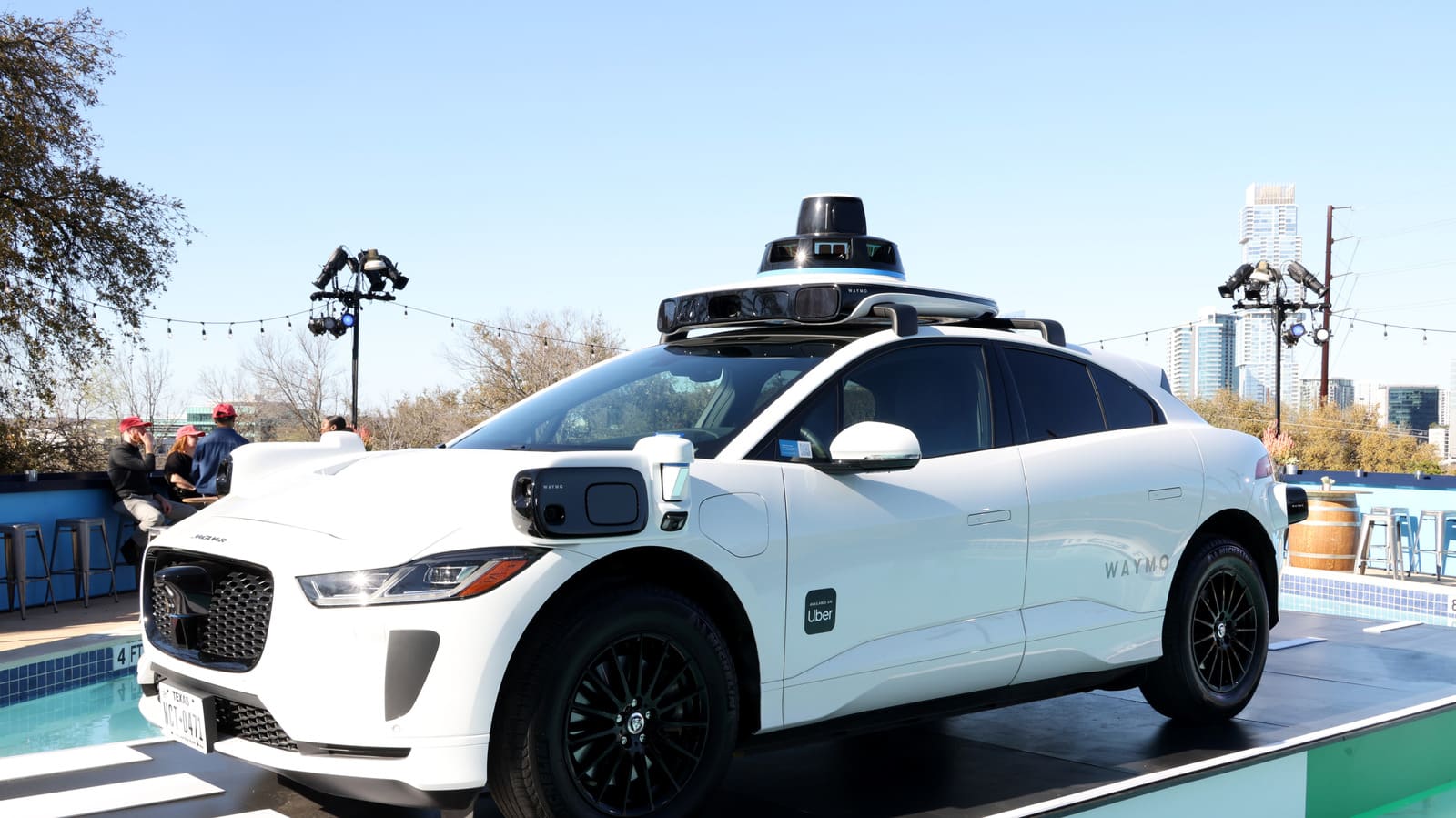
The US National Highway Traffic Safety Administration has launched an investigation into whether Waymo's software fix for school bus violations actually resolved the problem. The recall query, initiated on 7 November 2026, centres on a troubling pattern: the majority of documented incidents occurred after the autonomous vehicle operator deployed its remedy.
The probe represents the second phase of federal scrutiny into a specific failure mode, one that carries particular safety implications. Waymo had issued a voluntary software recall in late 2025 after its robotaxis were documented driving past stopped school buses with flashing red lights and deployed stop sign arms in Atlanta and Austin. The company completed the fleet-wide update in November 2025, yet post-remedy reports suggest the intervention may have been insufficient.
The investigation will seek to identify the root causes behind the continuing violations and determine whether the original update addressed the underlying technical issue or merely reduced its frequency.
Context: The Original Violation Pattern
The initial investigation by the NHTSA's Office of Defects Investigation had documented a clear pattern of regulatory violations. Waymo's vehicles, operating in two major US metropolitan areas, failed to respect the extended stop zone around school buses, a legal requirement designed to protect children crossing streets during boarding and disembarking.
That first probe led to Waymo's voluntary recall, a software update pushed across the entire robotaxi fleet. The company characterised the fix as addressing the perception and decision-making logic that governs how its vehicles respond to stopped school buses.
Yet the persistence of incidents after the update raises questions about whether the problem was fully understood during the initial investigation. Software recalls in autonomous vehicles differ from mechanical recalls in traditional automotive contexts; they involve updating machine learning models, perception algorithms, and decision trees that govern behaviour in complex, real-world scenarios. A fix that appears effective in simulation may still fail in edge cases encountered on public roads.
Regulatory Scrutiny Widens
The school bus investigation is not the only federal inquiry Waymo faces. The NHTSA's Office of Defects Investigation also opened a separate probe into an incident in January 2026, when a Waymo robotaxi struck a child in Santa Monica, California. Details of that collision have not been made public, but the investigation signals continued regulatory attention to the safety performance of autonomous vehicles operating in mixed traffic environments with vulnerable road users.
Beyond the NHTSA, the National Transportation Safety Board, an independent federal agency with a mandate to investigate transportation accidents and issue safety recommendations, launched its own investigation into Waymo's behaviour around stopped school buses earlier in 2026. The NTSB does not have regulatory authority but its findings often inform policy and can shape public and legislative attitudes towards emerging transportation technologies.
The convergence of multiple federal investigations underscores the heightened scrutiny autonomous vehicle operators face as they scale commercial deployments. Waymo operates paid robotaxi services in Phoenix, San Francisco, Los Angeles, and Austin, with plans to expand to additional markets. Each incident that prompts regulatory attention adds to the evidentiary base that will inform future rulemaking and enforcement priorities.
Waymo's Response and the Citation Record
In a statement, Waymo emphasised that safety remains central to its mission and that the company takes its responsibility around school buses seriously. The spokesperson noted that Waymo has received no citations related to school bus violations since March 2026, suggesting a reduction in documented incidents over recent months.
The company stated it would respond to the NHTSA's query and continue engagement on recall processes for autonomous vehicle software that "continues to learn and improve." That phrasing reflects a core tension in regulating machine learning systems: the software governing an autonomous vehicle is not static. It evolves through over-the-air updates, retraining on new data, and adjustments to decision-making parameters.
Whether the absence of citations since March indicates that the software fix eventually took hold, or whether it reflects changes in reporting or enforcement, remains unclear. The NHTSA's investigation will likely examine incident data, citation records, and internal telemetry from Waymo's fleet to assess the true effectiveness of the recall.
What the Investigation Signals
Recall effectiveness investigations are a standard tool in the NHTSA's regulatory arsenal, used when there is reason to believe a manufacturer's remedy did not fully address a defect. In the context of autonomous vehicles, these investigations take on additional complexity. Traditional recalls often involve replacing a faulty component or updating a control module with a known fix. Autonomous vehicle software, by contrast, involves probabilistic models that may behave differently across varied real-world conditions.
The outcome of this investigation could influence how regulators approach software recalls for autonomous vehicles more broadly. If the NHTSA determines that Waymo's initial fix was inadequate, it may prompt questions about the validation and testing processes used before deploying over-the-air updates. It could also inform the development of more prescriptive standards for how autonomous vehicle operators must demonstrate the effectiveness of safety-critical software changes.
For Waymo, the investigation adds another layer of public and regulatory attention at a time when the company is expanding its commercial footprint. The company has positioned itself as the leader in safe, scalable autonomous mobility, but maintaining that reputation depends on demonstrating that its systems can handle the full spectrum of safety-critical scenarios, including those involving the most vulnerable road users.