National Security Investigation Shadows Nvidia as Founder Faces Scrutiny
A personal matter involving CEO Jensen Huang has triggered government probes into whether classified technology reached Chinese entities through indirect channels
A Personal Matter Escalates into Policy Territory
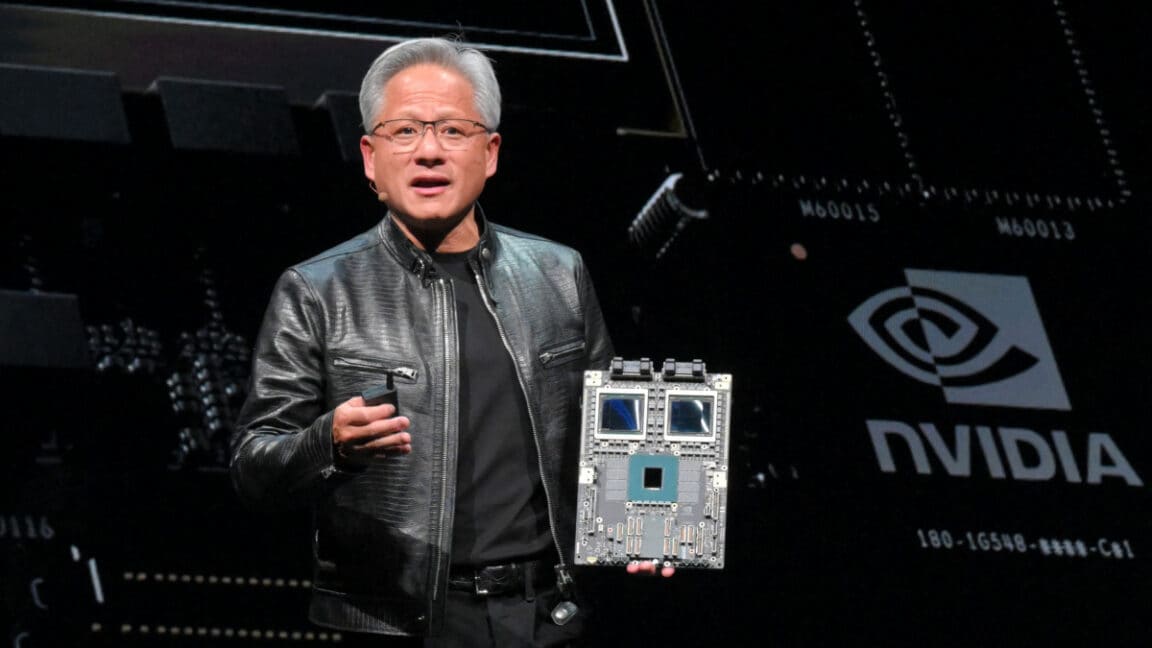
Jensen Huang, the co-founder and chief executive of Nvidia, faces a board-led investigation following revelations that have drawn the attention of multiple US government agencies. The inquiry centres on whether sensitive information about advanced semiconductor designs may have been exposed through personal connections to entities under scrutiny for export-control violations.
The investigation follows years of tension between Nvidia and Washington over access to the Chinese market. Huang has been among the most vocal technology executives advocating for a recalibration of export restrictions, arguing that blanket bans risk ceding long-term advantage to competitors in other jurisdictions. That advocacy has positioned him at the centre of a policy debate that now carries personal consequences.
Nvidia announced on Sunday that a committee of independent board members, supported by external legal counsel, would oversee the inquiry. The company stated that national and economic security interests take precedence over all other considerations, including shareholder value. The board emphasised it has not yet identified any breach of classified material or proprietary designs, but committed to examining all available evidence.
The Intersection of Lobbying and Enforcement
Huang has spent considerable effort lobbying the current administration to permit limited exports of certain chip architectures to Chinese buyers. In 2025, the US government imposed sweeping export controls that effectively barred Nvidia from selling its most advanced products into China, one of the largest markets for data-centre infrastructure globally.
A subsequent agreement allowed the company to ship its H200 series processors, an older generation of hardware, with the US Treasury receiving a percentage of revenue from those transactions. The arrangement produced minimal commercial benefit for Nvidia. Chinese state-backed buyers largely declined to purchase the products, viewing the terms as politically unpalatable and the hardware as insufficiently competitive against domestic alternatives under development by firms in Shenzhen and Shanghai.
The deal intensified criticism from officials within the administration who favour stricter containment measures. Those voices have grown louder in recent months as evidence emerged suggesting that certain distributors were circumventing controls through complex re-export schemes.
Megaspeed and the Smuggling Allegations
US investigators had already been examining Megaspeed, a Hong Kong-based distributor, over allegations that it facilitated the transfer of restricted semiconductors into mainland China. The company operates across multiple jurisdictions in Asia, purchasing hardware through intermediaries and reselling it to data centres and research institutions that would otherwise be unable to acquire such equipment under current regulations.
The probe into Megaspeed predates the current controversy surrounding Huang. However, the overlap between the two inquiries has raised questions about whether information flows between Nvidia's executive leadership and entities under investigation may have occurred, even inadvertently.
Export-control enforcement has become a central pillar of US technology policy in Asia. Over the past three years, the Commerce Department has expanded its remit, adding dozens of firms to restricted lists and tightening the definitions of what constitutes dual-use technology. Enforcement actions have targeted not only manufacturers but also logistics providers, financial intermediaries, and even cloud-service operators accused of enabling access to restricted compute resources.
The Megaspeed case represents one strand of a broader effort to close gaps in the export-control architecture. Investigators have focused on whether the distributor maintained relationships with procurement networks linked to Chinese government research programmes, particularly those involved in defence applications and surveillance infrastructure.
Organisational Structure and Dependency Risk
Nvidia's operational model depends heavily on Huang's direct involvement. Since co-founding the company in 1993 as a graphics-card manufacturer serving the gaming market, he has built a leadership structure characterised by minimal hierarchy. Huang oversees a core group of approximately six senior executives, while maintaining direct reporting lines to several dozen managers across engineering, sales, and operations.
This approach, which Huang has described as enabling rapid decision-making, has been credited with Nvidia's ability to outpace rivals in the accelerated-computing market. The company's market capitalisation expanded from roughly one trillion US dollars in early 2023 to 4.5 trillion dollars by late 2026, driven largely by demand for its data-centre products used in training and deploying large language models.
However, the concentration of authority also creates dependency risk. Few technology companies of comparable scale rely so heavily on a single individual for both strategic direction and day-to-day execution. Analysts have noted that succession planning at Nvidia remains opaque, with no clear internal candidates positioned to assume the chief executive role.
The current investigation amplifies those concerns. If the inquiry were to result in Huang stepping aside, even temporarily, the company would face immediate questions about continuity in product roadmaps, customer relationships, and government affairs.
Political and Industry Reactions
Elon Musk, who has maintained close ties with Huang and whose companies are among Nvidia's largest customers, publicly endorsed the chief executive following the announcement of the investigation. In a social media post, Musk characterised Huang as indispensable to American leadership in artificial intelligence and described him as one of the most consequential entrepreneurs of his generation.
That support reflects a broader sentiment within parts of the technology industry that export controls have been implemented too broadly, restricting not only adversaries but also limiting the ability of US firms to compete in global markets. Executives at cloud providers, semiconductor design houses, and systems integrators have privately expressed concern that overly restrictive policies risk accelerating the development of indigenous alternatives in China, undermining the long-term strategic objective of maintaining technological advantage.
However, lawmakers focused on national security have taken a markedly different view. John Moolenaar, the Republican chairman of the House select committee on China, called for Huang to testify before Congress. Moolenaar stated that it is essential for the chief executive to address concerns about how sensitive technology and information may have been accessed by entities with connections to Beijing.
The request for testimony signals that the investigation is likely to extend beyond the corporate governance process at Nvidia. Congressional scrutiny could encompass not only the specific allegations under review by the board but also broader questions about the adequacy of internal controls at companies handling restricted technologies.
Regional Implications for Semiconductor Policy
The case arrives at a moment of heightened attention to semiconductor supply chains across Asia. Governments in Seoul, Tokyo, and Taipei have each introduced measures intended to prevent unauthorised transfers of advanced manufacturing equipment and chip designs. Those efforts are coordinated, to varying degrees, with US export-control frameworks, but enforcement remains uneven.
Singapore, where Nvidia maintains a significant regional presence, has emerged as a critical node in the distribution of data-centre hardware. The city-state's position as a logistics and financial hub makes it an attractive location for companies seeking to navigate complex regulatory environments. However, it also raises questions about whether existing controls are sufficient to prevent diversion of restricted goods.
Indian firms, which have become increasingly important customers for Nvidia's products as the country expands its digital infrastructure, are watching the investigation closely. Any tightening of export procedures or additional compliance requirements could affect procurement timelines for data centres under construction in Bengaluru, Hyderabad, and Mumbai.
In China, state media have characterised the investigation as evidence of internal contradictions within US policy. Commentators have argued that the case demonstrates the unsustainability of attempting to decouple technology ecosystems while maintaining commercial relationships. Chinese semiconductor firms, meanwhile, have accelerated efforts to develop alternatives to Nvidia's architectures, with mixed results.
What Comes Next
The board's inquiry is expected to take several months. External legal counsel will review communications, financial transactions, and any interactions between Huang and entities currently under investigation by US authorities. The scope of the review may expand depending on preliminary findings.
If the investigation identifies material lapses in judgment or procedure, the board could impose sanctions ranging from formal reprimands to suspension or removal. Even absent definitive findings, the inquiry is likely to result in strengthened internal controls and revised protocols for interactions with foreign entities.
Congressional hearings, if they proceed, will likely focus on whether Nvidia's lobbying efforts included the sharing of technical details that could inform adversaries about the capabilities or limitations of restricted products. Lawmakers may also examine whether the company's internal compliance structures are adequate given the scale of its operations and the sensitivity of the technologies it produces.
For the broader semiconductor industry, the case underscores the growing complexity of operating in an environment where commercial imperatives, personal relationships, and national security considerations intersect. As export controls expand and enforcement intensifies, technology executives face an increasingly narrow path between maintaining global market access and satisfying the demands of policymakers in Washington.