Sequoia Bets on Motion-Capture Startup as Humanoid Robot Race Hungers for Data
Mecka AI is closing in on a $500 million valuation just months after its last round, underscoring how fast the market for physical-world training data is moving.
A Three-Month Valuation Jump
Mecka AI, the startup that collects human motion data to train humanoid robots, is in advanced talks to close a financing round led by Sequoia Capital at a valuation approaching $500 million, according to two people familiar with the matter. The round would land just three months after the company announced a $60 million raise led by Framework Ventures, with participation from Menlo Ventures, SV Angel, and Kindred Ventures.
The new valuation represents a near-tripling in a quarter, reflecting both the company's growth trajectory and the scramble among robotics developers for high-quality physical-world data. Mecka AI and Sequoia Capital declined to comment. The exact size of the new round has not been disclosed, and terms remain subject to change.
Four Non-Roboticists Spot a Bottleneck
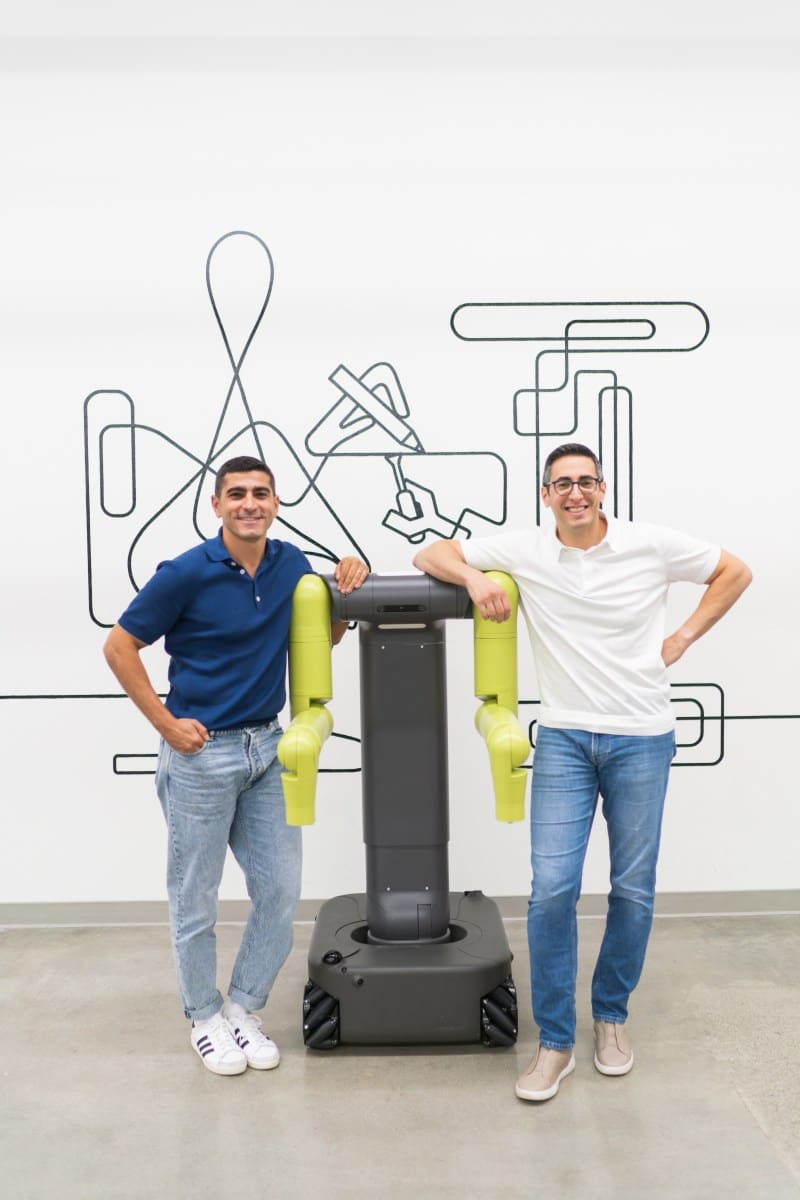
Mecka AI was co-founded in 2024 by Josh Gao, Mogen Cheng, Jason Chong, and Duy Nguyen. None of the four brought traditional robotics credentials. Gao and Cheng had previously built a restaurant fintech venture in Canada; Chong joined Coinbase after the exchange acquired his crypto platform; Nguyen handles operations. What they did bring was a thesis: that the scarcity of real-world interaction data, not algorithm design, was the primary constraint holding back general-purpose robots.
The company's name draws from "mecha", the fictional giant robots piloted by humans in Japanese science fiction. Its business model borrows from the playbook that Scale AI and others used to accelerate large language model training - crowdsource the ground truth. Mecka pays participants to record themselves performing everyday actions such as making coffee, assembling furniture, or repairing vehicles, using a combination of body-worn sensors and smartphone cameras.
Egocentric Data as Infrastructure
The startup is building what amounts to infrastructure for the embodied AI wave. Many robotics companies and AI research labs now rely on "egocentric" data - video and sensor streams captured from the perspective of a human performing a task - to train models that must navigate the messiness of the physical world. This approach complements other collection methods such as teleoperation, where a human remotely controls a robot to generate labelled demonstration data.
At Opentechwire, we've tracked the rapid professionalisation of this data layer over the past eighteen months. What began as academic labs filming their own researchers has evolved into a specialist industry with venture backing, standardised sensor rigs, and global contributor networks.
As of early June, Mecka projected it would reach an annual run rate of $100 million by the end of 2026, Gao told Fortune at the time of the previous fundraise. While the company has not publicly disclosed its customer roster, the velocity of its revenue growth and the calibre of its new lead investor suggest demand from well-capitalised robotics developers and frontier AI labs.
A Crowded but Fast-Growing Market
Mecka is far from alone. XDOF, another motion-data specialist, is reportedly nearing a new round at a $1.2 billion valuation. Scale AI, long dominant in image and text labelling for language models, has expanded into physical-world data collection. Micro1, originally focused on human-in-the-loop tasks for LLMs, is making a similar move. The competitive intensity reflects both the size of the prize - whoever supplies the training data for general-purpose robots will occupy a strategic choke point - and the relative immaturity of the market, where standards, pricing, and even data formats remain in flux.
The rush also signals a broader shift in how the AI industry thinks about data. For years, the assumption was that the internet contained enough text and images to train increasingly capable models. That assumption has run into two problems: diminishing returns from synthetic data, and the simple fact that language models cannot learn to fold laundry or wire a circuit board from reading about it. Embodied intelligence requires embodied data.
Why Sequoia Is Moving Fast
Sequoia's involvement is notable not just for the valuation it implies, but for the speed. Three months between rounds is unusually compressed, even in a hot market. It suggests that Mecka either hit its run-rate target ahead of schedule, signed marquee customers, or both. It also suggests that Sequoia views the motion-data layer as strategic enough to warrant pre-emptive investment, rather than waiting for the next natural fundraising window.
Venture investors have learned from the LLM boom that infrastructure often accrues more durable value than applications. OpenAI's compute bills flow to NVIDIA; its data costs flow to labelling platforms. If humanoid robots and other general-purpose machines follow a similar trajectory, the companies that supply their training data will capture a meaningful share of the value chain - and will do so with better unit economics than the robot manufacturers themselves, who face hardware margin pressure.
The Road Ahead
Mecka still faces execution risk. Collecting human motion data at scale requires logistics, quality control, and participant recruitment across geographies and task types. The company must also navigate the evolving preferences of its customers, who may shift towards simulation, synthetic data, or alternative collection methods as models improve. And while the current fundraising environment rewards growth, Mecka will eventually need to demonstrate that its data translates into measurably better robot performance - a harder proof point than showing that an LLM can pass a benchmark.
But for now, the market is voting with capital. The fact that a four-person team with no robotics pedigree can command a near-half-billion-dollar valuation in under two years tells you how much urgency the industry feels. The robots may not be walking among us yet, but the data to teach them is already a booming business.