Seed Checks Swell as Peak XV Backs Fewer Bets at Higher Ticket Sizes
The venture firm's latest Surge cohort reflects a structural shift in early-stage funding: larger capital commitments, more capital-hungry deeptech, and a rising Series A bar that forces seed investors to write bigger cheques upfront.
The New Economics of Seed
Peak XV Partners has raised the ceiling on its Surge programme investments to $5 million per company, a near-doubling from the $3 million limit that governed previous cohorts. The shift, visible in the firm's twelfth batch of 18 ventures, reflects a broader recalibration of early-stage economics: companies now need more runway before they can credibly approach Series A investors, and those building in deeptech or hardware-adjacent domains burn capital faster than their software-only predecessors.
Across the 18 companies in Surge 12, Peak XV deployed more than $50 million; total seed capital raised by the cohort exceeds $90 million, according to the firm. Median cheque size has climbed alongside the ceiling, though Peak XV declined to specify the figure. At least three of the companies had already closed outside funding before entering the programme, in some cases from Peak XV itself, a pattern that underscores how the boundaries between pre-seed, seed and seed-extension rounds have blurred.
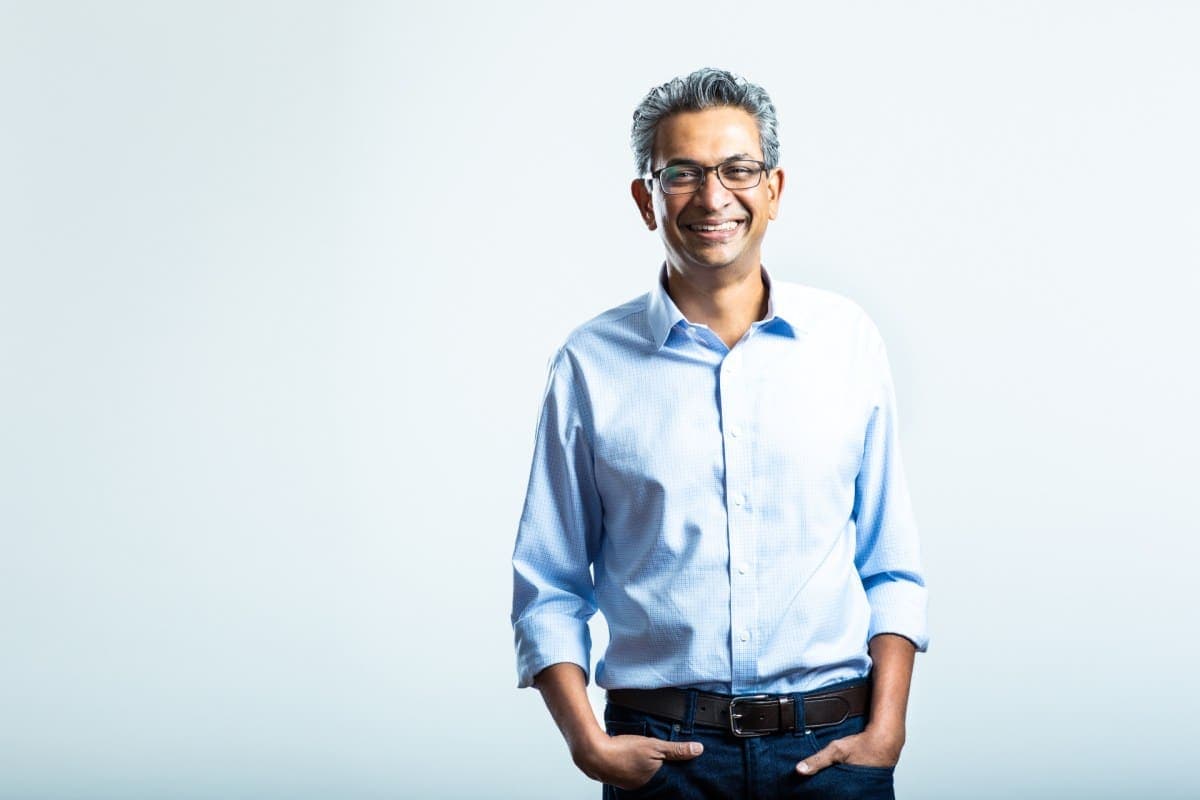
Rajan Anandan, managing director at Peak XV, attributes the larger allocations to two forces. First, the bar for Series A has moved higher; institutional investors now expect more traction, longer revenue histories or more validated unit economics than they did two years ago. Second, capital intensity has risen in categories such as robotics, space infrastructure and AI model post-training, where prototypes and pilots require material upfront investment. Writing bigger seed cheques, in this view, is less a matter of signalling conviction than a practical response to changed cost structures.
Geography and Market Mismatch
Only five of the 18 startups target the Indian market as their primary customer base, even though more than half are incorporated or headquartered in India. The gap between where a company is built and where it expects to find revenue has widened with each Surge cohort, Anandan told Opentechwire, as founders optimise for engineering talent and cost arbitrage while designing products for North America, Europe or global segments.
The shift mirrors a pattern we have tracked across Southeast Asia and India over the past three years: venture-backed companies increasingly treat Bengaluru, Singapore or Sydney as engineering hubs rather than end markets, reversing the "build local, sell local" assumptions that shaped the region's first wave of consumer internet companies. This cohort spans founders and offices from San Francisco to Sydney, a distribution that would have been unusual in Surge's earliest batches in 2019, when the programme launched under the Sequoia Capital India and Southeast Asia banner.
Since inception, Surge has backed more than 180 companies founded by entrepreneurs representing over 18 nationalities. Peak XV states that the ten largest graduates now generate combined annual revenue exceeding $1 billion, though the firm did not break out individual company figures or valuations.
Who Gets In
Anandan describes Surge as Peak XV's main vehicle for seed-stage deployment, with the expectation that the firm will continue backing successful companies through subsequent rounds. Roughly half to 60 per cent of each cohort comprises operators who left established technology companies to start their own ventures; the remainder splits between repeat founders and technical specialists with advanced degrees or niche domain expertise.
The mix reflects a selection bias towards founders who can move quickly: former product leads, engineering managers or research scientists who understand go-to-market motion, hiring cadence and the mechanics of scaling before they incorporate. Anandan notes that this profile has become more pronounced as competition for Surge spots has intensified; application volume has grown while cohort sizes have remained stable or shrunk slightly, tightening acceptance rates.
Inside the Cohort
The 18 companies span sectors from AI safety tooling to autonomous underground robotics, a range that makes thematic generalisation difficult. Three companies have not yet disclosed their names or products; Peak XV says they operate in education, applied AI and medical devices.
Among the disclosed ventures, several patterns emerge. Alma, founded by Nischith Shadagopan M N and Vinod Ganesan, is building a personal computing platform designed to lower cost and increase speed; both founders previously worked at Microsoft Research and served as founding engineers at Sarvam AI, a Bengaluru-based startup focused on large language models for Indian languages.
August AI, founded by Anuruddh Mishra in 2022 following a personal diagnostic error, operates a healthcare platform combining physician-led care with AI triage and decision support; the company reports more than 9 million users across 160 countries, a figure that suggests either a freemium model or low-touch engagement rather than traditional telemedicine.
Ditto, founded by UC Berkeley dropouts Allen Wang and Eric Liu, functions as an AI matchmaking layer inside iMessage, focused on college students. The company raised $9.2 million in a Peak XV-led seed round announced earlier this year, making it one of the three ventures that secured outside capital before entering Surge.
GameStock, founded by Antoine Mistico, Easton Dana and Vivek Indlebele Narasimha Prasad, applies game mechanics to financial markets, attempting to make investing more competitive. Mistico is a repeat founder and former professional baseball player, a background that Peak XV highlighted in its cohort announcement.
HiLoop, founded by Jad Ghalayini, Karan Brar and Thomas Boser, offers a post-training platform that helps AI companies adapt open-weight models for specific use cases. The team includes former engineers from Reducto and a Cambridge computer science doctorate who completed his degree at 24.
Hoola Health, founded by Deeksha Senguttuva, consolidates paediatric and family care on a single platform, covering consultations, vaccinations, diagnostics, developmental therapy and dental services. Senguttuva grew up in a family that built and operated a hospital group, giving her early exposure to healthcare operations.
Kello, founded by Mona Gandhi and Subramanya Jingade, is building an AI-driven talent discovery platform that prioritises trajectory and potential over credentials. Gandhi was Airbnb's first female engineer and previously founded Upraised; Jingade co-founded AmbitionBox.
Kindling, founded by Adam Miller and Sachin Shah, describes itself as a storytelling operating system for technology startups, using AI to help companies develop communications and content at scale.
Puralink, founded by Harrison Crowe-Maxwell, Shyeon Delnawaz and Thien "Long" Tran, is developing autonomous robots capable of navigating underground pipe networks. Crowe-Maxwell has built robots since childhood and commercialised university research into the patented drive technology the startup uses.
Reinforce Labs, founded by Anish Das Sarma, develops tools to evaluate, red-team and remediate enterprise AI systems. Sarma previously founded a company acquired by Airbnb and later led AI and machine-learning teams as a director at Google.
Riffle, founded by Anurag Choudhary and deo, offers a browser-based platform where musicians can create, collaborate and share music without switching between separate tools during the creative process.
Rosella, founded by Chris Dwyer and Sean Stuart, is building an AI-native commercial insurance brokerage for businesses in the United States, automating parts of the traditionally manual process of sourcing and placing coverage. Rosella raised approximately $2.5 million in a pre-seed round led by Peak XV and Intact Private Capital earlier this year.
Tribe Money, founded by Himanshu Arora and Nikhil Shanker, provides an AI-powered personal finance platform that helps users track spending, research investments and make decisions.
ULOOK, founded by Adheesh Boratkar and Siddhesh Ravindra Naik, is building autonomous satellite systems for radio-frequency sensing and spectrum intelligence, targeting global customers. The founders have worked on more than twelve satellite missions. ULOOK raised approximately $2.3 million in seed funding from growX Ventures and InfoEdge Ventures before joining Surge.
Wingit, founded by Nikunj Kothari and Saksham Khandelwal, is building a beauty platform aimed at India's expanding premium consumer segment, focusing on discovery and purchase of higher-end products.
What It Signals
The move to larger seed allocations is neither unique to Peak XV nor surprising given the broader environment. Across the United States, Europe and Asia, seed rounds have grown in size and duration over the past eighteen months as the distance between seed and Series A has stretched. Founders who might once have raised a Series A twelve to fifteen months after seed now routinely wait eighteen to twenty-four months, either because traction thresholds have risen or because investors have become more selective.
For deeptech companies, the dynamic is more acute. A software startup can often reach product-market fit on $1 million to $2 million of capital; a robotics company building custom hardware, or a satellite venture fabricating and launching prototypes, may burn through that sum before completing a single pilot. Peak XV's willingness to commit up to $5 million per company reflects an acknowledgement that capital efficiency in these categories looks different from capital efficiency in SaaS or marketplaces.
The question for Surge and similar programmes is whether larger cheques at seed translate into better outcomes at Series A and beyond. Writing bigger cheques can extend runway and reduce the risk of down rounds or bridge financings, but it can also inflate valuations prematurely or delay the discipline that comes from capital constraints. Peak XV's track record suggests the firm has managed this trade-off effectively in earlier cohorts, but the test will come when Surge 12 companies begin raising their next rounds over the coming twelve to eighteen months.
The Globalisation Bet
The geographical spread of Surge 12 also reflects a broader thesis: that the next generation of high-value technology companies will be built by distributed teams, often headquartered in one region while serving customers in another. This model works well when the product is digital, regulation is light and go-to-market can be handled remotely. It works less well when local compliance, on-the-ground sales or physical infrastructure are required.
At Opentechwire, we have seen this tension play out across fintech, healthcare and logistics, where regulatory fragmentation and local market idiosyncrasies often force startups to choose between global ambition and regional depth. The companies in Surge 12 that target global markets from Indian or Southeast Asian bases will need to navigate this trade-off carefully, balancing the cost advantages of offshore engineering against the friction of remote customer acquisition and support.
Whether the cohort's global orientation proves prescient or premature will depend on how well these startups can compete with locally based rivals in North America and Europe, where proximity to customers, investors and talent pools remains a structural advantage. Peak XV's bet is that the cost differential and the quality of technical talent in Bengaluru, Singapore and other regional hubs are large enough to offset that disadvantage. The coming funding rounds will test that assumption.