Replit's Vision: Companies Run Themselves While Humans Provide Judgment
Amjad Masad argues that AI agents will handle execution while people focus on taste, architecture, and decision-making in what he calls the self-driving company.
The Loop That Changes Everything
When a support ticket lands at Replit today, no human sees it first. An agent examines the request, scans GitHub issues, reviews the codebase, and checks Linear tickets. By the time an engineer looks at the problem, the context is assembled, the options are mapped, and the decision becomes a matter of judgment rather than archaeology. If that engineer decides a patch is needed, deploying an agent to write and ship the fix is a single click.
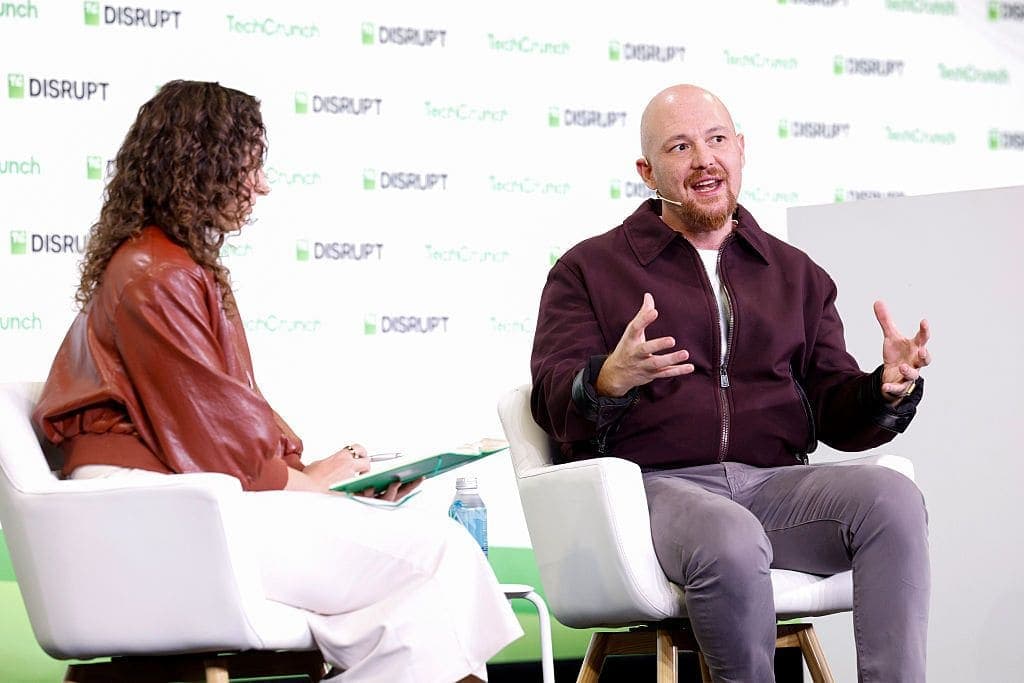
Amjad Masad, Replit's co-founder and chief executive, describes this workflow not as automation but as transformation. Speaking at an industry event in San Francisco, he framed the shift as the emergence of the "self-driving company", a term borrowed from autonomous vehicles but applied to organisations where agents handle execution and people handle taste.
The analogy is deliberate. In Masad's telling, the past year marked an inflection point when AI agents became reliable enough to trust with substantial portions of work that previously required human attention. Replit, which builds AI-powered coding tools used by businesses to develop and ship software, has reorganised its own operations around this premise. The result, he argues, is not fewer jobs but different work.
Judgment Stays Human
The architecture Masad outlined centres on a loop: agents perform initial triage, humans make decisions, agents execute those decisions. The model assumes that judgment, taste, and strategic thinking remain distinctly human contributions, even as the mechanics of implementation shift to software.
At Replit, that has meant more time spent in discussion and on whiteboards, more focus on architecture and on deciding what to build rather than how to build it. Masad noted that the company's internal rhythm has changed, with engineers spending less time on routine execution and more time on questions that require discretion.
The implication is that the value of human work shifts upward in abstraction. Where a support engineer might once have spent hours tracing a bug through logs and code, that engineer now spends minutes deciding whether a fix is warranted and what form it should take. The agent does the tracing; the human does the deciding.
The Productivity Argument
When Replit talks to other businesses, according to Masad, the conversations centre on productivity and employee satisfaction. The pitch is that agents remove tedious work, making jobs less boring and more creative. The assumption is that people prefer to think rather than to execute, and that organisations benefit when their employees spend more time on problems that require judgment.
This framing positions AI transformation not as a threat to employment but as a reallocation of human attention. Masad acknowledged that much of the workforce remains unaware of the scale of change underway, and suggested that the shift will surprise many people. But he argued that the outcome, at least within companies that adopt agent-driven workflows, is a more satisfying version of work.
The claim rests on the premise that agents can reliably handle execution without requiring constant supervision. Masad said that reliability threshold was crossed earlier this year, though he did not specify metrics or error rates. The assertion is significant: if agents remain brittle or require frequent correction, the promised productivity gains evaporate, and the human role shifts from judgment to babysitting.
The Self-Driving Metaphor and Its Limits
The self-driving company metaphor carries both promise and risk. Autonomous vehicles, after all, have proven far harder to deploy at scale than early proponents predicted. Edge cases proliferate, regulatory frameworks lag, and the gap between controlled environments and real-world complexity remains wide.
Masad's model assumes that business processes are more tractable than city streets, that the state space of support tickets and code patches is smaller and more structured than the state space of traffic. That may be true for certain workflows, particularly in software development, where the environment is digital and the feedback loops are tight. It is less clear how the model generalises to domains where context is ambiguous, stakes are high, and judgment cannot be cleanly separated from execution.
The other risk is organisational. If agents handle execution and humans handle judgment, then the skill set required of employees shifts sharply. People who excel at implementation but struggle with strategic thinking may find their roles eroded. The model rewards those who can articulate what to do, not those who know how to do it. That is a significant reordering of workplace value, and one that may not align with the skills or preferences of much of the current workforce.
Silicon Valley's Optimism Problem
Masad argued that the technology industry has failed to articulate a positive vision of AI transformation, and positioned Replit as an alternative voice. The comment reflects a broader tension within the sector, where enthusiasm for AI capabilities often sits uneasily alongside anxiety about displacement and misuse.
The challenge is that optimism about productivity gains is easier to sustain inside companies that build AI tools than inside companies that adopt them. For Replit, agents are a product and a competitive advantage. For a mid-sized retailer or a regional bank, agents are a cost, a risk, and a potential source of disruption to established workflows and employee morale.
The self-driving company model may indeed represent the future of work, but the path from here to there involves difficult transitions. People will need to retrain, organisations will need to restructure, and the distribution of gains will depend heavily on which workers can adapt to a world where judgment is valued and execution is automated.
What Replit's Experiment Reveals
At Opentechwire, we have tracked the adoption of AI agents across software development, customer support, and operations over the past eighteen months. The pattern Masad describes, where agents handle structured tasks and humans provide oversight, is becoming common in startups and scale-ups with technical workforces. The question is how far that pattern extends.
Replit's internal transformation is instructive because the company operates in a domain where agents are most likely to succeed: software engineering, where the environment is deterministic, the tools are digital, and the feedback is immediate. If the model struggles even there, it will struggle everywhere. If it succeeds, the implications are wide-ranging.
The self-driving company is not a metaphor for full automation. It is a metaphor for delegation, where humans remain in the loop but the loop itself changes shape. Whether that change makes work more fulfilling or simply more precarious will depend on how organisations manage the transition, and on whether the productivity gains are shared or captured by a narrowing set of roles.
Masad's vision is optimistic, but optimism in Silicon Valley has often run ahead of reality. The next year will test whether the self-driving company is a durable model or a phase in a longer, messier transformation.