Nvidia Pushes Sovereign AI Agenda in Central Asia as US-China Tech Competition Expands
Jensen Huang's visit to Kazakhstan signals how chip diplomacy is moving beyond traditional tech hubs into energy-rich nations seeking digital autonomy
The Pitch in Astana
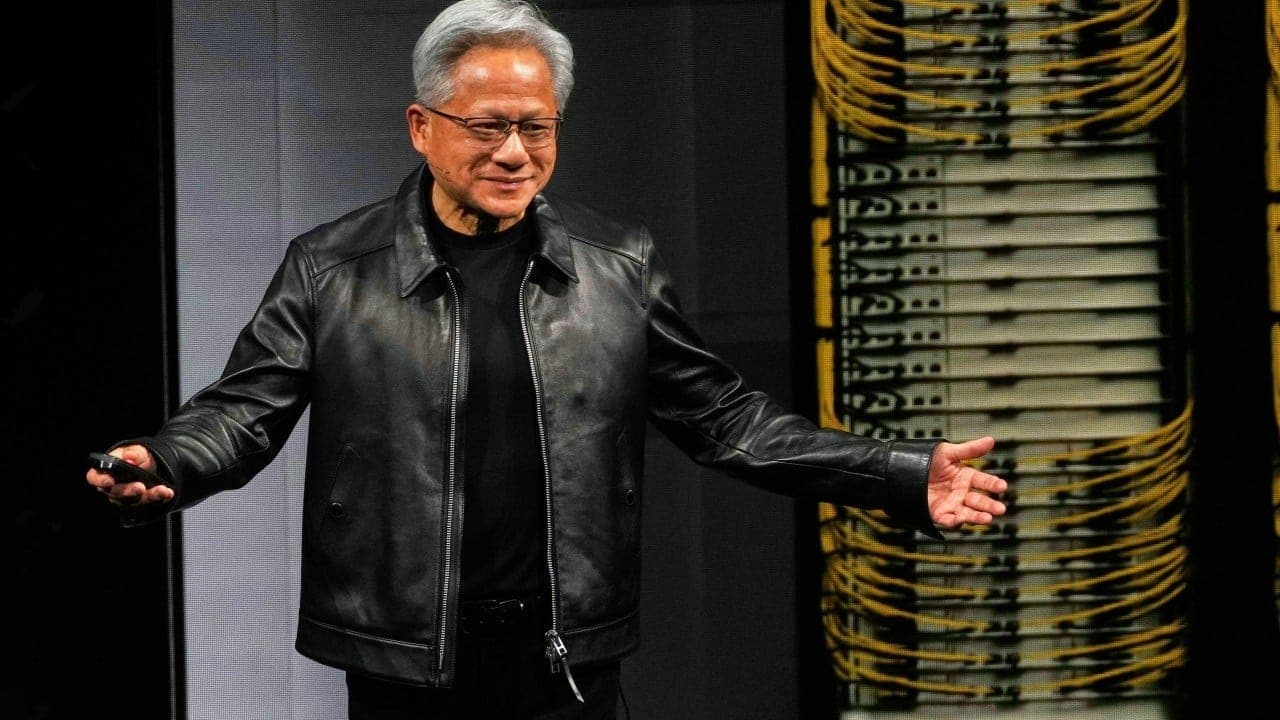
Jensen Huang stood before an audience in Kazakhstan's capital on 19 October, delivering a message he has refined across dozens of countries: nations must build their own artificial intelligence infrastructure or risk digital dependence. The Nvidia chief executive appeared alongside Zhaslan Madiyev, the country's minister for AI and digital development, framing computing capability as a matter of national sovereignty rather than mere industrial policy.
Kazakhstan represents an unexpected frontier in the semiconductor industry's geopolitical expansion. The Central Asian nation of 20 million people sits on substantial energy reserves and occupies strategic geography between Russia and China, yet it lacks the manufacturing ecosystems of Seoul or Shenzhen. Huang's appearance there underscores how chip firms are no longer content to serve established tech economies; they are actively shaping the digital strategies of nations that were peripheral to earlier waves of computing adoption.
The "sovereign AI" concept Nvidia promotes rests on a straightforward proposition: countries should control the data centres and inference systems that process their citizens' information, rather than routing sensitive workloads through foreign clouds. For Nvidia, this doctrine conveniently translates into hardware sales. Each nation pursuing digital autonomy requires GPU clusters, networking equipment, and the software stack Nvidia has spent years integrating. The company frames this as a defensive posture, but the commercial logic is transparent.
Why Kazakhstan Matters Now
At Opentechwire, we have tracked sovereign AI announcements in India, the United Arab Emirates, and across Southeast Asia over the past 18 months. Kazakhstan's entry into this cohort signals a shift in scale. The country has historically relied on hydrocarbon exports; its government now speaks of diversifying into digital services and using surplus electricity from aging thermal plants to power computation. Madiyev's ministry, established only in 2024, exists precisely to coordinate this transition.
The US-China dimension adds urgency. Washington has tightened export controls on advanced chips to limit Beijing's access to cutting-edge AI hardware, but those restrictions create opportunities for third countries willing to align with American semiconductor suppliers. Kazakhstan maintains economic ties with both powers; hosting Nvidia's chief executive in Astana suggests a tilt towards the US technology stack, even as Chinese firms build solar farms and transmission lines across the region.
Energy abundance gives Kazakhstan a structural advantage that pure technology hubs lack. Training large language models and running continuous inference workloads demand kilowatts per rack; the country can offer electricity at rates that make Singapore or Tokyo uncompetitive. If the government can attract hyperscale operators or build state-backed facilities, it could position itself as a compute exporter rather than merely a consumer of foreign cloud services.
Bubble Concerns and Capex Reality
Huang used the Astana event to dismiss growing investor anxiety about overbuilding in AI infrastructure. He argued that demand for machine learning capacity far exceeds current supply, pointing to order backlogs and the scramble among cloud providers to secure GPU allocations. This optimism sits awkwardly alongside recent earnings caution from server manufacturers and slowing growth in hyperscale capital expenditure reported in third-quarter filings.
The tension is not new. Nvidia's valuation reflects expectations of sustained exponential growth in chip shipments, yet the pace of model improvement has slowed and enterprises remain cautious about deploying generative AI beyond pilot projects. Sovereign AI programmes, if they materialise at scale, could absorb some of the capacity overhang by creating state-backed demand independent of commercial return on investment. Whether that represents genuine economic activity or a subsidy-fuelled detour is a question Huang did not address.
Kazakhstan's government has not disclosed budget figures for its AI ambitions, nor has it named anchor customers for any planned data centre capacity. The minister spoke in general terms about partnerships and pilot programmes, a pattern familiar from similar announcements in other emerging markets. Without committed capital and operational timelines, sovereign AI risks remaining a PowerPoint doctrine rather than a physical buildout.
The Geopolitics of the GPU
Nvidia's global roadshow reflects a broader reality: semiconductor firms are now diplomatic actors, shaping national technology strategies through selective access to hardware and technical support. The company has met with officials in at least 15 countries this year, tailoring its sovereign AI pitch to local priorities, whether energy security, language model localisation, or data residency compliance.
This influence carries risk. By embedding itself in national infrastructure plans, Nvidia becomes exposed to shifts in trade policy, currency controls, and the political stability of client states. Kazakhstan's economy remains heavily tied to commodity prices; a downturn in oil revenue could halt digital investments overnight. The company is also navigating US export restrictions that could tighten further, limiting which chips it can sell to certain jurisdictions.
China's response to sovereign AI proliferation has been muted but strategic. State-backed firms are offering alternative hardware and subsidised cloud credits to countries wary of depending entirely on American suppliers. Kazakhstan's location and existing Belt and Road infrastructure projects give Beijing leverage that Nvidia cannot easily counter with product roadmaps alone.
What Happens Next
Sovereign AI will succeed or fail based on whether governments can move from policy statements to operational data centres with paying workloads. Kazakhstan has energy and geography; it lacks the technical workforce, regulatory frameworks, and capital markets depth that underpin successful technology hubs. Huang's visit may catalyse initial investments, but the harder work of building talent pipelines and attracting application developers will determine whether the country becomes a compute node or another site of stranded digital infrastructure.
The broader question is whether the sovereign AI model fragments global cloud architecture or simply creates new routes for the same hyperscale operators to expand. If every nation builds walled-off GPU clusters, latency and data transfer costs rise, complicating the cross-border workflows that drive much of AI's current commercial value. If sovereign facilities end up leased to multinational providers under bilateral agreements, the sovereignty element becomes largely symbolic.
Nvidia benefits either way, so long as chips ship. The company's ability to stay ahead of export control revisions and maintain technological lead over competitors like AMD and emerging Chinese designers will shape how much leverage it retains in these national conversations. For now, Huang's schedule of ministerial meetings suggests the strategy is working, even as the macro environment for AI investment grows more uncertain.