Two Chinese AI Labs Clear New Export Hurdle for Open-Source Models
DeepSeek and MiniMax complete registration under fresh Beijing oversight rules, moving ahead with global licensing as China tightens grip on AI technology transfers
First Movers Under Revised Framework
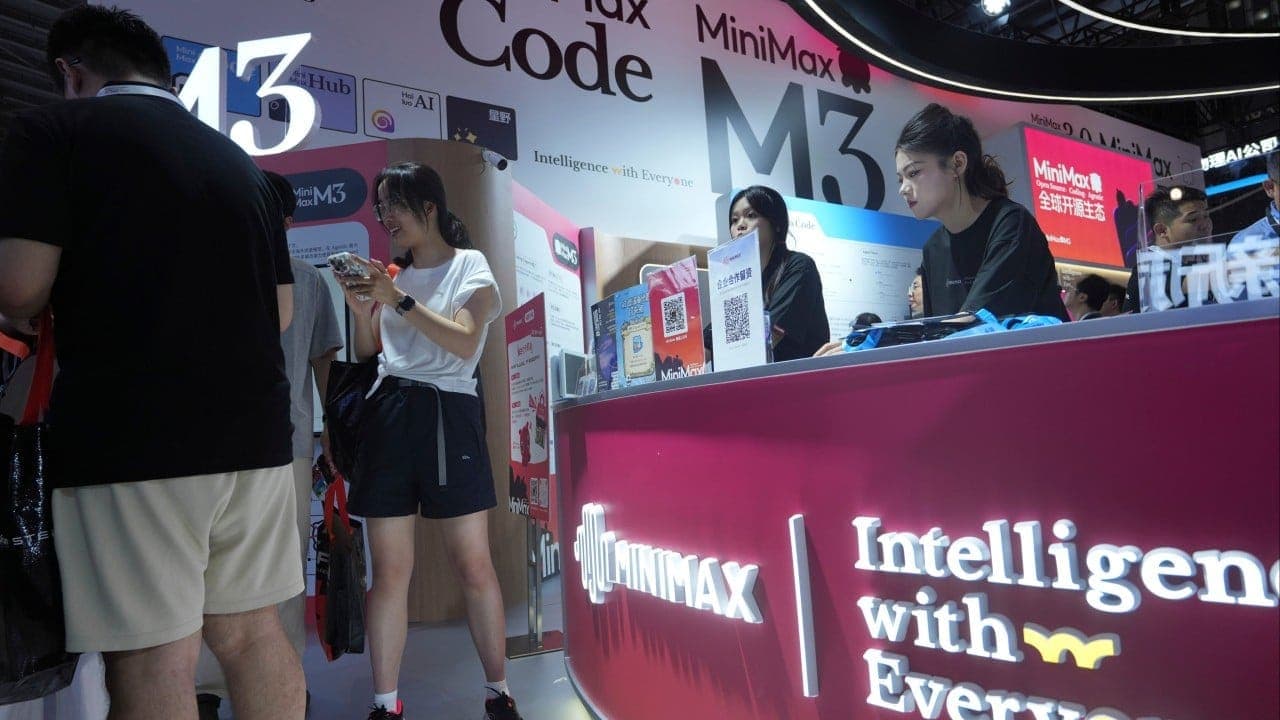
DeepSeek and MiniMax, two of China's most prominent artificial intelligence laboratories, have completed the registration process required under Beijing's newly tightened export control regime, clearing the path for open-source releases and international licensing arrangements. State broadcaster CCTV confirmed the development late on Thursday through Yuyuan Tantian, its widely followed social media channel focused on policy and technology.
The approvals mark the first known instances of AI developers successfully navigating the revised framework, which came into force earlier this month. Both companies have since resumed or initiated overseas licensing activities, positioning themselves as early adopters of the compliance pathway Beijing has laid out for AI technology transfers.
At Opentechwire, we've tracked China's evolving export control architecture since the initial 2023 restrictions on large language model parameters. The latest iteration represents a recalibration: Beijing is seeking to retain oversight without fully closing off access to Chinese AI capabilities, particularly in the open-source domain where global collaboration has been a competitive advantage for mainland labs.
Policy Context and Timing
The registration requirement stems from revisions to China's export control catalogue, which now explicitly include certain AI model architectures and training methodologies. The updates, published in early October, expanded the scope of technology subject to Ministry of Commerce review before cross-border transfer or public release.
Unlike the blanket prohibitions applied to semiconductor manufacturing equipment or advanced chip designs, the AI provisions establish a notification and clearance process. Developers must submit technical documentation, describe intended distribution channels, and demonstrate compliance with data security laws before receiving authorisation for overseas activity.
The swift turnaround for DeepSeek and MiniMax suggests both companies anticipated the policy shift and prepared submissions in advance. Industry observers in Shenzhen and Beijing have noted that the Commerce Ministry held closed-door consultations with leading AI firms throughout the third quarter, likely smoothing the administrative pathway for early applicants.
Open-Source Strategy and Global Reach
DeepSeek has built its reputation on releasing capable models under permissive licences, attracting developer communities in Southeast Asia and Europe. Its V2 series, launched in July, has been integrated into enterprise applications from Jakarta to Warsaw, often as a cost-effective alternative to proprietary offerings from US-based providers.
MiniMax, meanwhile, has focused on multimodal systems combining text, image and audio processing. The company's partnerships with hardware manufacturers in South Korea and Taiwan hinge on its ability to distribute model weights and fine-tuning toolkits without legal friction. The export registration removes a significant uncertainty that had clouded those agreements since the regulatory revisions were first signalled in August.
Both firms are venture-backed, with DeepSeek counting Alibaba Cloud and several Hangzhou-based funds among its investors, whilst MiniMax has drawn capital from Tencent and a consortium of Singapore family offices. Their open-source posture serves dual purposes: accelerating adoption across markets where sales teams are thin, and signalling to the global research community that Chinese labs remain committed to collaborative development despite tightening policy.
Compliance as Competitive Edge
The registration milestone carries strategic weight beyond regulatory box-ticking. By moving quickly through the new process, DeepSeek and MiniMax gain a window of operational clarity whilst competitors assess their own compliance posture. Several smaller labs in Beijing and Shanghai have paused international releases pending legal review, according to developers who spoke with Opentechwire on condition of anonymity.
The approval also provides a measure of political cover. With US export controls on advanced chips constraining access to cutting-edge training infrastructure, Chinese AI companies face persistent questions about the sustainability of their technical roadmaps. Demonstrating adherence to Beijing's framework - whilst continuing to engage global markets - helps counter narratives that mainland labs are operating in an isolated or opaque regulatory environment.
Yet the compliance burden is real. Registration entails ongoing reporting obligations, and the Commerce Ministry retains discretion to revoke or suspend authorisations if a company's activities diverge from its initial submissions. For resource-constrained start-ups, the administrative overhead may prove prohibitive, potentially consolidating the AI sector around larger, better-capitalised players.
Regional Implications and Developer Response
The approvals arrive as Southeast Asian governments weigh their own approaches to AI governance. Singapore's Infocomm Media Development Authority has been monitoring China's export control evolution, seeking to ensure that locally hosted applications relying on mainland models remain compliant with both jurisdictions' rules. Thailand and Vietnam, where DeepSeek's models have gained traction in local-language applications, are similarly navigating the intersection of Chinese export policy and their own digital sovereignty priorities.
For developers outside China, the key question is predictability. Open-source licences offer legal rights to use and modify code, but those rights mean little if the underlying model weights can be withdrawn or restricted on short notice. The registration process introduces a layer of state oversight that, whilst less restrictive than outright bans, still injects uncertainty into long-term planning.
Some enterprise users in Manila and Kuala Lumpur have begun evaluating fallback options, including models from European labs or smaller US providers, as a hedge against future policy shifts. Others are pressing Chinese vendors for contractual assurances that go beyond the standard Apache 2.0 or MIT licence terms, seeking explicit commitments on availability and support.
What This Signals About Beijing's AI Policy
The swift processing of DeepSeek and MiniMax registrations suggests Beijing is calibrating its controls with an eye towards maintaining influence in global AI development, rather than retreating into autarky. By enabling continued open-source distribution - subject to oversight - Chinese policymakers preserve a channel for mainland models to shape international standards, inform research agendas, and capture developer mindshare.
This approach contrasts with the more restrictive stance on hardware and semiconductor technology, where China has imposed tighter export limits in response to US and allied controls. In the AI domain, the calculation appears different: the technology is more diffuse, the competitive landscape more fluid, and the benefits of ecosystem participation more significant.
Still, the framework remains untested at scale. DeepSeek and MiniMax are well-established labs with strong institutional backing and, presumably, well-prepared legal teams. How the registration process will function for smaller firms, or for edge cases involving dual-use applications, remains to be seen. The Ministry of Commerce has not published detailed guidance on approval timelines, technical thresholds, or grounds for denial, leaving much to be worked out through practice.
For now, the two approvals provide a data point: compliance is achievable, at least for leading players, and Beijing is willing to authorise cross-border AI activity within the bounds of its new rules. Whether that window stays open, and how wide, will depend on geopolitical currents and the evolving balance between openness and control in China's technology policy.