Batam's Data Centre Ambitions Hit Local Resistance as Infrastructure Buckles
Indonesia's gateway island to Singapore is struggling with water shortages and power cuts as AI-era facility construction accelerates, testing the limits of rapid digital infrastructure expansion.
A 26-Year Resident Notices the Shift
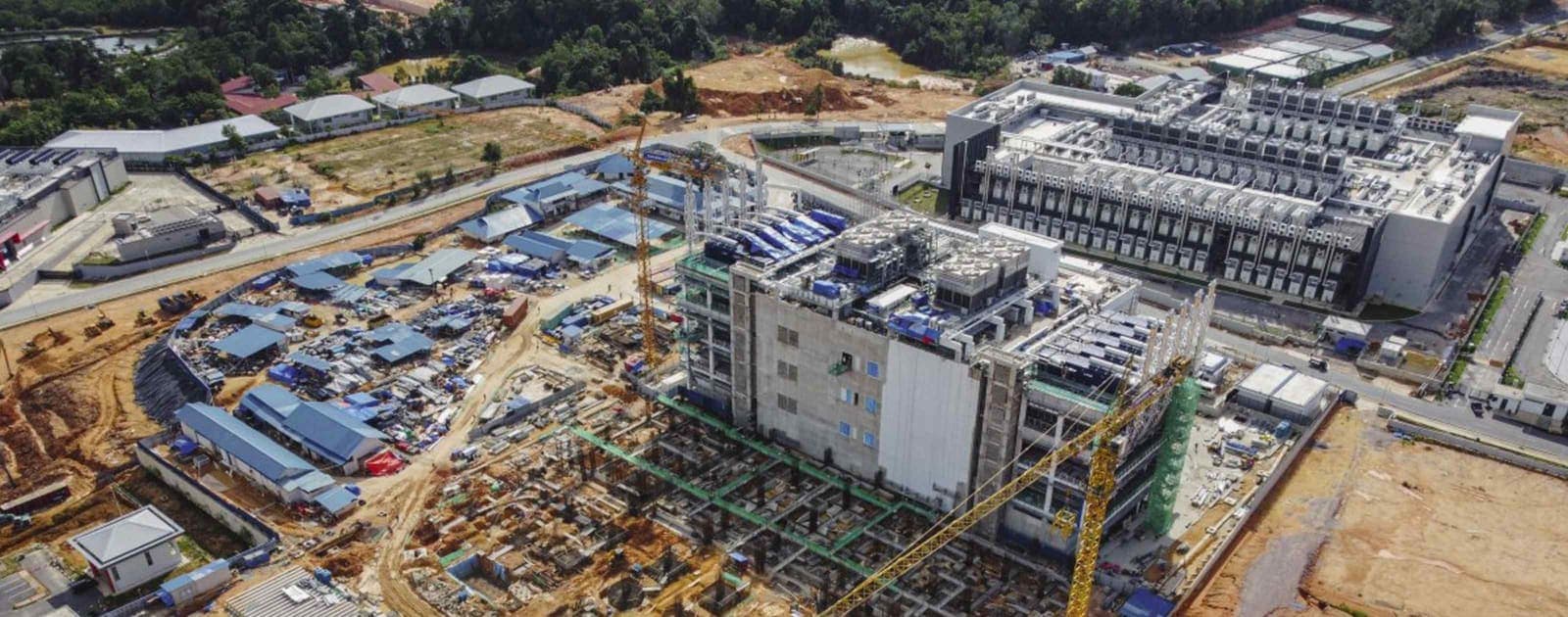
Juniadi Adinda has spent more than two decades in his village on Batam Island without worrying about water. That changed as construction crews arrived to build facilities designed to house rows of servers, cooling systems, and the power distribution equipment that modern data centres require. The Indonesian island, positioned roughly an hour by ferry from Singapore's financial district, has become a magnet for developers seeking land, electricity, and regulatory environments more accommodating than the city-state's constrained footprint.
The pattern emerging across Batam reflects a tension Opentechwire has tracked in markets from Maharashtra to Johor: AI workloads demand unprecedented energy density, but the pace of facility construction now regularly outstrips the capacity of local grids, water networks, and community tolerance. What makes Batam's case instructive is its proximity to one of Asia's most advanced digital economies and its role as an infrastructure overflow valve for Singapore's own data centre moratorium.
Singapore's Spillover Strategy
Singapore imposed a moratorium on new data centre developments in 2019, citing land and energy constraints. The policy created immediate demand for nearby alternatives. Batam, part of Indonesia's Riau Islands province and already designated as a special economic zone, offered developers a combination of tax incentives, cheaper real estate, and subsea fibre connectivity to Singapore's internet exchanges. Nongsa Digital Park, a technology precinct on the island's northern coast, has attracted multiple data centre projects since 2021.
The logic is straightforward: locate compute infrastructure close enough to Singapore to maintain single-digit millisecond latency for financial services, e-commerce platforms, and cloud workloads, but far enough to bypass the city-state's building restrictions and energy premiums. Developers including BDx Data Centres, a Singapore-based operator, have publicly committed to expanding on Batam, viewing the island as a cornerstone of regional capacity planning.
Yet the infrastructure underpinning that strategy is now visibly strained. Batam has experienced rolling blackouts in recent months, a phenomenon Indonesia's state electricity company attributes to surging industrial demand and delayed generation projects. Water supply interruptions have also been reported in areas adjacent to construction sites, where cooling systems for high-density server racks can consume millions of litres daily once operational.
The Local Arithmetic of Resource Allocation
Data centres are capital-intensive but employ relatively few people once running. A facility capable of delivering 50 megawatts of IT load might create several hundred construction jobs over two years, then require a permanent workforce of 30 to 50 technicians and engineers. For communities, the trade-off is stark: infrastructure stress in exchange for modest direct employment and the promise of spillover economic activity that may or may not materialise.
At Opentechwire, we have observed that backlash intensity correlates less with absolute facility size than with the visibility of resource diversion. When residents experience blackouts or water rationing while construction continues uninterrupted, the narrative shifts from "digital infrastructure investment" to "foreign-backed resource extraction." Batam's situation fits this pattern. The island's population is roughly 1.2 million, and its utilities were not designed to absorb the load profiles that AI training and inference workloads impose.
Indonesia's central government has prioritised attracting digital economy investment, including data centres, as part of its broader industrialisation agenda. Presidential regulations issued in recent years have streamlined permitting and offered fiscal incentives. However, implementation responsibility falls to provincial and municipal authorities, who must reconcile national policy with local grid realities and voter sentiment. The gap between policy ambition in Jakarta and operational capacity in Batam is widening.
Regional Echoes and the Limits of Latency Arbitrage
Batam is not an isolated case. Johor, Malaysia's southernmost state, has faced similar dynamics as developers seek alternatives to Singapore. Maharashtra, home to Mumbai's financial centre, has seen protests over land acquisition and water use for data centre projects. Even in markets with more robust grid infrastructure, such as parts of Japan and South Korea, the energy intensity of AI workloads is forcing utilities and regulators to reconsider approval processes.
The common thread is latency arbitrage: the attempt to place compute capacity just outside high-cost, high-regulation zones while maintaining connectivity performance. This strategy works until the destination market's infrastructure ceiling is reached. Batam's ceiling appears lower than developers anticipated. The island's power generation capacity has not kept pace with industrial zone expansion, and its water supply relies on ageing pipelines and limited reservoir capacity.
For Singapore-based firms, the rejection or delay of Batam projects creates a strategic problem. The city-state's moratorium remains in place, with no clear timeline for lifting. Alternative locations within Indonesia, such as Java or Sulawesi, offer more robust infrastructure but sacrifice the latency advantage that makes the Singapore-adjacent model viable. Moving further afield to Thailand or Vietnam introduces different regulatory complexities and, in some cases, geopolitical risk related to data sovereignty rules.
Policy Lag and the Infrastructure Build-Out Problem
Indonesia's national electricity company has announced plans to add generation capacity across the Riau Islands, but grid upgrades and new power plants typically require three to five years from approval to commissioning. Data centre projects, by contrast, can be built in 18 to 24 months. This temporal mismatch creates a window during which facilities either sit idle, waiting for power, or draw from grids already operating near capacity, exacerbating local shortages.
Water infrastructure presents a similar lag. Batam's existing supply network was designed for residential and light industrial use. Retrofitting it to support data centres' cooling demands requires new treatment plants, expanded distribution mains, and in some cases, desalination capacity if freshwater sources prove insufficient. These are multi-year, capital-intensive projects that local governments, operating under tight fiscal constraints, struggle to finance without central government support or private co-investment.
The result is a cycle of approvals granted on the assumption that infrastructure will catch up, followed by community backlash when it does not. Local officials, facing pressure from both Jakarta to facilitate investment and constituents experiencing service degradation, increasingly opt for project delays or outright rejections. This is the dynamic now playing out on Batam.
What Comes Next for Overflow Markets
The Batam experience suggests that latency arbitrage has natural limits when destination markets lack the infrastructure depth to absorb concentrated digital loads. For developers, this implies a need to front-load infrastructure investment or partner directly with utilities to co-develop generation and distribution capacity. Some operators in other markets have begun negotiating power purchase agreements that include funding for grid upgrades, effectively subsidising the public infrastructure their facilities require.
For Indonesia, the policy question is whether to continue prioritising speed of approvals or to impose stricter pre-conditions tied to demonstrated infrastructure readiness. The former approach attracts capital quickly but risks the kind of friction now visible on Batam. The latter slows the pipeline but aligns investment with actual absorptive capacity.
Singapore, meanwhile, faces its own calculus. The longer its moratorium persists, the more its digital economy depends on the stability of neighbouring infrastructure. If Batam and Johor cannot reliably host overflow capacity, Singapore's cloud providers, fintech platforms, and AI labs will need to either accept higher latency by moving workloads further afield or lobby for selective relaxation of domestic restrictions.
Across Southeast Asia, the AI data centre build-out is colliding with the reality that electricity grids, water networks, and community tolerance are not infinitely elastic. Batam's struggles are a signal, not an anomaly, and the industry's ability to navigate this collision will shape the region's digital infrastructure map for the next decade.