Nvidia Bets on Sovereign AI and Industrial Orders to Broaden Customer Base
As Jensen Huang speaks in Berlin, the chipmaker's long-term valuation hinges on whether enterprise and government buyers can offset its reliance on hyperscalers
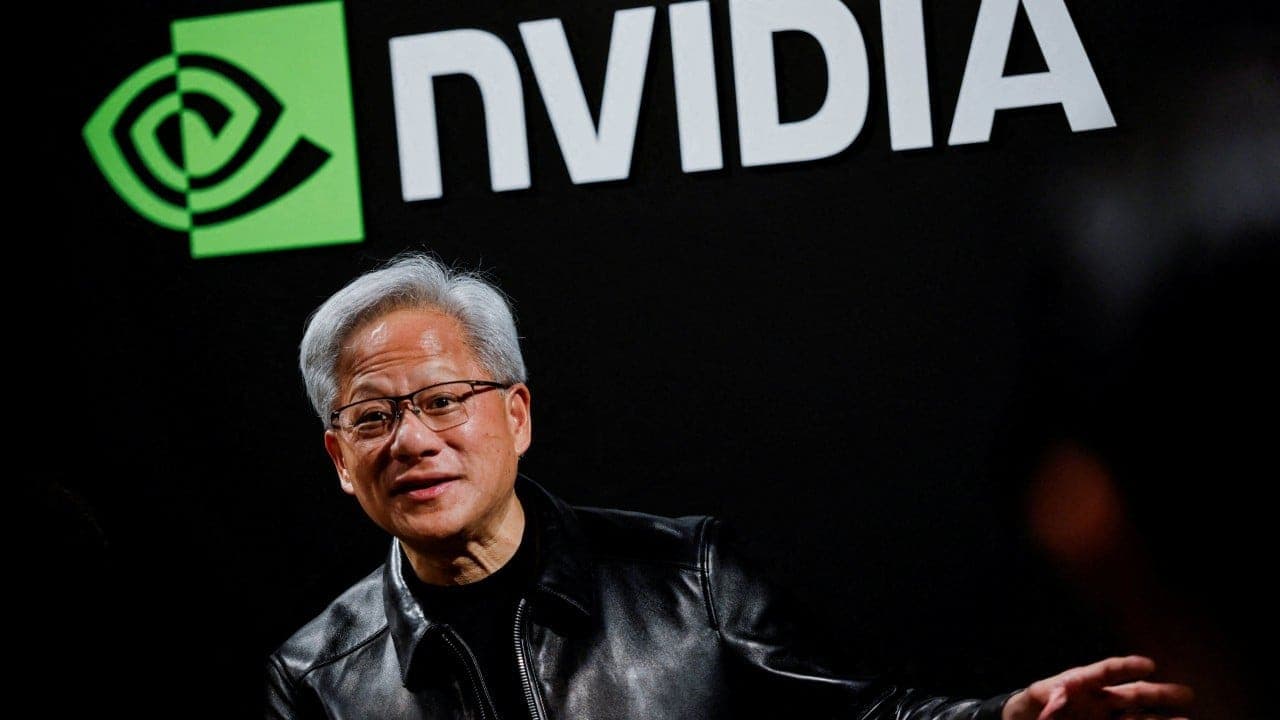
The Berlin Pitch
Jensen Huang steps onto a Berlin stage on Wednesday with a specific audience in mind. The Nvidia CEO is not there to court the hyperscalers that have driven the chipmaker's explosive run over the past two years. He is there to make the case to governments, industrial manufacturers, and enterprise operators that accelerated computing infrastructure is not just for Meta, Microsoft, and Alphabet.
The conference agenda centres on sovereign AI, industrial automation, and operational infrastructure. At Opentechwire, we have tracked how this trio of themes has become a strategic priority for Nvidia as it confronts a harder question from investors: can the company sustain its valuation if its customer base remains concentrated in fewer than ten US technology giants?
Nvidia holds the title of the world's most valuable company by market capitalisation. That status rests on a single bet: that the artificial intelligence spending boom will generate returns substantial enough to justify the capital outlay. So far, the hyperscalers have placed that bet with confidence, ordering data centre GPUs in volumes that have driven Nvidia's revenue growth into triple-digit percentage territory over multiple quarters.
But concentration risk is mounting. The handful of buyers responsible for the majority of Nvidia's revenue are also facing their own scrutiny. Investors have begun asking whether the inference workloads, fine-tuning pipelines, and frontier model training runs these companies are funding will translate into profitable products or remain expensive research exercises.
Sovereign AI as a New Revenue Stream
Sovereign AI is shorthand for government-backed efforts to build and control national AI infrastructure. In practice, it means data centres, training clusters, and inference capacity owned or directed by public institutions rather than commercial cloud providers.
The concept has gained traction in Europe, the Middle East, and parts of Asia over the past 18 months. Governments in Germany, France, the United Arab Emirates, Saudi Arabia, and Japan have announced investments in domestic AI compute capacity, often citing strategic autonomy and data sovereignty as drivers.
For Nvidia, sovereign AI represents a channel that is both lucrative and diversified. Public procurement cycles move more slowly than hyperscaler orders, but they also tend to be less sensitive to quarterly earnings volatility. A three-year contract with a European ministry or a Gulf sovereign wealth fund is a different risk profile than a purchase order from a cloud provider that might adjust capex guidance based on utilisation metrics.
The timing of the Berlin event is deliberate. Germany has committed billions of euros to AI infrastructure as part of its digital sovereignty agenda. The European Union has allocated funding for cross-border AI research and deployment under Horizon Europe. Huang's appearance is an opportunity to position Nvidia as the default supplier for these initiatives, particularly as rival chip architectures from AMD and emerging custom silicon projects remain years behind in ecosystem maturity.
Industrial Automation: The Edge Bet
Industrial automation is the second pillar of Nvidia's diversification thesis. This is not the generalised AI hype that has driven consumer headlines. It is the application of machine learning to manufacturing lines, logistics networks, robotic assembly, predictive maintenance, and quality control in sectors from automotive to pharmaceuticals.
Nvidia has built a suite of products aimed at this market: Jetson modules for edge inference, Isaac robotics platforms, Omniverse for digital twin simulation, and software frameworks that allow engineers to deploy models trained in data centres onto factory floors. The pitch is that industrial operators can reduce downtime, improve yield, and accelerate time-to-market by embedding AI into operational technology.
The challenge is that industrial buyers are conservative. They operate on long replacement cycles, prioritise reliability over performance, and demand proof of return on investment before committing to new platforms. Selling GPUs to a carmaker's assembly line is a fundamentally different motion than selling them to a hyperscaler building out a frontier model cluster.
But the revenue potential is significant. The global installed base of industrial automation equipment runs into the tens of millions of units. If even a fraction of that base is upgraded to include accelerated computing, the addressable market expands well beyond the current data centre footprint. Nvidia's strategy is to land reference customers, publish case studies, and build out a partner ecosystem that can deliver turnkey solutions to enterprises that lack in-house AI expertise.
The Investor Question That Will Not Go Away
Nvidia's valuation implies continued growth at a pace that few companies in history have sustained. The stock trades at a multiple that reflects expectations of both revenue expansion and margin stability. Any sign that demand is plateauing, or that customers are deferring orders, tends to trigger sharp sell-offs.
The core investor concern is simple: are the companies buying Nvidia GPUs generating enough incremental revenue or cost savings to justify continued capex at current levels? If a hyperscaler spends five billion dollars on AI infrastructure in a year, does that translate into five billion dollars of new enterprise contracts, advertising revenue, or subscription growth?
So far, the answer has been mixed. Some workloads, particularly those involving large language model inference at scale, have proven commercially viable. Others remain speculative. The gap between training cost and monetisation timeline has widened for many frontier model projects. Companies that once projected rapid breakeven on AI investments are now talking about multi-year horizons.
This uncertainty is why Nvidia is pushing so hard into sovereign and industrial markets. If the hyperscaler cycle slows, the company needs alternative demand sources that are large enough to move the revenue needle. Sovereign AI and industrial automation are the two sectors where Nvidia sees that potential.
What Berlin Signals About the Next Phase
The fact that Huang is delivering a keynote in Berlin rather than in San Francisco, Seattle, or Santa Clara is itself a signal. Nvidia has spent years cultivating relationships with the US cloud providers that account for the bulk of its revenue. Now it is investing executive time and marketing resources into geographies and verticals where it has historically been less visible.
Europe is a strategic theatre for this effort. The region has significant industrial capacity, substantial public investment in digital infrastructure, and a regulatory environment that favours local compute over reliance on US-based cloud services. If Nvidia can establish itself as the preferred supplier for European sovereign AI projects and industrial automation deployments, it gains a revenue stream that is both substantial and geographically balanced.
At the same time, the Berlin conference is a reminder of the limits of Nvidia's current position. The company dominates AI accelerators, but it does not control the applications, the business models, or the end-user demand that will ultimately determine whether AI capex translates into returns. Huang can make the case for sovereign infrastructure and industrial deployment, but he cannot dictate whether governments will follow through on funding commitments or whether manufacturers will prioritise AI integration over other capex projects.
The next twelve months will clarify whether Nvidia's diversification strategy is gaining traction. If sovereign AI contracts begin to show up in revenue guidance, and if industrial automation deployments scale beyond pilot projects, the company will have validated its thesis that demand can broaden beyond the hyperscaler core. If not, the investor scrutiny that Huang faces in Berlin will only intensify.
The Stake for the Broader Ecosystem
Nvidia's ability to sustain its valuation has implications that extend far beyond the company itself. The chipmaker sits at the centre of a capital allocation chain that includes venture funding for AI startups, corporate R&D budgets, public infrastructure spending, and equity market sentiment toward technology at large.
If Nvidia's growth trajectory flattens, it will signal to investors that the AI spending cycle has matured faster than expected. That would likely trigger a repricing across the sector, affecting not just chip companies but also cloud providers, software vendors, and the hundreds of startups that have raised capital on the assumption of continued infrastructure expansion.
Conversely, if Nvidia demonstrates that sovereign and industrial demand can offset any slowdown in hyperscaler orders, it extends the runway for AI capex and validates the case for continued investment. The Berlin conference is a test of that narrative. Huang's task is to convince an audience beyond the usual Silicon Valley buyers that accelerated computing is not just a tool for training frontier models, but a platform for national competitiveness and industrial transformation.
Whether that pitch succeeds will depend less on the keynote itself and more on the procurement decisions, budget allocations, and deployment timelines that follow in the months ahead.