Sequoia Backs Blacksmith to Unicorn Status as AI Code Testing Demand Surges
The continuous integration platform reached USD 1 billion valuation just eight weeks after its Series B, reflecting investor urgency around infrastructure for machine-generated software.
The Velocity Play
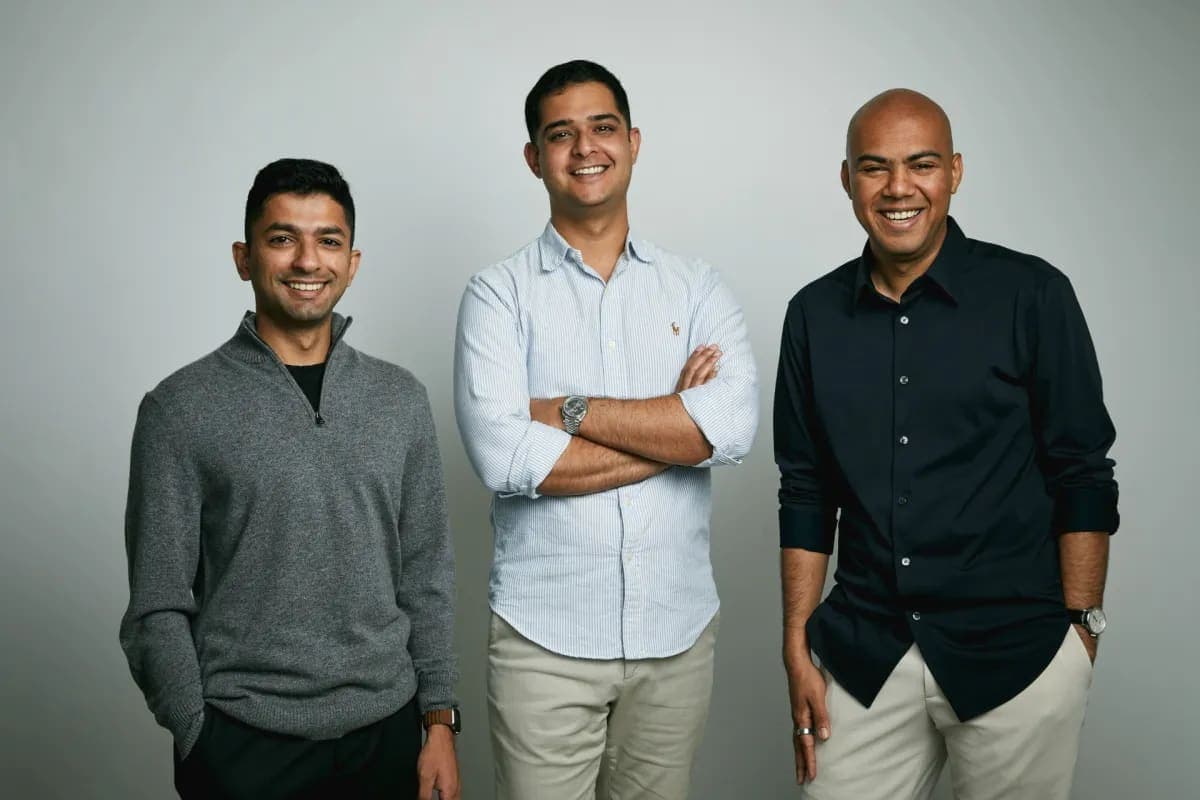
Blacksmith announced a USD 66 million Series C on Wednesday, bringing the continuous integration platform to a USD 1 billion valuation with Sequoia as lead investor. The round closes just eight weeks after the company secured USD 45 million at a USD 550 million valuation in August, and twelve months after a USD 10 million Series A priced the business at USD 60 million. In the span of a single calendar year, Blacksmith's paper worth has grown sixteenfold, a pace that underscores venture capital's mounting conviction that the infrastructure layer beneath AI-generated software represents the next major systems bottleneck.
Co-founder and chief executive Aditya Jayaprakash frames the problem plainly: organisations now wrestle with CI workloads that outstrip legacy tooling, and the gap widens each quarter as language models shoulder more of the commit volume. Blacksmith's platform automates the build, test, merge and validation steps that sit between a developer's push and production deployment. Where traditional CI pipelines bog down under parallel jobs or flaky tests, the company promises deterministic execution and faster feedback loops. Mercury and Granola number among disclosed customers; Blacksmith has processed more than 90 million individual CI jobs to date, according to the company's own figures.
Why Velocity Became Valuation
The compressed fundraising calendar reveals two intersecting forces. First, revenue momentum: Blacksmith's annual recurring revenue has grown seventeen-fold, though the company declined to publish absolute figures. That multiple, if sustained across recent quarters, implies the business crossed a threshold that makes unit economics legible to growth-stage investors even at a billion-dollar entry price. Second, investor appetite for picks-and-shovels plays in the generative AI stack has intensified through 2026, particularly for infrastructure that does not compete directly with frontier model labs. Continuous integration sits far enough downstream that hyperscalers, model providers and enterprise buyers all share an interest in reliable tooling, yet close enough to the developer workflow that switching costs accumulate quickly once a platform embeds itself in the release pipeline.
At Opentechwire we have tracked more than thirty infrastructure rounds across Asia and North America this year in categories adjacent to Blacksmith: observability for agentic systems, version control for prompt libraries, sandboxing for model-generated code. The common thread is risk mitigation. As Jayaprakash noted in the company's announcement, the salient question for agent-authored software is trust. Enterprises adopting code-generation assistants face a straightforward arithmetic problem: if a single engineer's weekly output jumps from fifty commits to five hundred, existing CI infrastructure must either scale by an order of magnitude or introduce a quality gate that slows deployment velocity back to pre-AI levels. Neither option is palatable. Blacksmith's thesis is that purpose-built CI architecture, optimised for high-frequency, machine-generated workloads, solves both constraints at once.
The Regional Dimension
While Blacksmith is headquartered in the United States, the dynamics it exploits are playing out with particular intensity across South Korea, Singapore and India. Seoul's large gaming studios and Singapore's fintech platforms have been early adopters of code-generation tooling, driven by talent scarcity and competitive pressure to ship features faster. Bengaluru's product engineering teams, serving both domestic startups and multinational captive centres, report CI queue times that have doubled since early 2025, according to infrastructure surveys we have reviewed. The constraint is not merely computational; it is architectural. Legacy CI systems were designed for human commit cadences and assume that test suites grow linearly with codebase size. Generative models invert both assumptions: commit volume can spike overnight when a team enables an assistant, and machine-written code often requires more exhaustive integration testing because the model lacks the institutional context a human engineer brings to edge cases.
Blacksmith's traction among financial-services customers is instructive. Mercury, a banking platform for startups, operates under regulatory scrutiny that demands audit trails for every code change. Automating more of the development process does not relax compliance obligations; it amplifies them. A CI system must not only catch regressions but also produce artefacts that satisfy an examiner months later. This is a wedge that applies across regulated verticals: payments in Jakarta, securities trading in Hong Kong, healthtech in Sydney. The companies best positioned to adopt AI code generation at scale are precisely those that cannot afford to relax quality gates, and that constraint creates a floor price for infrastructure that solves the trust problem.
Capital Efficiency and the Eighteen-Month Horizon
Blacksmith has now raised USD 125 million across four rounds. For a developer-tools company with fewer than one hundred employees, that quantum of capital is unusual unless the business is either burning heavily on go-to-market or investing in compute-intensive R&D. Continuous integration platforms typically carry gross margins above seventy per cent once the sales motion matures, because the core product is software orchestration rather than raw compute provisioning. The fundraising velocity therefore suggests either aggressive hiring to capture market share before competitors entrench, or a conviction among investors that the window for category definition is narrow.
We see evidence for the latter. Three well-funded competitors have emerged in the past six months, two in stealth and one, also backed by a tier-one Silicon Valley firm, preparing to launch publicly in the first quarter of 2027. The market structure favours speed: enterprises evaluating CI vendors prefer platforms with demonstrated scale, and scale in this context means job volume, language coverage and integration breadth. Blacksmith's ninety-million-job milestone is a moat-building exercise as much as a technical achievement. Each job run generates telemetry that feeds back into optimisation heuristics, creating a flywheel where early customers make the platform faster for subsequent ones.
The eighteen-month horizon matters because generative AI adoption follows a predictable curve. Early adopters, who enabled code assistants in 2023 and 2024, have already hit CI capacity limits and are in-market for solutions. The early majority, now piloting assistants in controlled environments, will face the same constraints in mid-2027. By the time the late majority begins serious adoption in 2028, the CI market will likely have consolidated around two or three dominant platforms. Sequoia's decision to lead at a billion-dollar valuation reflects a view that Blacksmith can be one of those two or three, and that the cost of waiting for more data exceeds the risk of overpaying at this stage.
The Trust Surface
Jayaprakash's framing around trust warrants closer attention. In the near term, trust in AI-generated code reduces to a testing problem: does the code behave as specified under all relevant inputs? Continuous integration addresses that question mechanically, through unit tests, integration tests and end-to-end scenarios. But as models become more capable and assume responsibility for larger subsystems, the trust surface expands. An agent that writes a feature also writes its tests, and eventually writes the CI configuration that validates both. At that point, the architecture must incorporate adversarial checks: does the test suite actually exercise failure modes, or does it merely pass the happy path?
Blacksmith has not publicly detailed how its platform approaches this meta-testing challenge, but the problem is implicit in any infrastructure designed for agent workflows. We expect the next generation of CI tooling to incorporate techniques borrowed from formal verification and fuzzing, where the system generates test cases independently of the code under review. The companies that solve this will own a defensible position in the stack, because trust at scale cannot be outsourced. An enterprise may accept a third-party code assistant, but it will not delegate the final quality gate to the same vendor that wrote the code.
Signals and Constraints
Three datapoints from Blacksmith's announcement deserve scrutiny. First, the seventeen-fold ARR growth is a trailing figure; it does not tell us whether growth is accelerating, linear or decelerating. If the multiple reflects a small base, absolute revenue may still be modest, and the valuation is pricing in future scale rather than current cash flow. Second, the customer list remains thin in public disclosure. Mercury and Granola are credible names, but a billion-dollar valuation typically implies dozens of enterprise contracts, and the absence of a longer roster suggests either concentration risk or a deliberate strategy to avoid tipping off competitors. Third, the round size is modest relative to valuation. Sixty-six million dollars at a billion-dollar post-money implies a six to seven per cent dilution, which is conservative for a Series C. Either Blacksmith is capital-efficient and did not need a larger raise, or the company is preserving optionality for a near-term growth round at a higher price.
The broader venture environment in late 2026 is bifurcated. Generative AI infrastructure continues to attract aggressive pricing, while most other software categories face valuation compression and extended diligence cycles. Blacksmith's rapid succession of rounds is possible only because it sits in the former bucket. The risk for investors is that CI workloads prove more elastic than anticipated: if model providers optimise inference costs and latency to the point where test execution becomes trivial, the economic pain that drives enterprises to Blacksmith may dissipate. Conversely, if regulatory pressure increases and organisations must audit every machine-generated commit, the addressable market expands beyond current forecasts.
What Comes Next
Blacksmith now enters the phase where execution risk overtakes market risk. The company must convert its capital advantage into durable customer relationships, which in developer tools means both top-down enterprise sales and bottom-up adoption by individual engineering teams. The product must remain fast as job volume grows, and pricing must scale without triggering sticker shock when a customer's CI usage doubles quarter-over-quarter. Competitors will copy features, and hyperscalers may bundle CI capabilities into existing DevOps suites at marginal cost.
The path from unicorn to exit, whether public market or acquisition, depends on whether Blacksmith can demonstrate that its platform is not merely faster CI but a necessary control plane for software written by machines. If the company succeeds, the valuation will look prescient. If adoption of AI code generation stalls, or if enterprises conclude that existing CI vendors are good enough, Blacksmith will join the long list of well-funded infrastructure plays that solved a problem the market did not yet have. The next twelve months will clarify which outcome is more likely.