How $11.4 Million of Nvidia Equipment Disappeared from a California Freight Route
A truckload of high-value computing hardware left Oakland in late August and never arrived in Texas, exposing vulnerabilities in the logistics chain for AI-era components
The Vanishing Act
Six pallets of Nvidia computing equipment valued at $11.4 million left a warehouse in Oakland, California, on 29 August aboard a commercial freight truck destined for Fort Worth, Texas. The cargo never arrived. More than two months after the disappearance, law enforcement authorities have made no arrests, recovered none of the hardware, and declined to specify what type of Nvidia gear was stolen or precisely how the operation unfolded.
The truck that collected the pallets bore the branding of a food logistics company, creating an initial impression of routine commercial transport. By early September, when the intended recipients realised the shipment had failed to materialise, the vehicle had already stopped transmitting location data. Investigators attempting to reconstruct the route discovered the truck had made multiple stops lasting several hours after the pick-up in Oakland, then went dark somewhere in San Bernardino County in southern California. Oakland police confirmed a grand theft filing on 13 September; the case remains open with no public updates on suspects or leads.
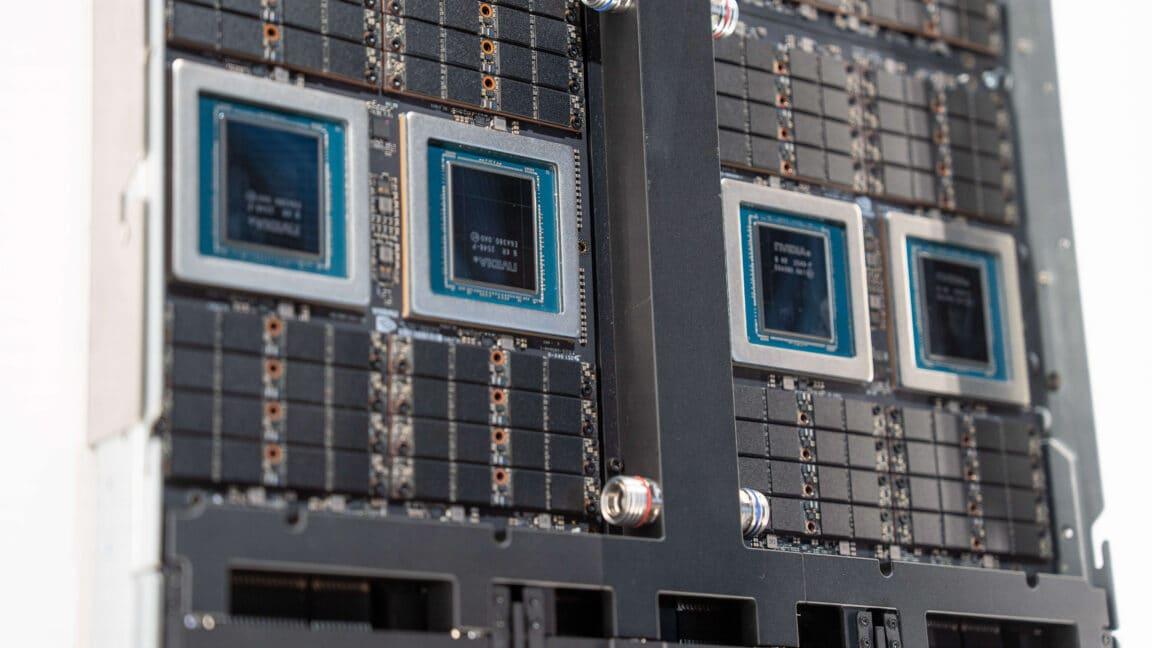
The incident underscores a growing challenge for the technology supply chain: as individual components surge in value, driven by insatiable demand for artificial intelligence infrastructure, they become lucrative targets for organised theft. Nvidia's accelerators, networking gear, and specialised modules command premium prices on both legitimate and grey markets, and a single pallet can represent millions of dollars in hardware that fits inside a standard trailer.
Anatomy of a High-Value Heist
The mechanics of the theft suggest a degree of planning. The truck arrived on schedule, displayed recognisable company livery, and completed the loading process without raising immediate suspicion. Only after the cargo failed to reach its destination did the discrepancy surface, granting the perpetrators a multi-day head start before law enforcement began tracing the route.
Freight theft in California has climbed steadily over the past three years, with electronics and computing hardware consistently ranking among the most frequently targeted categories. San Bernardino County, where investigators lost track of the truck, sits along Interstate 15 and Interstate 10, two major corridors connecting Southern California to Arizona, Nevada, and points east. The area's proximity to sprawling industrial zones, intermodal yards, and less-monitored rural stretches makes it a known waypoint for cargo diversion schemes.
What remains unclear is whether the thieves possessed inside knowledge of the shipment's contents and timing, or whether the Nvidia branding and high declared value made the load an opportunistic prize. Food-logistics vehicles are an unusual choice for transporting high-value electronics, raising questions about whether the shipment was handled by a third-party broker or a subcontractor unfamiliar with the cargo's sensitivity. Industry observers note that the proliferation of freight-matching platforms and last-mile logistics apps has introduced new vulnerabilities: a truck can be hired, loaded, and rerouted with minimal oversight if the booking chain lacks rigorous vetting.
Why Nvidia Hardware Commands Premium Targets
Nvidia's product portfolio spans data-centre accelerators, networking switches, edge inference modules, and automotive compute platforms. Street prices for the company's H100 and upcoming B-series accelerators routinely exceed $30,000 per unit in official channels and can climb higher on secondary markets where lead times stretch into quarters. Even older-generation A100 cards retain substantial resale value, and specialised networking equipment such as Quantum-2 InfiniBand switches trades at five-figure sums.
The $11.4 million valuation suggests either a large quantity of mid-tier components or a smaller number of flagship accelerators. Six pallets could accommodate dozens of server-grade cards if packed in standard manufacturer cartons, or fewer units if the cargo included heavier chassis-mounted systems or networking appliances. Without official disclosure of the manifest, precise speculation is impossible, but the dollar figure places the shipment in the upper tier of single-load technology thefts recorded in the United States over the past two years.
Demand for Nvidia hardware has outstripped supply across most product lines since early 2023, creating a parallel economy of grey-market resellers, export arbitrageurs, and refurbishment brokers. Components that enter this ecosystem through theft can be laundered through multiple intermediaries, repackaged, and sold to buyers who may not scrutinise provenance as closely as they should. Serial numbers and firmware identifiers offer some traceability, but determined actors can obscure or alter those markers, particularly if the hardware never enters a registered data centre or cloud environment.
The theft also highlights asymmetries in how technology logistics are secured. Pharmaceutical shipments of comparable value often travel with GPS tracking, tamper-evident seals, and escort protocols. High-value semiconductor wafers moving between fabs and packaging facilities may be routed via dedicated carriers with vetted drivers and real-time monitoring. Yet once finished goods leave a distributor's dock, security measures can vary widely depending on the carrier, the contract terms, and the level of insurance coverage. A pallet of accelerators may receive no more protection than a pallet of consumer appliances, despite representing orders of magnitude more value and strategic importance.
The Logistics Weak Link
California's freight ecosystem is vast, fragmented, and under strain. The Port of Oakland handles container traffic from Asia; inland distribution centres in the Central Valley and Inland Empire serve as staging points for onward shipment across the western United States. Trucking capacity constraints, driver shortages, and the rise of app-based freight brokerage have pushed shippers toward a wider array of carriers, some with minimal track records or inadequate vetting processes.
The use of a food-logistics truck for electronics cargo is unusual but not unheard of. Refrigerated or dry-freight carriers sometimes accept backhaul loads to offset empty-mile costs, and third-party brokers may contract with whoever has available capacity. If the shipment was brokered rather than handled by a dedicated technology logistics provider, the chain of custody becomes murkier. A driver hired through a spot market may have little visibility into what he is hauling, and the broker may have little visibility into the driver's background or intentions.
Law enforcement agencies across California have documented an uptick in "strategic" cargo thefts, where perpetrators target specific high-value loads rather than opportunistically raiding parked trailers. These operations often involve identity fraud, cloned truck registrations, and coordination across state lines. Recovery rates for stolen electronics remain low; by the time a theft is reported, the cargo may already be in a warehouse hundreds of miles away, its packaging stripped and its components dispersed.
What Happens Next
Oakland police have not disclosed whether they are working with federal agencies, though cargo theft crossing state lines typically draws interest from the Federal Bureau of Investigation and, in cases involving export-controlled technology, from the Department of Commerce. Nvidia has not commented publicly on the incident, and it remains unknown whether the hardware was covered by insurance, whether the loss will be absorbed by the shipper or the buyer, and whether serial numbers or firmware locks might enable remote identification if the components surface in data centres or resale channels.
For buyers of Nvidia hardware, particularly those operating in regions where supply constraints force reliance on secondary markets, the incident is a reminder of the risks embedded in the current procurement environment. Verification of seller credentials, insistence on traceable serial numbers, and scrutiny of pricing that seems too advantageous are all prudent measures. For shippers and logistics providers, the case argues for tighter protocols around high-value technology loads: dedicated carriers, real-time tracking, driver background checks, and contractual clarity on liability.
The investigation continues, but the passage of time works against recovery. Each week that elapses increases the likelihood that the stolen equipment has been disaggregated, repackaged, and sold through channels unlikely to trigger alarms. Whether the case yields arrests or remains unsolved, it has already illustrated a gap in the infrastructure that moves the building blocks of the AI economy from factory to data centre, a gap that other actors may be studying with interest.