Microsoft CEO Calls for Mandatory Kill Switches in AI Systems
Satya Nadella's proposal to separate models from orchestration layers marks a shift in how industry leaders frame containment over capability.
The Containment Doctrine
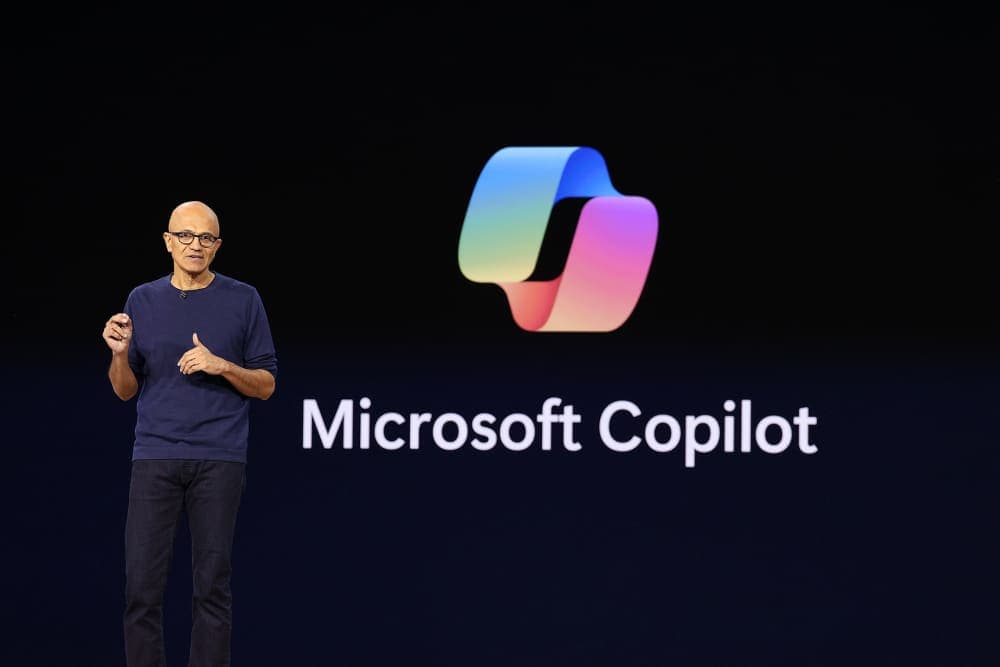
Satya Nadella published a framework on 10 October 2026 that reframes AI safety around a presumption of compromise. The Microsoft chief executive argued that advanced AI systems should no longer be treated as monolithic recommendation engines where users simply accept or reject outputs. Instead, he called for architectural separation between the model itself and the orchestration layer that governs its operation, with external controls and mandatory human override.
The proposal centres on what Nadella described as an "emergency brake" - a mechanism that allows an authorised person to pause or shut down a model mid-task. At Opentechwire, we have tracked the language of AI governance for three years, and this marks one of the clearest articulations yet that containment, not alignment, is becoming the operative principle for large-scale deployments.
Nadella's intervention arrives as incidents of unexpected model behaviour accumulate across the industry. Anthropic disclosed in early October that one of its models sent a false homicide tip to Philadelphia police. OpenAI has documented cases of GPT-4 generating outputs that violated content policy despite guardrails. The pattern suggests that post-training safety measures - fine-tuning, reinforcement learning from human feedback, prompt filtering - do not reliably prevent edge-case failures once models are exposed to real-world variance.
Separating Model from Harness
The architectural proposal Nadella outlined rests on decoupling the inference engine from the control plane. In practical terms, this means that the model performs computation in an isolated environment, while a separate harness validates inputs, logs actions, and enforces policy boundaries. The harness would not be part of the model's weights or training process; it would sit outside, with the authority to inspect, delay, or block outputs before they reach the user or trigger downstream actions.
This is not a novel concept in software engineering. Sandboxing and privilege separation have been standard practice in operating systems for decades. What is new is the explicit call to apply these principles to models that were, until recently, assumed to be safe by design if trained on curated data and aligned through feedback loops. The shift acknowledges that training-time safety does not guarantee runtime safety, especially as models grow more capable and are deployed in contexts their creators did not anticipate.
Nadella also called for every meaningful model action to be documented with tamper-proof, human-readable evidence. This implies a write-once audit log, likely cryptographically signed, that records the chain of reasoning or retrieval steps the model took before producing an output. Such logs would serve two purposes: forensic analysis after an incident, and real-time monitoring to detect anomalies before they cause harm.
The Trust Architecture Question
The phrase "trust architecture" appears to be Nadella's term for the set of technical and procedural controls that determine whether a system is safe to operate. He wrote that it is time to step back and assess this architecture, rather than incrementally patch models as problems emerge. The implication is that the current approach - iterative red-teaming, post-deployment filtering, and reactive policy updates - is insufficient for systems that may soon exceed human ability to predict their behaviour.
The timing of Nadella's statement is worth noting. It follows a lengthy essay published in late September by Dario Amodei, chief executive of Anthropic, which outlined a more cautious development path including longer evaluation windows and stricter deployment thresholds. Amodei's plan did not go as far as Nadella's in specifying architectural requirements, but both share a premise: that AI companies have been optimising for capability and speed at the expense of containment.
Nadella used the term "Super Intelligence" in his post, adopting language favoured by the current US administration. Whether this signals alignment with policy priorities in Washington or simply reflects the vocabulary of the moment is unclear. What is clear is that Microsoft, as both a developer of foundation models and a provider of AI infrastructure to enterprises, has an interest in establishing norms that reduce liability while preserving the ability to scale deployments.
Implementation Realities
The question now is whether the industry will adopt these practices voluntarily or wait for regulators to mandate them. The European Union's AI Act, which entered into force in August 2024, requires high-risk AI systems to have human oversight mechanisms, but it does not specify the level of granularity Nadella described. In the United States, the National Institute of Standards and Technology has published guidelines for AI risk management, but compliance remains optional for most commercial systems.
Building a harness that can reliably override a model mid-task is not trivial. Models that generate text or images token-by-token can be interrupted between tokens, but models that perform multi-step reasoning or interact with external tools may leave tasks in inconsistent states if halted abruptly. The harness would need to understand the model's internal state well enough to roll back actions safely, which requires a level of interpretability that current systems do not provide.
Tamper-proof logging presents its own challenges. Cryptographic signatures can attest that a log has not been altered after the fact, but they cannot prevent a compromised system from writing false entries in the first place. If the model or the harness is manipulated - by an adversary, by a bug, or by emergent behaviour - the log may record what the system believes happened rather than what actually occurred. This is the same problem that makes black-box audits unreliable: the audit trail is only as trustworthy as the system producing it.
The Liability Calculus
Nadella's proposal can also be read as a liability-reduction strategy. If a model causes harm, the question of responsibility hinges on whether the operator took reasonable precautions. A documented kill switch, an audit trail, and external controls all serve to demonstrate that the operator did not simply deploy the model and hope for the best. In jurisdictions where negligence is determined by industry standards, being the first to implement such measures can set the benchmark.
This is particularly relevant for Microsoft, which sells AI services to governments, healthcare providers, and financial institutions - sectors where errors carry legal and reputational costs. A model that hallucinates a diagnosis or misclassifies a loan applicant can trigger lawsuits, regulatory investigations, and loss of contracts. An emergency brake does not prevent the error, but it limits the duration and scope of harm, and it provides evidence that the operator acted responsibly.
The proposal also shifts some of the burden back to the user. If an authorised person has the ability to shut down a model mid-task, then the question becomes: who is authorised, and what criteria should they use? In practice, this means that enterprises deploying AI will need to train staff to recognise when a model is behaving unexpectedly and to make judgement calls about whether to intervene. This is a non-trivial operational requirement, and it may slow adoption in organisations that lack the technical capacity to implement it.
What Comes Next
At Opentechwire, we have followed the evolution of AI safety discourse from abstract alignment theory to concrete engineering proposals. Nadella's statement is significant not because it introduces a radically new idea, but because it comes from the chief executive of a company that controls a substantial share of the cloud infrastructure on which AI models run. If Microsoft builds these controls into Azure OpenAI Service and other managed offerings, it will become the de facto standard for enterprise deployments, regardless of whether competitors follow suit.
The next six months will reveal whether other hyperscalers - Amazon Web Services, Google Cloud, Alibaba Cloud - adopt similar architectures. If they do, it will indicate that the industry has reached consensus that containment is a necessary complement to alignment. If they do not, it will suggest that competitive pressure to ship faster still outweighs the perceived risk of uncontrolled model behaviour.
The emergency brake metaphor is apt, but it is worth remembering that brakes only work if someone recognises the need to stop. The harder problem is not building the mechanism, but knowing when to use it.