Washington Freezes Green-Card Pipeline for Microsoft and Six Other Firms
The Labour Department has barred seven tech companies from sponsoring permanent residency applications, citing alleged under-advertising of domestic openings in favour of H-1B holders.
The Suspension
The United States Department of Labour has suspended seven companies from filing new permanent labour certification applications, effectively blocking their ability to sponsor green cards for employees on H-1B temporary work visas. Microsoft and Adobe are the two largest brand names on the list; the other five are Cognizant, Infosys, Tata Consultancy Services, Wipro and HCL Technologies, plus Capgemini.
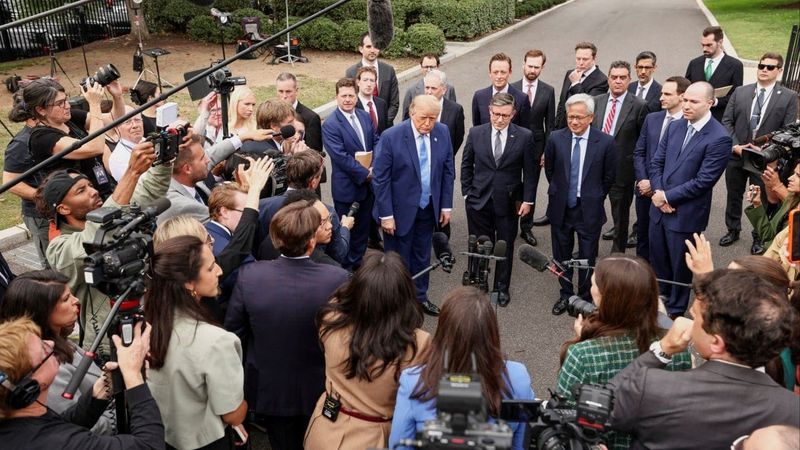
Labour Secretary Keith Sonderling announced on 8 October 2026 that his department would neither accept fresh applications nor process pending ones involving these employers. The move follows months of scrutiny over whether certain firms have used immigration pathways to sidestep the domestic labour market.
At Opentechwire, we've tracked the H-1B programme's evolution across Asia-Pacific headquarters and North American subsidiaries for years. What stands out in this round of enforcement is the breadth: the list spans both US-founded software giants and India-headquartered IT services firms that together employ tens of thousands of visa holders in the United States.
The Allegation
Vice President JD Vance, speaking at the announcement, framed the issue as intentional under-advertising. He argued that the targeted companies post job openings in ways designed to yield few domestic applicants, then cite the lack of response as justification to recruit internationally. Vance singled out Microsoft, calling it the heaviest user of the system and accusing it of treating foreign workers as "indentured servants" who replace American citizens.
The allegation rests on a provision in US permanent residency law: before an employer can sponsor a green card, it must demonstrate that no qualified American worker is available for the role. Critics contend that some firms meet this requirement on paper by advertising positions in obscure outlets, at below-market salaries, or with narrow specifications that discourage applicants.
Data from US Citizenship and Immigration Services show that Amazon leads all employers in H-1B petitions approved, followed by Tata Consultancy Services, Infosys, Apple and Microsoft. The five India-based consultancies on the suspension list are mainstays of the annual H-1B lottery, often filing thousands of applications each cycle for client placements across banking, healthcare and enterprise software projects.
Microsoft's Response
Microsoft issued a statement the same day, emphasising that the vast majority of its US workforce holds American citizenship or permanent residency. The company said that in the most recent fiscal year it submitted roughly six thousand H-1B petitions, of which 80 per cent were extensions or status changes for existing employees rather than new hires. The remaining 20 per cent - new employees already lawfully in the United States who accepted Microsoft job offers - represented about one per cent of the firm's domestic headcount.
The statement also asserted that Microsoft files H-1B petitions only for candidates who meet the visa category's statutory standards, which require a bachelor's degree or equivalent and a role in a speciality occupation. The company said it looks forward to providing the administration with further detail.
We reached out to Adobe for comment; the company had not replied by the time of publication.
Precedent and Pattern
The Labour Department's action follows a string of settlements in which technology employers paid penalties for similar conduct. In August 2026, the Department of Justice secured three point two million US dollars from OpenAI after determining that the firm had under-advertised openings domestically and shown preference for workers on temporary visas. Meta settled comparable charges in 2021; Apple did so in 2023.
Those cases turned on the same labour certification process now frozen for the seven companies. Each settlement included a financial penalty, a commitment to advertised wages and recruitment practices that meet federal standards, and monitoring by the Justice Department's Civil Rights Division.
What distinguishes the current suspension is its breadth and its public framing. Previous enforcement actions targeted individual firms and resulted in negotiated settlements. This week's announcement bundles seven employers, names them in a vice-presidential press event, and imposes an immediate halt to new filings - an escalation in both tone and scope.
The J-1 Expansion
In a parallel move, the administration announced investigations into nine universities - among them Harvard, Yale and Stanford - for alleged misuse of J-1 visa programmes. J-1 visas allow international students and researchers to participate in exchange programmes, internships and postdoctoral fellowships.
The government has not detailed the specific allegations, but the J-1 category has faced criticism in the past for allowing employers to hire foreign students at lower wages than they would pay permanent residents or citizens in the same roles. Some internships and traineeships under J-1 status last multiple years and can resemble full-time employment without the protections or mobility that H-1B or green-card status would confer.
Linking university J-1 scrutiny to corporate H-1B enforcement signals a wider policy interest in labour-market access for temporary visa holders. The nine institutions named are research-intensive universities that host thousands of international graduate students and postdocs each year, many of whom work in laboratories and technical roles funded by federal grants.
What the Freeze Means in Practice
For employees at the seven suspended firms who are already in the green-card queue, the immediate effect depends on where their applications stand. Cases filed before the suspension and already under review at the Labour Department's processing centres will likely remain in limbo until the companies resolve the underlying compliance questions or the department lifts the bar.
New hires and current employees not yet in the permanent residency pipeline face a longer wait. H-1B status is temporary - initially granted for three years, renewable once for a total of six - and workers who exhaust that period without an approved green card application must leave the United States or switch to another visa category. The suspension removes one of the main pathways to stability for those employees.
From the employers' perspective, the freeze complicates talent retention. Technology firms in the United States compete for engineers, data scientists and product managers in a market where top candidates often hold multiple offers. Inability to sponsor green cards can tip a decision toward a competitor or toward a role in another country. At least three of the suspended firms - Microsoft, Adobe and Capgemini - operate large engineering centres in India, where they can hire the same skill sets without visa constraints.
The policy also intersects with broader debates over high-skill immigration in an era of generative AI and semiconductor re-shoring. Governments across Asia have launched or expanded their own talent visa schemes: Singapore's Tech.Pass, South Korea's gold card, India's new points-based system. If US green-card sponsorship becomes less predictable, we may see more mid-career engineers opt to build their careers in Bengaluru, Seoul or Singapore rather than waiting out multi-year queues in California or Washington.
The Enforcement Context
The suspension arrives amid rising enforcement activity on employment-based immigration. Over the past two years, site visits by Labour Department investigators to H-1B employers have increased, wage-and-hour audits have expanded, and the Justice Department's Immigrant and Employee Rights Section has opened more discrimination cases involving visa status.
Some of that enforcement addresses genuine abuse: staffing firms that pay H-1B workers below the prevailing wage, consulting companies that bench employees without pay between client projects, and employers that retaliate against workers who raise concerns. Other cases hinge on procedural missteps - an advertisement that ran for 29 days instead of 30, or a job description that omitted a single required duty.
The line between protecting workers and creating uncertainty is narrow. Stricter enforcement can deter bad actors, but it also raises compliance costs and processing times for firms that follow the rules. For workers, longer waits and higher rejection rates translate into years of contingency, during which job changes, promotions and even travel become legally complex.
What Comes Next
The seven companies will almost certainly engage with the Labour Department to address the allegations and seek reinstatement. That process could involve audits of past labour certification filings, revised recruitment procedures, wage adjustments and third-party monitoring. Depending on the findings, some firms may face financial penalties or consent decrees similar to those imposed on OpenAI, Meta and Apple.
Whether the suspension expands to other employers will depend in part on how the current crop of cases unfolds. The India-based IT services sector, in particular, will be watching closely; dozens of smaller consultancies use the same H-1B and green-card pathways and could face parallel scrutiny.
For policymakers, the episode underscores tensions inherent in a temporary-visa system that has become a de facto queue for permanent immigration. The H-1B programme was designed as a stopgap for short-term skill shortages, not as a decade-long holding pattern for engineers waiting to adjust status. Green-card country caps - which limit India and China to the same annual allotment as smaller nations - create backlogs that stretch 20 years for some applicants.
Until those structural issues are addressed, enforcement actions like this week's suspension will remain a blunt instrument: capable of punishing specific abuses, but unable to resolve the underlying mismatch between visa supply, labour demand and the time it takes to move from temporary to permanent status in the United States.