Meta Claims Frontier Status With New Wonder AI Models
The social media giant's latest releases introduce persistent memory and goal-oriented focus, pricing them at the high end of the inference market as it races to justify record AI spending.
The Compute Gambit Pays Off
Meta unveiled two large language models this week that the company says place it alongside OpenAI, Anthropic, and Google at the frontier of AI capability. Muse Wonder and Muse Wonder Full arrive after what Meta describes as a year-long rebuild of its AI infrastructure, backed by capital expenditure the company projects will reach $145 billion by year-end.
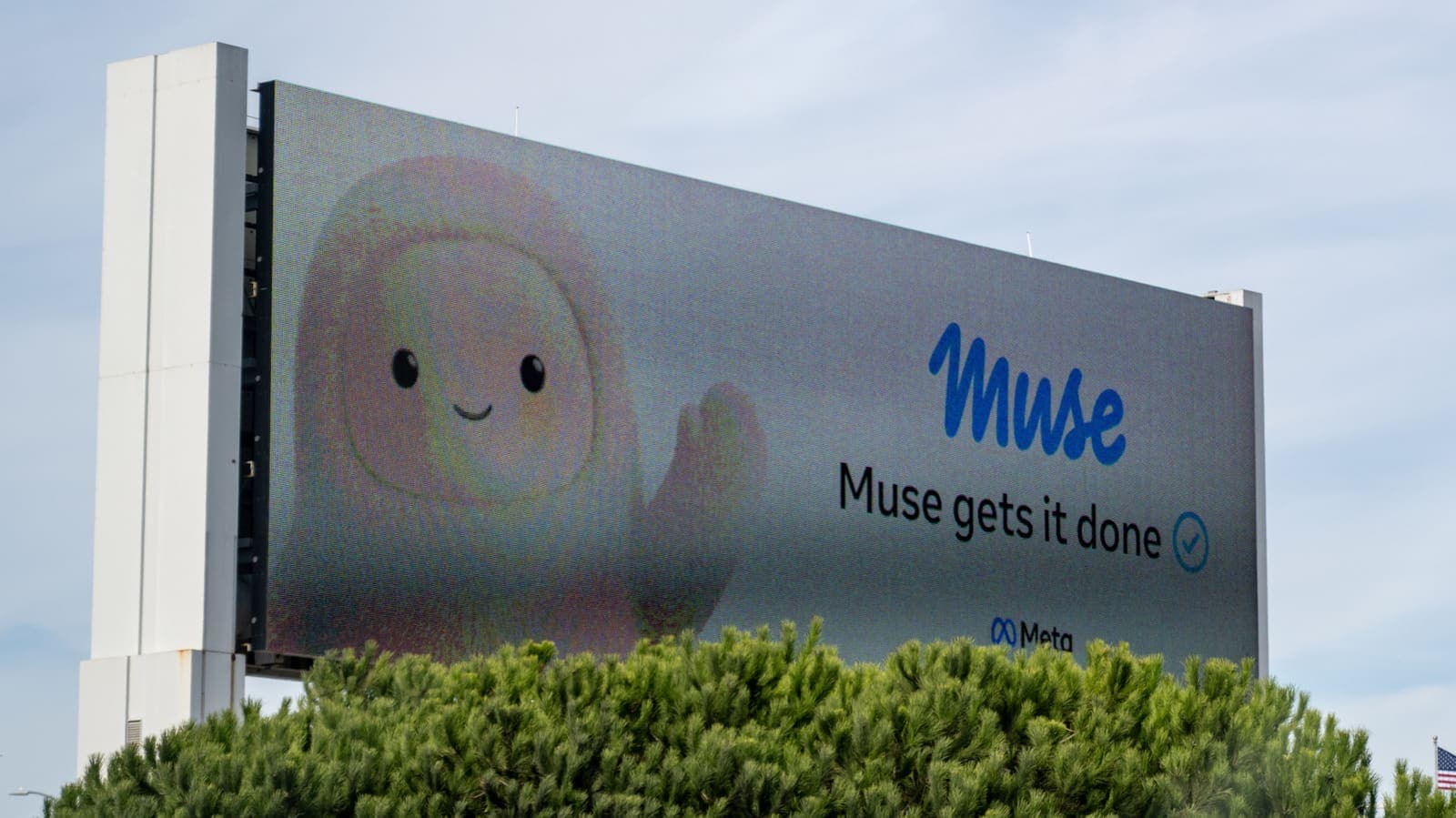
The models introduce what Meta calls "active memory" and "active focus," features designed to let AI agents maintain context across sessions and persist on complex tasks without drifting. The company frames these as steps toward "personal superintelligence," a term that signals both technical ambition and product strategy: Wonder will first roll out to paying subscribers of Muse, Meta's consumer-facing chatbot.
For a company that has long trailed in the generative AI race despite employing one of the largest research teams in the industry, the announcement represents a high-stakes claim. Whether the models deliver on that claim will determine if Meta's spending binge translates into competitive moat or expensive catch-up.
Memory and Focus as Differentiation
Active memory, as Meta defines it, enables an agent to surface relevant details from prior conversations without requiring users to re-establish context. Active focus lets the system continue working on a task when it encounters obstacles, rather than halting or returning generic errors.
Both capabilities address longstanding pain points in multi-turn interactions with language models. Existing systems often lose thread when conversations span days or require synthesising information from earlier exchanges. They also struggle with tasks that involve iterative problem-solving, particularly in domains like debugging code or drafting legal documents where setbacks are routine.
Meta positions Wonder as particularly strong in legal, financial, and health-related queries, domains where hallucination risk and liability concerns have slowed enterprise adoption. The company also highlights "frontier coding performance," though it has not yet published benchmark comparisons against GPT-4.5, Claude 3.7, or Gemini 2.0.
The decision to gate Wonder behind Muse's subscription tiers suggests Meta sees these features as premium. In a market where free-tier models have become table stakes, the move tests whether users will pay for persistence and goal-orientation, or whether those features will quickly become commoditised as competitors release similar updates.
Pricing Signals Enterprise Intent
Muse Wonder is available through Meta's API at $4 per million input tokens and $20 per million output tokens. That pricing sits above OpenAI's GPT-4o but below Anthropic's Claude 3.5 Opus for output, positioning it as a mid-to-high-cost option for developers.
Muse Wonder Full, the larger and presumably more capable variant, is restricted to subscribers paying $50 per month for "power usage" or $200 per month for "maximum usage" through Muse Code, Meta's coding-focused interface. The tiering mirrors GitHub Copilot's enterprise model, where access to the most advanced features requires organisational contracts rather than individual subscriptions.
The API pricing suggests Meta is targeting use cases where output quality and task completion justify higher per-token costs: contract review, financial modelling, clinical decision support. These are categories where incumbent software commands high annual contract values, and where a capable language model could compress workflows currently spread across multiple tools.
Yet the pricing also reveals tension. Meta has spent the past two years emphasising open-weight releases and broad access through Llama. Wonder, by contrast, is closed and expensive. The shift reflects a broader recalibration across the industry: as training costs balloon and inference infrastructure scales, even companies philosophically committed to openness are carving out proprietary tiers to recoup investment.
The Superintelligence Team's Mandate
Mark Zuckerberg described the release as the product of "rigorous scientific work" by Meta's superintelligence team, a group formed in early 2025 to consolidate the company's scattered AI research efforts. The team's mandate, as Zuckerberg has outlined in previous earnings calls, is to build models capable of reasoning, planning, and executing tasks with minimal human oversight.
That mandate explains the focus on memory and persistence. A model that can recall user preferences, track multi-step goals, and recover from errors begins to approximate an agent rather than a chatbot. For Meta, agents represent a path to embedding AI into the daily routines of its 3.2 billion users, turning one-off queries into sustained engagement.
The technical challenge lies in making these capabilities reliable. Early agent systems from Adept, Inflection, and others have struggled with brittleness: they work well in demos but fail unpredictably in production. If Wonder exhibits similar flakiness, the premium pricing will be difficult to justify, and enterprise customers will default to safer, if less ambitious, alternatives.
Meta has not disclosed the training data mix, parameter count, or architecture details for Wonder. That opacity makes independent evaluation difficult. It also raises questions about how the models handle memory: whether they store user data locally, embed it in fine-tuned weights, or rely on retrieval-augmented generation with encrypted vector stores. The answers matter for privacy, compliance, and trust, particularly in regulated sectors.
Spending and Strategy
Meta's projected $145 billion in AI spending this year dwarfs the budgets of most competitors and rivals the combined capital expenditure of Amazon, Microsoft, and Google in their cloud infrastructure build-outs a decade ago. The figure includes data centre construction, GPU procurement, energy infrastructure, and talent acquisition.
Zuckerberg has framed the spending as necessary to avoid falling behind in a winner-take-most market. But it also reflects a strategic bet: that AI will become the primary interface layer for Meta's products, replacing feeds, search bars, and navigation menus with conversational agents that mediate user intent.
If that vision materialises, Wonder and its successors will need to do more than match frontier performance. They will need to be fast, cheap to run at scale, and capable of personalisation without compromising privacy. They will also need to generate revenue, either directly through subscriptions or indirectly by increasing engagement and ad load.
The risk is that Meta is building infrastructure for a product category that remains unproven. Agent adoption has been slower than the industry anticipated, constrained by reliability concerns, unclear ROI, and user habits that favour deterministic interfaces over conversational ones. If agents remain niche, Meta's spending will look less like strategic foresight and more like expensive hedging.
What Frontier Means Now
Meta's claim to have reached the frontier invites scrutiny of what "frontier" means in late 2026. The term originally described models at the edge of capability, those that could perform tasks no previous system could. But as more labs release models with similar benchmark scores, the frontier has become crowded and harder to define.
Wonder's differentiation, if it holds, will rest on memory and focus rather than raw reasoning scores. That suggests the next phase of competition will centre on agent-specific features: long-term coherence, task persistence, user adaptation. These are harder to benchmark and easier to differentiate, which may be precisely why Meta is emphasising them.
For developers and enterprises evaluating Wonder, the question is whether these features justify the cost and the risk of depending on a closed model from a company whose AI strategy has shifted multiple times in the past three years. For Meta, the question is whether Wonder can convert tens of billions in spending into a sustainable product advantage before the market moves again.
The models are rolling out now. The answers will follow.