Meta's Carbon Emissions Surge 40 Per Cent as AI Infrastructure Strains Climate Targets
The social media giant now questions whether its 2030 net-zero commitment remains achievable, as data centre expansion drives the steepest emissions growth among major US tech companies.
Emissions Climb Faster Than Offsets
Meta's carbon footprint grew nearly 40 per cent between 2024 and 2025, the sharpest year-over-year increase among the four largest US technology companies. The jump reflects the energy demands of artificial intelligence infrastructure, which now account for the bulk of the company's environmental impact.
Net emissions reached more than 11.8 million metric tonnes in 2025, up from 8.1 million metric tonnes the previous year - a 45 per cent rise even after accounting for renewable energy projects and carbon removal technology. The scale of the increase has prompted Meta to reassess whether its 2030 net-zero goal remains feasible under current expansion plans.
Microsoft's overall carbon footprint increased 25 per cent over the same period, whilst Google recorded an 18 per cent rise and Amazon a 16 per cent increase. Meta's smaller absolute footprint means the percentage swing carries less total volume than some peers, but the trajectory raises questions about the compatibility of rapid AI scaling with near-term climate commitments.
The Data Centre Power Equation
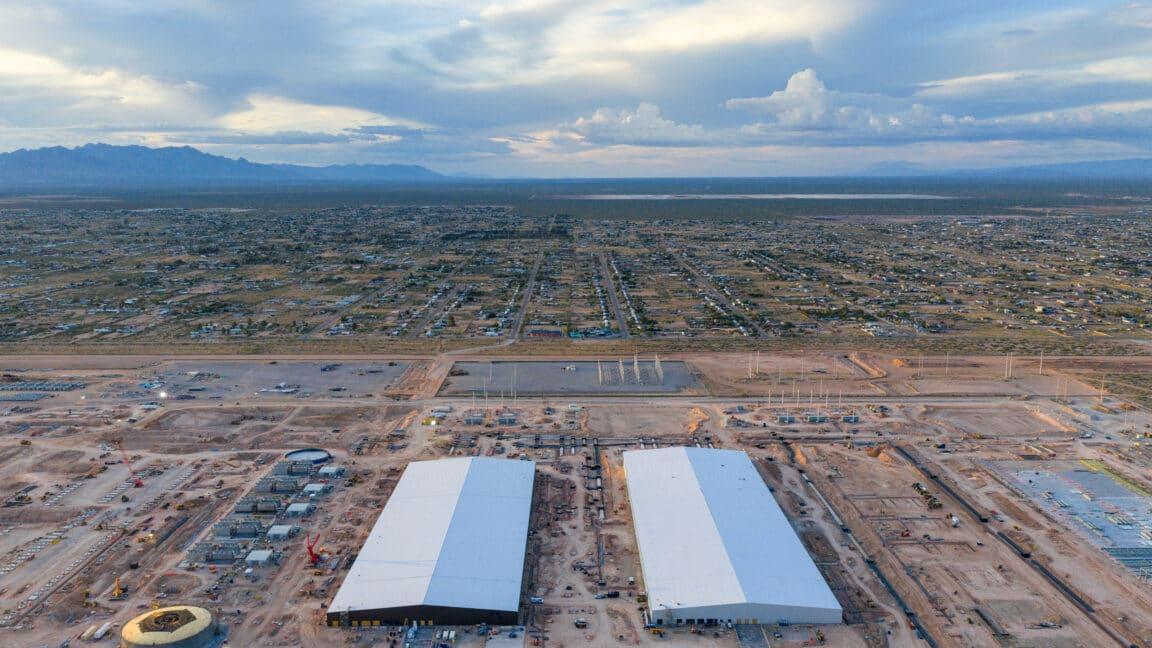
AI model training and inference workloads demand far more electricity per computation than traditional cloud services. Meta has invested in renewable energy capacity to match new load, yet the velocity of data centre buildout has outpaced the rate at which clean power can be brought online or credited through offsets.
The company's strategy has relied on power purchase agreements for wind and solar projects, alongside investments in direct air capture and other carbon removal technologies. Those mechanisms allow emissions to be offset on paper, but the physical infrastructure still draws from grids where fossil fuel generation remains part of the mix.
Renewable energy projects typically require multi-year lead times for permitting, construction and grid connection. Data centres, by contrast, can be stood up in eighteen months when demand justifies the capital expenditure. That mismatch between the pace of supply and demand leaves a widening gap in the near term, even when long-term contracts are in place.
Water Consumption Shifts to Stressed Regions
Meta reduced direct water consumption at its facilities from 825 million gallons in 2024 to 790 million gallons in 2025. The improvement, however, masks a less favourable shift in where that water is drawn.
Consumption in areas classified as water-stressed rose from 198 million gallons to 246 million gallons over the same period. Water stress refers to regions where demand approaches or exceeds sustainable supply, making additional industrial use a source of local tension.
Indirect water use - the volume consumed by power plants generating electricity for Meta's operations - climbed from 19 billion gallons to more than 26 billion gallons. The figure underscores that for data centres, the far larger water footprint lies upstream in power generation, not in the cooling systems that sit on-site.
Meta remains the only hyperscale operator to report indirect water consumption publicly. Closed-loop cooling systems, now widely deployed, reduce water use at the facility level but increase electricity demand for pumps and chillers, shifting the burden to power plants that often rely on water for steam generation or cooling.
Transparency Without Peer Comparison
The absence of comparable indirect water reporting from other major cloud providers makes it difficult to assess whether Meta's footprint is an outlier or representative of industry norms. Google, Amazon and Microsoft have not disclosed equivalent figures in their recent environmental reports.
Public pressure for greater transparency has intensified following sustained criticism of AI's environmental cost, a theme that gained traction during the 2026 US midterm elections. Voter concern over data centre siting and resource consumption surfaced in several swing districts, particularly where proposed facilities would draw from aquifers or require new transmission infrastructure.
Disclosure alone does not reduce consumption, but it does establish a baseline against which progress can be measured and compared. Without standardised reporting, companies can selectively highlight metrics that paint a favourable picture whilst leaving more challenging data unpublished.
Net-Zero Targets Under Review
Meta has not formally abandoned its 2030 net-zero commitment, but the company's latest sustainability report signals that the target may be reconsidered. The language marks a shift from previous years, when the goal was presented as fixed and the focus was on execution pathways.
The tension between climate commitments made in the early 2020s and the infrastructure demands of generative AI is not unique to Meta. Across the sector, companies are weighing whether to revise targets, slow deployment, accept higher offsets costs, or pursue step-change improvements in data centre energy efficiency.
Step-change efficiency gains - such as liquid cooling, custom silicon optimised for inference, or co-location with dedicated renewable generation - remain under development. None are yet deployed at a scale sufficient to bend the emissions curve downward whilst supporting current growth rates.
In the near term, the path forward for Meta and its peers will likely involve a combination of continued renewable energy procurement, increased spending on carbon removal, and a pragmatic reassessment of what net-zero can mean when the underlying business model is expanding faster than the clean energy supply chain can accommodate.