MediaTek's Latest Phone Chip Tackles Memory Efficiency as Supply Tightens
The Dimensity 9400 Pro aims to deliver AI performance while reducing reliance on scarce, expensive memory components
A Design Response to Scarcity
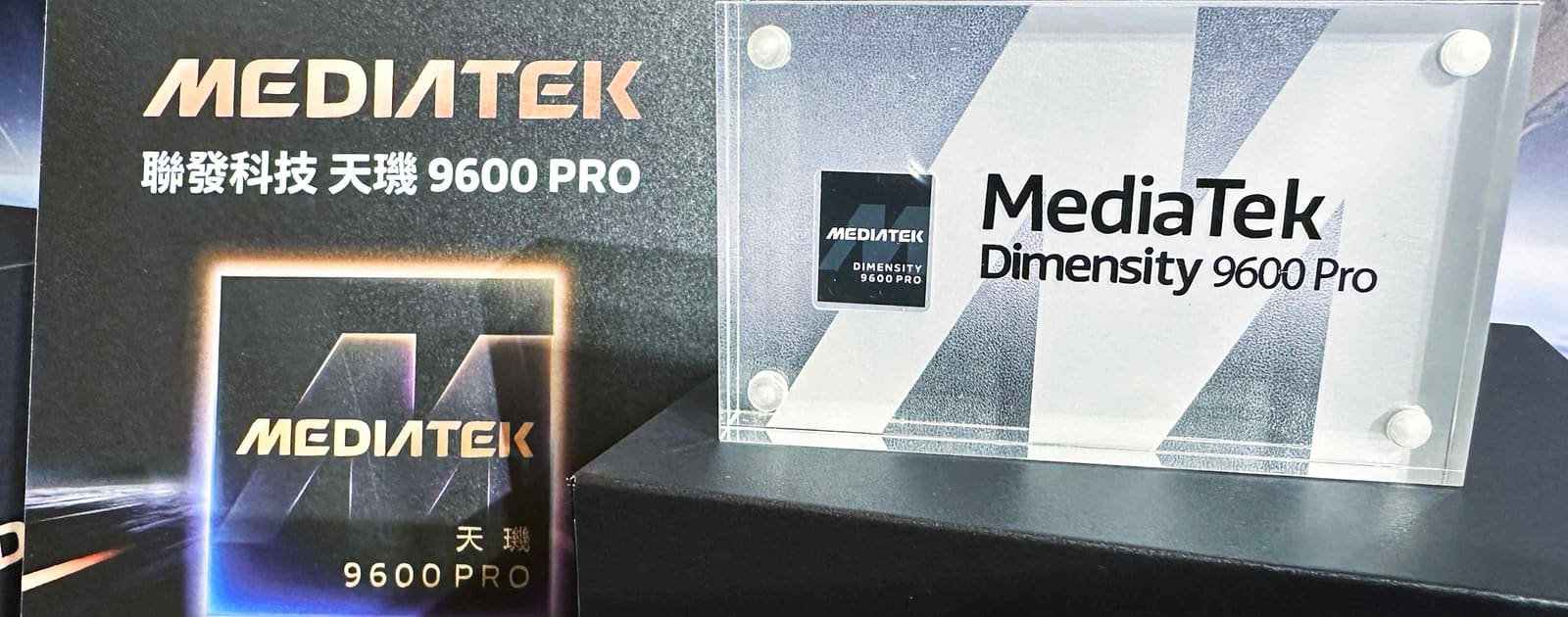
MediaTek has introduced its latest flagship smartphone processor with an architecture optimised for lower memory consumption, a design choice shaped by ongoing supply constraints in the memory chip market. The Dimensity 9400 Pro represents the Taiwanese chipmaker's attempt to maintain AI performance gains whilst working around a bottleneck that has raised component costs across the industry.
The chip is manufactured using TSMC's advanced node technology, the same fabrication process that powers Apple's latest iPhone generation. Yet MediaTek's engineering focus diverges from simply chasing raw performance metrics. Instead, the company is collaborating directly with device manufacturers to tune how the processor handles AI workloads, aiming to extract more capability from limited memory budgets.
At Opentechwire, we've tracked this constraint emerging across multiple product categories over the past eighteen months. Memory pricing has climbed as demand from AI servers, data centres, and now edge devices converges on the same supply base. For smartphone makers, the trade-off is stark: either absorb higher bill-of-materials costs or find silicon that does more with less.
The Memory Wall in Mobile AI
The shift towards on-device AI inference has intensified memory requirements in smartphones. Large language models, even when quantised and pruned for mobile deployment, demand substantial bandwidth and capacity. High-bandwidth memory configurations add directly to device cost, and supply constraints mean lead times have stretched for the fastest, densest modules.
MediaTek's response involves architectural adjustments that reduce memory traffic and improve cache utilisation. By keeping more intermediate data on-chip and minimising round trips to external DRAM, the Dimensity 9400 Pro aims to deliver comparable AI task performance whilst easing the memory subsystem load. The company has not disclosed specific bandwidth figures, but the optimisation work is being done in partnership with handset brands that face direct pressure on margins.
This approach contrasts with competitors that have pursued brute-force memory configurations. Qualcomm's recent flagship, for instance, pairs its AI engine with wider memory buses and higher-capacity packages. That strategy works when supply is elastic, but the current environment rewards designs that can flex downward without crippling user experience.
Working Backwards from the Supply Chain
The collaboration model MediaTek describes is revealing. Rather than shipping a reference design and letting OEMs adapt, the company is embedding engineers with customers to profile real workloads and tune memory hierarchies accordingly. This iterative process acknowledges that AI performance on paper often diverges from what users encounter when running camera processing, voice assistants, or real-time translation.
It also reflects MediaTek's position in the market. The company supplies a broad range of device makers, many of whom operate on thinner margins than premium brands. For these customers, a memory-efficient chip can mean the difference between launching a mid-tier AI phone or postponing it until component prices stabilise.
The supply crunch itself has multiple drivers. Memory fabs have been slower to add capacity than logic fabs, in part because the capital intensity and longer qualification cycles make expansion riskier. Meanwhile, the AI server boom has absorbed high-bandwidth memory that might otherwise flow to mobile. Export controls have further complicated supply chains, particularly for Chinese handset makers that rely on specific memory vendors.
Regional Stakes and Competitive Dynamics
MediaTek's move carries weight across Asia's smartphone supply chain. The company commands significant share in markets such as India, Southeast Asia, and parts of China, where price sensitivity is high and device replacement cycles are lengthening. A chip that enables AI features without forcing a memory upgrade could help brands differentiate in crowded mid-range segments.
The announcement also arrives as Chinese competitors, including Huawei's HiSilicon, push their own mobile AI silicon. Huawei recently unveiled an optical interconnect standard aimed at data centre AI, signalling ambitions beyond handsets. For MediaTek, maintaining competitiveness means addressing not just performance, but total system cost - a metric that now hinges heavily on memory.
Taiwan's position as both a chip design hub and a manufacturing base adds another dimension. TSMC's advanced nodes give MediaTek access to the same process technology that Apple uses, yet the companies target different segments and optimise for different constraints. Apple controls its entire hardware stack and can specify memory configurations with less concern for cost. MediaTek must serve a fragmented customer base where every dollar in the bill of materials matters.
Implications for the Edge AI Trajectory
The Dimensity 9400 Pro's memory efficiency focus offers a preview of how edge AI silicon may evolve under sustained supply pressure. If memory remains expensive and scarce, chip designers will invest more in compression, sparsity, and on-chip intelligence - techniques that were once considered optimisations but are now becoming requirements.
This shift could accelerate divergence between mobile and server AI architectures. Data centre chips have moved towards massive memory pools and high-bandwidth interconnects, accepting power and cost trade-offs that mobile devices cannot. Phones, by contrast, may adopt hybrid approaches: offloading some inference to the cloud when latency permits, whilst keeping a lean, memory-conscious AI engine on-device for privacy-sensitive or real-time tasks.
For device makers, the calculus is immediate. A memory-efficient chip allows them to hit AI feature checklists without blowing up production costs. For end users, the bet is that clever architecture can substitute for raw capacity - at least until supply constraints ease or a new memory technology matures.
MediaTek's collaboration model, embedding engineers with OEMs to tune workloads, may become standard practice if memory remains tight. That level of co-design is resource-intensive, but it acknowledges that AI performance is increasingly workload-specific. A chip optimised for camera processing may underperform in voice tasks, and vice versa. Tailoring the memory hierarchy to the device's primary use cases becomes a competitive lever.
Looking Ahead
The memory supply situation is unlikely to resolve quickly. Capacity expansions take eighteen to twenty-four months from decision to production, and demand from AI servers shows no sign of slowing. For mobile chipmakers, that means memory efficiency will remain a design priority through at least the next product generation.
MediaTek's Dimensity 9400 Pro is an early signal of this new reality. Whether the architecture delivers in practice will depend on how well the optimisations hold up across diverse workloads and how aggressively competitors respond. But the broader trend is clear: in an era of constrained supply, doing more with less is no longer optional.