Japan's Largest Unicorn Builds Sovereign AI Model to Escape US and Chinese Dependency
Sakana AI's ground-up foundation model targets defence and cybersecurity applications, where reliance on foreign infrastructure carries national risk.
A Strategic Pivot Toward AI Sovereignty
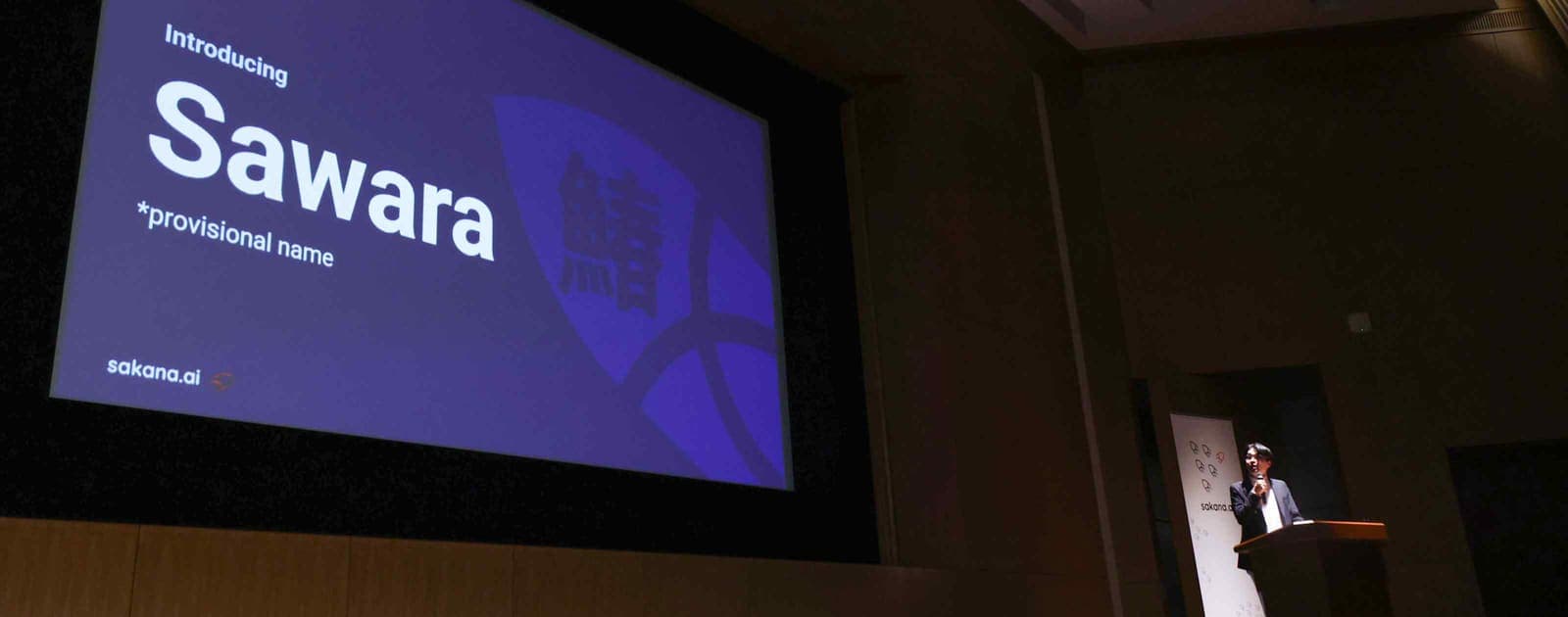
Sakana AI unveiled plans on 26 October to build a domestically developed foundation model, provisionally named Sawara, marking a deliberate break from the pattern of fine-tuning or wrapping foreign base models that has characterised much of Asia's AI landscape. The Tokyo-based startup, which holds the title of Japan's most valuable private technology company, framed the announcement around national security imperatives: defence agencies and critical infrastructure operators cannot afford dependencies on models whose training data, inference endpoints, and update cycles sit beyond sovereign control.
At Opentechwire, we have tracked the regional funding rounds and partnership announcements that underpin Asia's generative AI buildout. Most have involved licensing foundation models from US hyperscalers or, less commonly, from Chinese labs operating under export restrictions. Sakana's decision to train a model entirely in-house represents a costlier, longer path, one that reflects both ample capital and a conviction that certain use cases demand full-stack ownership.
The Risk Calculus Behind Homegrown Models
Defence and cybersecurity workloads present a distinct threat surface when run atop foreign AI infrastructure. Model providers can log queries, update weights remotely, or face legal orders to deny service. Even open-weight models carry supply-chain risk if the original training corpus or toolchain remains opaque. For a government evaluating an AI-enabled threat-detection system or an autonomous platform, those dependencies translate into operational vulnerability.
Japan's Ministry of Defense has been reorganising its research apparatus to prioritise AI and cyber capabilities, a shift visible in budget allocations and in exploratory contracts with both domestic labs and select US vendors. The regulatory environment now favours solutions that can be audited end to end and that do not require data to traverse international boundaries during inference. Sakana's announcement arrives into that policy context, positioning Sawara as a model architected from the start to meet sovereign-cloud and air-gapped deployment requirements.
Building a competitive foundation model from scratch demands access to high-quality training data, substantial compute resources, and a team experienced in large-scale distributed training. Sakana has raised significant venture funding, which places it in a small cohort of Asian AI startups with the balance sheet to attempt a multi-month training run on thousands of accelerators. The company has also recruited researchers with backgrounds in neural architecture search and evolutionary algorithms, techniques that can optimise model design when brute-force scaling hits diminishing returns.
Market Dynamics and the Unicorn Threshold
Sakana AI's valuation has crossed the one-billion-dollar threshold that defines unicorn status, a milestone that remains rare among Japanese startups and rarer still in the AI infrastructure segment. Venture investors in the region have grown selective, concentrating capital in companies that demonstrate either a clear route to profitability or strategic importance sufficient to attract corporate or sovereign backers. Sakana appears to straddle both categories: its research output has drawn attention in academic circles, and its focus on sovereignty-aligned products opens doors to government and enterprise customers willing to pay premium pricing for supply-chain assurance.
The competitive landscape includes a handful of other Japan-based AI labs, as well as partnerships between large trading houses, electronics conglomerates, and foreign model providers. Some of those arrangements involve co-location of compute or joint fine-tuning projects, but few have committed to training a foundation model without a foreign base. The capital intensity and technical risk of that approach have kept most players in the integrator or application layer. Sakana's willingness to take on full-stack development sets it apart, and also exposes it to execution risk if training runs fail to converge or if downstream performance does not justify the incremental cost over licensed alternatives.
Defence and Cybersecurity as First Verticals
The announcement named defence and cybersecurity as priority application domains. Both sectors share characteristics that favour sovereign models: strict data-residency rules, adversarial threat environments, and procurement processes that weight supply-chain security alongside technical performance. A foundation model trained entirely on domestic or allied data, running on domestic compute, and updated by a domestic team, offers a control plane that foreign-hosted models cannot match.
Cybersecurity workloads in particular benefit from models that can ingest telemetry at scale, correlate indicators across time windows, and generate human-readable summaries of complex attack chains. Latency and throughput matter, but so does the ability to retrain on proprietary threat intelligence without uploading that data to a third-party service. An on-premises or sovereign-cloud deployment of Sawara would allow security operations centres to fine-tune the model on internal incident logs, a capability that public API endpoints do not support.
Defence applications extend from logistics optimisation and maintenance prediction to more sensitive uses in signals analysis and autonomous systems. Export-control regimes already restrict the flow of certain AI accelerators and software libraries to adversary nations, and those restrictions are tightening. A model built within a trusted jurisdiction avoids the risk of sudden de-licensing or feature withdrawal, risks that have materialised in other technology domains during periods of geopolitical tension.
Technical and Economic Hurdles Ahead
Training a foundation model competitive with the current generation of US and Chinese offerings requires navigating a series of well-documented challenges. Data quality and diversity matter as much as raw scale; a model trained predominantly on Japanese-language or domain-specific corpora may excel in those niches but lag in multilingual or general-purpose benchmarks. Sakana will need to decide whether Sawara targets breadth or depth, and whether it pursues an open-weight release strategy to accelerate adoption or keeps the weights proprietary to preserve competitive differentiation.
Compute cost remains the dominant line item. A training run at the scale needed for a credible foundation model can consume tens of millions of dollars in accelerator time, even with access to favourable datacenter pricing. Ongoing operational expenses include model serving infrastructure, which must handle inference at latency and throughput levels that enterprise and government customers expect. Sakana's ability to secure long-term compute partnerships, whether with domestic cloud providers or through dedicated clusters, will determine the project's financial viability.
Talent acquisition is another constraint. The global market for researchers with experience in large-scale transformer training remains tight, and competition for that talent is intensifying as more labs launch ambitious projects. Sakana has made high-profile hires, including advisers with deep academic credentials, but scaling the engineering team to support a production-grade model lifecycle will test the company's organisational capacity.
Regional Implications and the Sovereignty Trend
Sakana's announcement fits into a broader pattern across Asia, where governments and strategic industries are re-evaluating their dependencies on foreign technology stacks. South Korea, Singapore, and India have all announced or funded initiatives to develop domestic AI capabilities, motivated by a mix of economic development goals, national security concerns, and a desire to capture value locally rather than remitting it to US cloud giants. The success or failure of these projects will shape the region's AI landscape for the next decade.
At Opentechwire, we have observed that sovereignty rhetoric often runs ahead of execution. Building a competitive model is necessary but not sufficient; distribution, ecosystem support, and developer adoption determine whether a sovereign model becomes a genuine alternative or remains a proof-of-concept. Sakana will need to cultivate a user base, publish benchmarks, and integrate Sawara into workflows that today default to foreign models. That go-to-market challenge is at least as demanding as the technical one.
The interplay between policy and product will also matter. If Japanese procurement rules begin to mandate domestic AI for certain categories of government contract, Sakana stands to benefit directly. If those rules do not materialise, or if they are written in ways that allow foreign vendors to qualify through joint ventures or data-residency commitments, the competitive advantage of a homegrown model narrows. Regulatory tailwinds can accelerate adoption, but they cannot substitute for a product that meets user needs on technical and economic merit.
Sakana's Sawara project is an experiment in whether a well-funded startup, operating outside the hyperscaler oligopoly, can train and commercialise a foundation model that competes on sovereignty as well as capability. The outcome will inform similar efforts across the region and test the proposition that national AI champions can emerge in an industry dominated by a handful of US and Chinese players. For now, the project underscores a shift in how governments and strategic industries are thinking about AI infrastructure: not merely as a commodity to be consumed, but as a layer of the technology stack too critical to outsource.